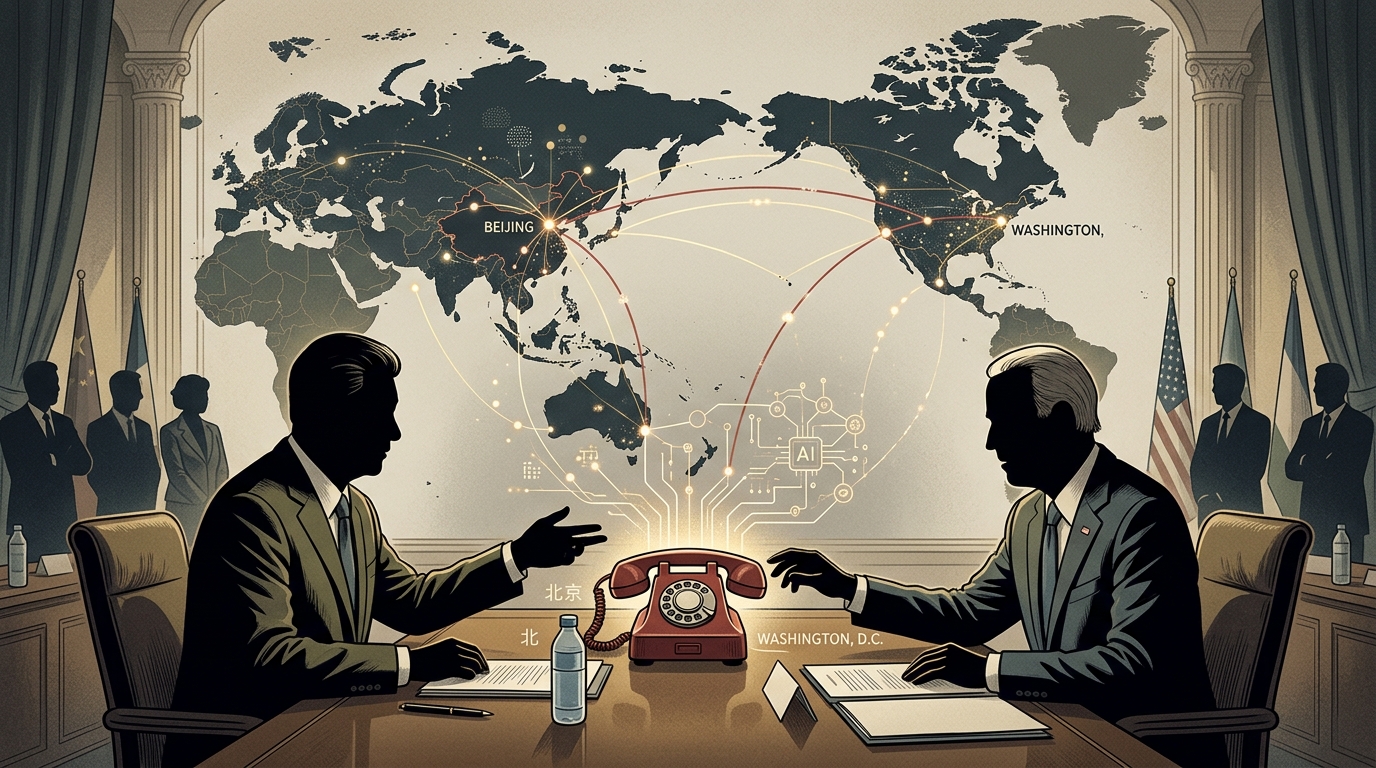
As the United States and China engage in high-stakes discussions regarding Artificial Intelligence, experts warn that the rhetoric of "winning" a global race may undermine actual safety. While Donald Trump and Xi Jinping prepare for their summit, a proposed AI safety notification mechanism is facing criticism for its lack of technical substance.
A Mechanism Lacking Expertise
US Treasury Secretary Scott Bessent announced a plan for a safety alert line to notify both nations when AI systems behave unpredictably. However, sources familiar with the plan told Politico that it appears superficial, involving no officials with technical expertise to assess risks. One source colorfully dismissed the plan's scientific value as "BS."
US Representative Ro Khanna has urged the administration to go further, calling for international agreements to ban recursive self-improving AI and establish safeguards against the misuse of AI for biological or nuclear weaponry.
The Flawed 'AI Race' Narrative
Alvin Wang Graylin, a technology strategist at Stanford, argues that the US is caught in a "deeply flawed" narrative. While the US currently leads in frontier AI revenue, China is rapidly gaining global market share through open models, which Graylin predicts could soon reach 80 percent adoption.
- Capability gaps between the US and China often last only a few months.
- Strict export controls may prevent China from conducting adequate safety testing.
- Cooperation is vital to prevent rogue actors from utilizing AI for cyber or chemical attacks.
Sam Bresnick of Georgetown University’s CSET noted that China likely views US "safety" talks with suspicion, seeing them as a tool to lock in American dominance. This perception could render the notification system useless if Beijing believes it is merely a method for suppression.