The rapid evolution of Artificial Intelligence (AI) is no longer a distant threat or a futuristic promise, but a daily reality reshaping the foundations of Technical and Vocational Education and Training (TVET). As we move through mid-2026, the management of vocational schools stands at a critical crossroads. The recent example of Vietnam, a nation investing heavily in the digital economy, highlights the need for a radical overhaul of how educational institutions preparing tomorrow's workforce are led.
Digital Transformation and Administrative Efficiency
Managing a vocational school in the AI era goes beyond mere computer usage. It involves integrating intelligent systems capable of predicting labor market trends in real-time. Modern school principals now utilize predictive analytics algorithms to identify students at risk of dropping out, offering timely intervention and personalized support. Furthermore, the automation of administrative tasks—from timetable scheduling to laboratory resource management—allows leadership to focus on the core: educational quality and strategic growth.
In Vietnam, the government is promoting "smart school" models where AI manages the energy footprint of buildings and optimizes the use of high-tech equipment. This approach not only saves resources but also serves as a living example for students training in technical trades, demonstrating how technology is integrated in practice.
The Revolutionary Shift in Curricula
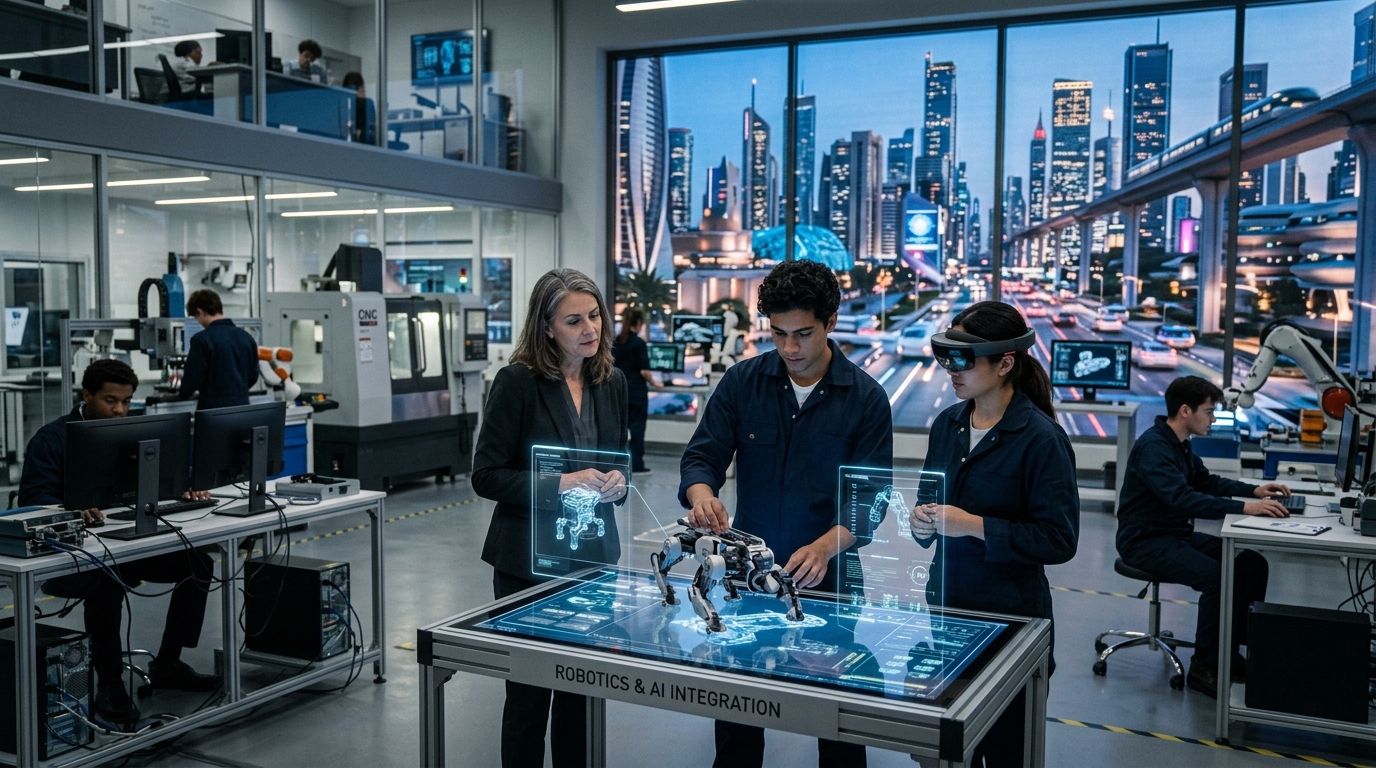
The greatest challenge for management remains curriculum flexibility. In a world where skills become obsolete faster than ever, vocational schools cannot rely on static five-year programs. AI enables the creation of "dynamic curricula" that adapt to the needs of Industry 4.0. Directors must collaborate closely with tech giants and local businesses to ensure students aren't just learning to operate machines, but to collaborate with intelligent systems.
- Hybrid Skills: Combining traditional technical training with digital literacy.
- Personalized Learning: Utilizing AI tutors that adapt the teaching pace to each student's abilities.
- VR/AR Simulations: Administrative investment in virtual labs that reduce consumable costs and increase safety.
"Management is no longer about maintaining order, but about managing change. If a vocational school does not evolve at the speed of the market, it produces unemployed graduates with degrees,"notes an educational policy expert from Hanoi.
The Challenge of Teacher Upskilling
No AI system can replace an experienced instructor, but it can make them more effective. School management must invest heavily in the upskilling of teaching staff. Many educators feel threatened by technology or struggle to keep up with developments. Here, the director's role is both psychological and organizational: they must foster a culture of lifelong learning and provide the tools so the teacher becomes a mentor and knowledge facilitator, rather than a mere transmitter of information.
In advanced technical schools, we see the implementation of "AI Co-teaching," where the instructor uses AI to grade technical drawings or analyze student code, freeing up time for meaningful classroom discussion and problem-solving. Management must establish clear ethical frameworks for the use of these tools, ensuring transparency and meritocracy.
Connecting with Labor Market 4.0
Finally, vocational school management must act as a bridge. The use of AI allows for the creation of digital portfolios for students, which are directly accessible to potential employers. Through matching algorithms, the school can recommend the right graduate for the right job, significantly increasing absorption rates.
In conclusion, the era of Artificial Intelligence requires a new generation of leaders in vocational education. Leaders who do not fear technology but understand it as the ultimate tool for empowering their students. Success will no longer be measured solely by grades, but by the ability of graduates to navigate a constantly changing technological environment with confidence and critical thinking.