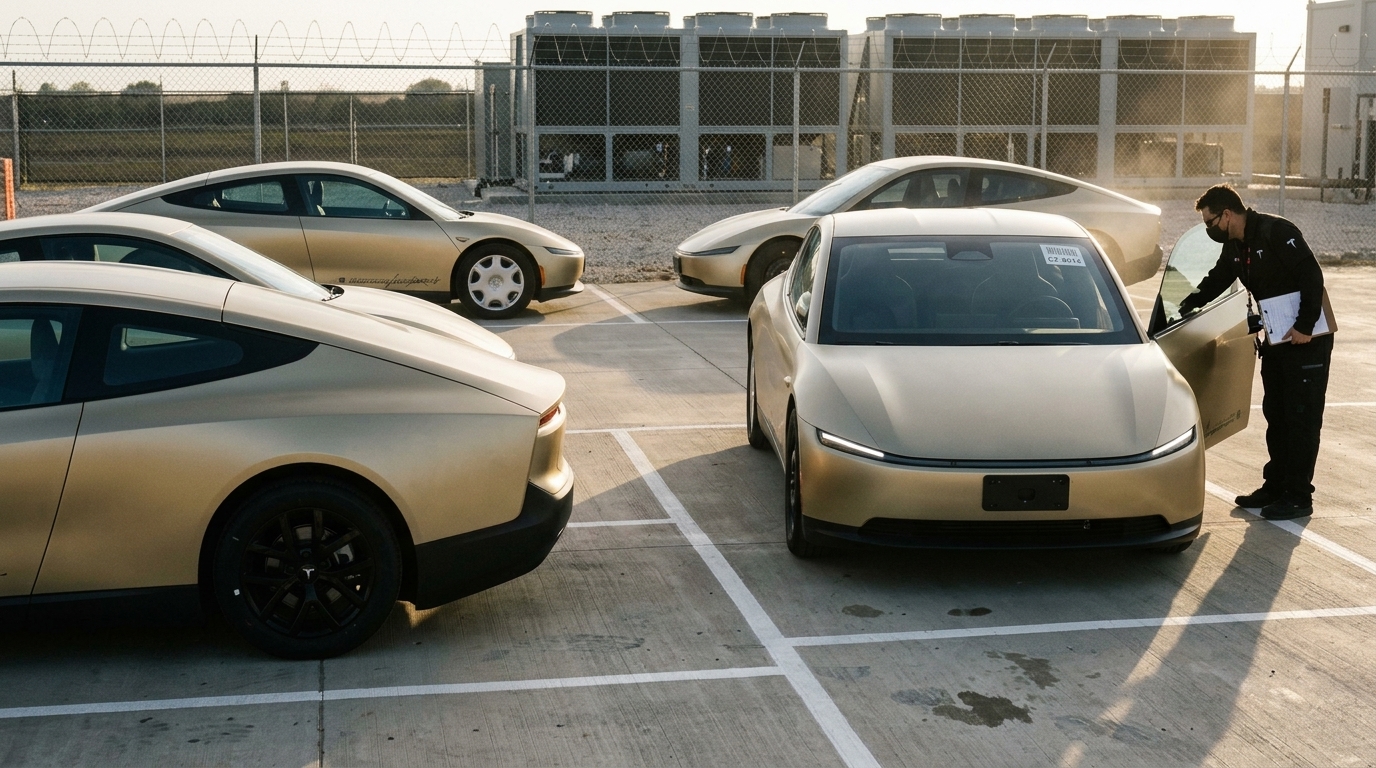
Tesla launch events are typically defined by loud beats, roaring crowds, and the theatrical presence of Elon Musk. However, the road debut of the Cybercab in Austin, Texas, was strikingly different: there was no livestream, Musk was absent, and invited influencers were initially barred from posting about the event.
A Vehicle Without Controls
The Cybercab, a matte gold two-seater first introduced in 2024, lacks traditional controls such as steering wheels and pedals. Currently, 45 of these vehicles are registered to operate on Tesla’s robotaxi network in Texas. The company is positioning the vehicle as the cornerstone of its pivot from a traditional carmaker to an "AI robotics company."
Autonomy Milestones and Competition
Despite the high ambitions, Tesla appears to be playing catch-up. Tesla AI software head Ashok Elluswamy announced that the company’s vehicles have completed 1 million miles without human drivers—a milestone that competitor Waymo reached back in January 2023. Furthermore, Tesla continues to rely solely on inexpensive cameras, eschewing the costly lidar and radar setups favored by rivals like Zoox and Waymo.
Legal and Operational Hurdles
Deploying vehicles without manual controls faces significant federal safety regulation barriers. While the NHTSA is evaluating the situation, Tesla has yet to file an official exemption request, with executives suggesting one may not be necessary. Additionally, it was revealed that the robotaxi network relies on remote human operators who can intervene in difficult scenarios; these operators have already been involved in at least three minor incidents, according to government data.