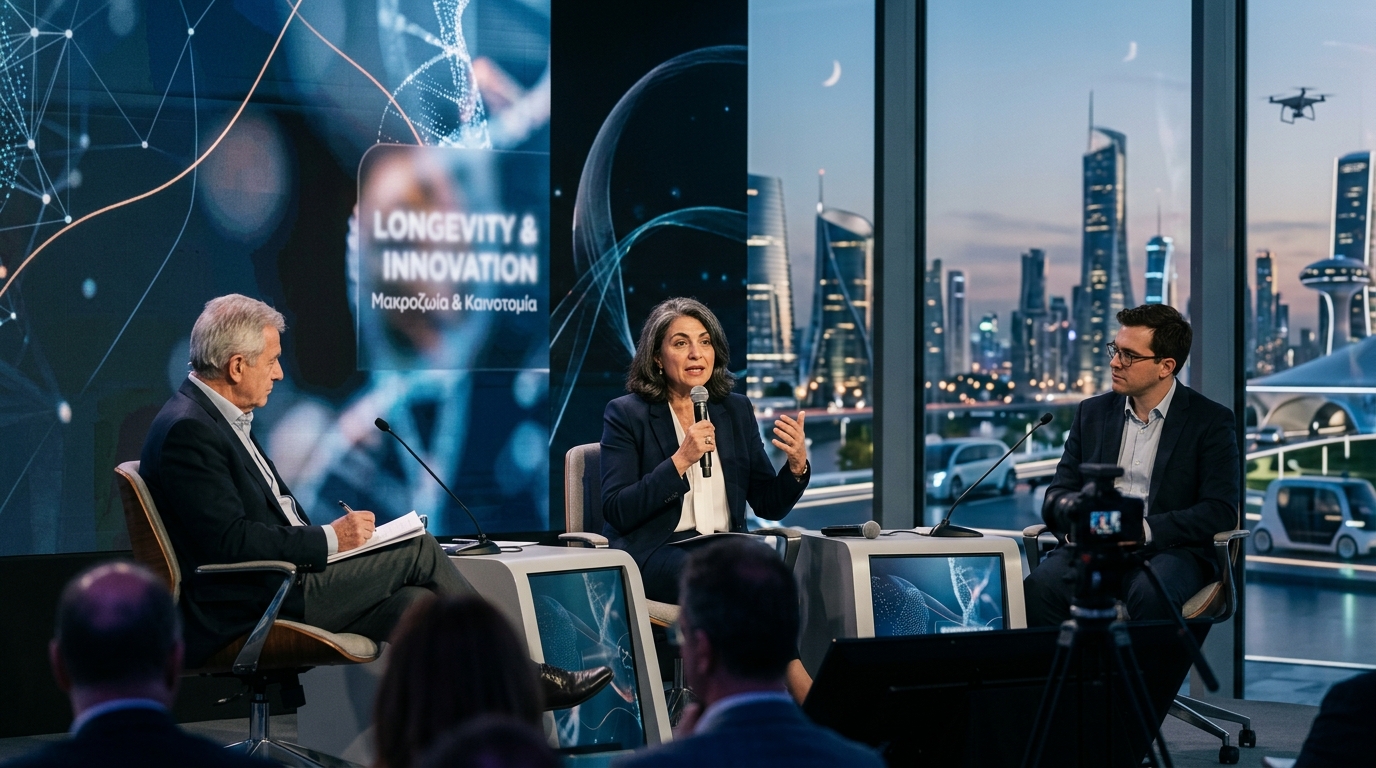
In the modern era, the concept of aging is ceasing to be viewed as an inevitable biological decline and is beginning to be treated as a "disease" that can be prevented or even reversed. At the recent Economist Impact conference, discussions on longevity and healthcare highlighted a critical turning point: the integration of Artificial Intelligence (AI) into the heart of preventive medicine. This is no longer just about medical breakthroughs; it is a total paradigm shift affecting the economy, labor, and social cohesion.
The Shift from Treatment to Prevention
For decades, healthcare systems have operated on a reactive model: the patient gets sick, the doctor treats. This model, however, is proving economically unsustainable as the population ages. Artificial Intelligence is now enabling the transition to "4P Medicine": Preventive, Predictive, Personalized, and Participatory. By analyzing vast amounts of data from wearables, genetic testing, and biomarkers, AI can identify risks of chronic disease decades before the first symptoms appear.
The use of Large Language Models (LLMs) and specialized algorithms in pharmacology has accelerated the discovery of new molecules targeting cellular aging. So-called "senolytic" drugs, which help remove senescent cells that cause inflammation, are now being developed with the help of computer simulations, reducing the time and cost of clinical trials.
Economic Implications and the "Longevity Dividend"
The economic dimension of longevity is as significant as the medical one. The concept of the "Longevity Dividend" refers to the economic benefits that arise when people remain healthy and productive for more years. Instead of aging being a burden on pension funds, a healthy elderly population can continue to contribute to consumption, entrepreneurship, and volunteer work.
- Extension of working life through flexible forms of employment.
- Reduction in hospitalization costs for chronic diseases through continuous monitoring.
- Growth of the "Silver Economy" targeting individuals over 65.
However, this transition requires radical reforms. States must invest in digital health infrastructure and ensure that access to these technologies is not limited to a privileged elite. Inequality in longevity could become the new great social divide of the 21st century.
Ethical Dilemmas and Quality of Life
Beyond the numbers, the question of quality arises. The goal is not just to extend lifespan, but to extend "healthspan"—the period of life spent in good health. AI can help manage polypharmacy and personalize nutrition and exercise, but human contact remains irreplaceable. Critics warn that over-reliance on data could lead to a "medicalization" of daily life, where every movement is monitored and evaluated by algorithms.
"Longevity is not a sprint toward immortality, but a marathon for dignity and well-being at every stage of life."
In conclusion, the convergence of technology and health, as analyzed by Economist Impact, is leading us into an era where humans gain unprecedented control over their biology. The challenge for nations is to adapt their public health systems to integrate these innovations in a fair and sustainable manner.