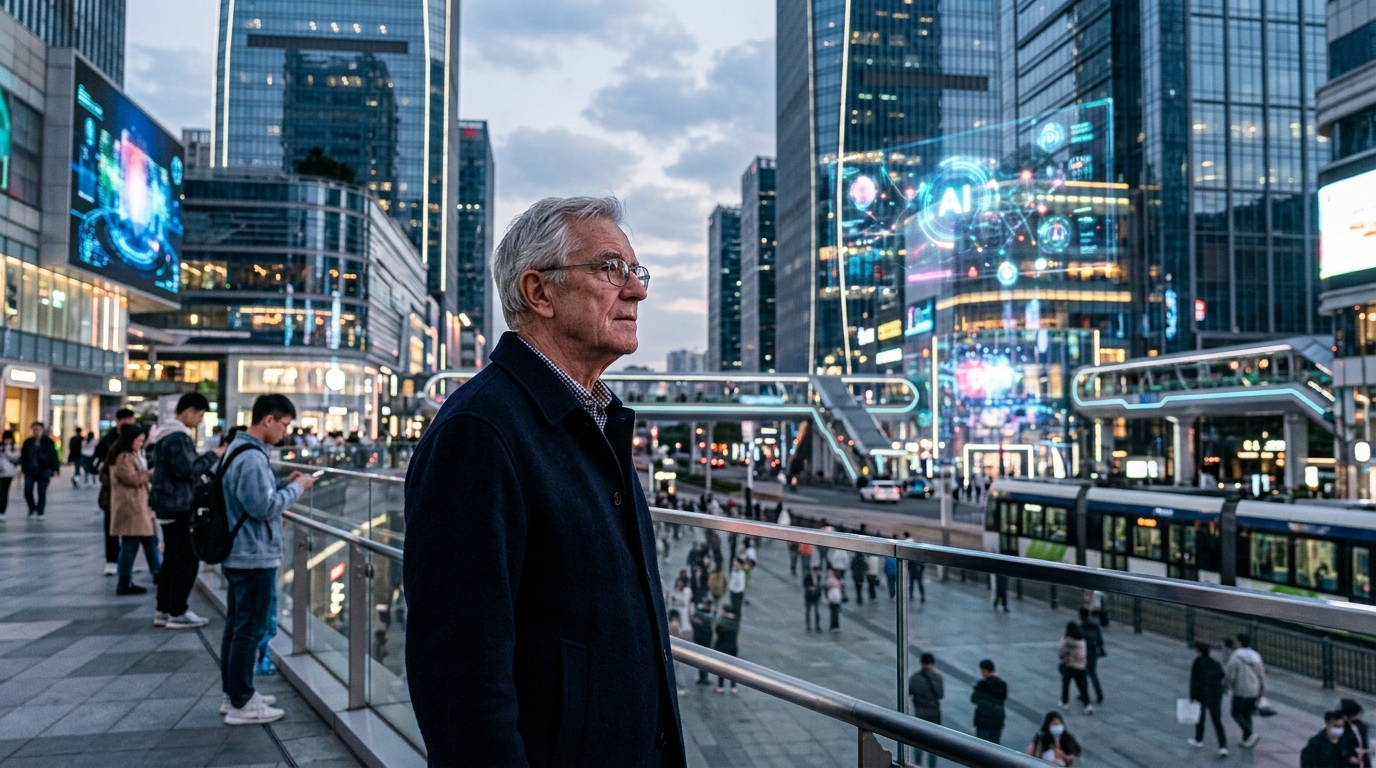
As of mid-2026, the Artificial Intelligence revolution is no longer a distant promise but a daily reality that has permeated every facet of professional life. For the Baby Boomer generation—those born between 1946 and 1964 who currently hold many senior management and specialized expertise positions—the dilemma is more pressing than ever. The speed at which AI agents and generative models have altered workflows creates a gap that many find difficult to bridge.
The Digital Abyss and Decades of Experience
For a professional who began their career with typewriters and fax machines, the requirement to now collaborate with algorithms that "think" and "create" can feel like an insurmountable mountain. This isn't just about learning new software, like the transition to Windows or the internet. Artificial Intelligence requires a fundamental shift in mindset: from executing tasks to overseeing and guiding intelligent systems. Many Boomers feel that their "institutional memory" and experience are being devalued in the face of machine speed.
However, the reality is more complex. While younger generations (Gen Z and Millennials) are more tech-savvy, they often lack the critical thinking and strategic foundation that Boomers possess. The question being asked in the boardrooms of major corporations is whether it's worth investing in the reskilling of older executives or if pushing them toward retirement is the more economically sound solution.
The Cost of Staying and Psychological Pressure
The pressure is not only technical but also psychological. The concept of "AI burnout" disproportionately affects workers over 60. The constant need to adapt to tools that change weekly creates a sense of insecurity. According to recent surveys, a significant percentage of Boomers in Europe and the US state they would prefer to retire 2-3 years earlier than planned rather than undergo intensive training in Prompt Engineering and AI Management.
On the other hand, there is a segment of "Silver Techies" who see AI as the ultimate tool to extend their careers. With AI's help, physical fatigue or slower reflexes are offset by the machine's ability to take over mundane tasks, allowing the experienced professional to focus exclusively on decision-making. This category of workers is transforming into "mentors of algorithms," using their experience to tune and audit the outputs of artificial intelligence.
The Threat to Institutional Memory and the Knowledge Gap
If the Boomer generation chooses a mass exit, businesses risk losing what we call "tacit knowledge." This is the understanding of human relationships, political balances, and the history of an organization that cannot be encoded into any Large Language Model. The violent replacement of experience with algorithmic efficiency could lead to strategic blunders that AI is not yet capable of predicting.
- Loss of contact networks built over decades.
- Lack of mentorship for younger employees.
- Difficulty managing crises that require human intuition rather than statistical probability.
To avoid this, many companies are implementing "Reverse Mentoring" programs, where the youth teach the elders about technology and the elders teach the youth about strategy and work ethics. However, the success of these programs depends on the humility of both parties.
Social and Economic Implications
The decision to retire is not just individual; it has massive implications for social security systems. If millions of Boomers leave the workforce prematurely due to AI, the pressure on pension funds will spike. At the same time, the labor market will lose a stabilizing factor. AI, instead of becoming the tool to help address an aging population, risks becoming the catalyst that exacerbates the demographic problem in the workplace.
"AI will not replace humans, but humans who use AI will replace those who do not. For Boomers, this rule is a harsh truth that leaves no room for complacency."
In conclusion, the Baby Boomer generation stands at a crossroads. Adapting to AI is not just a professional requirement but an act of resistance against obsolescence. Those who manage to marry their analog wisdom with the digital power of the new era will be the most valuable players in the future economy. The rest may find peace in retirement, but they will leave behind a void that no machine can fully fill.