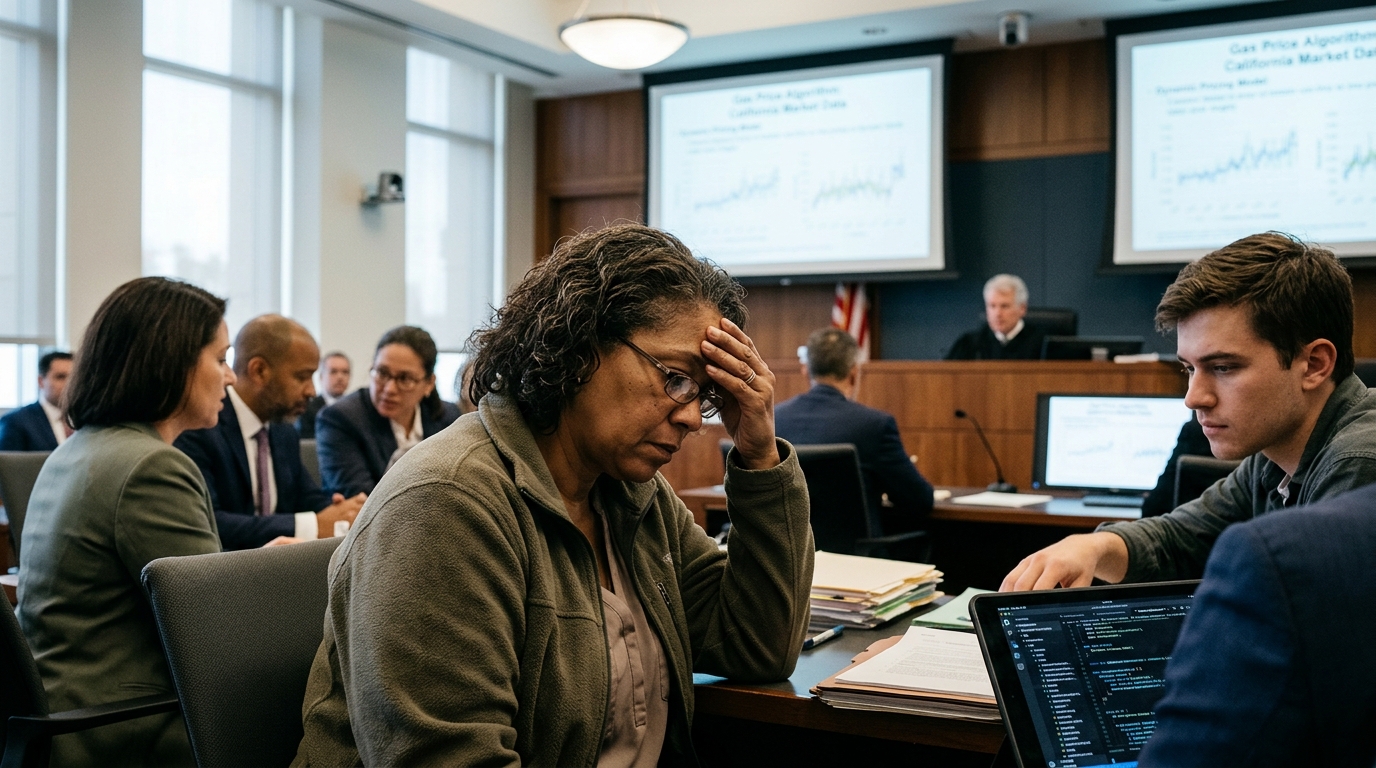
In sunny California, where car culture is inextricably linked to daily survival, gas prices have always been a volatile political and economic flashpoint. However, a recent class-action lawsuit filed in federal court brings to light a new, darker dimension of the fuel market: the use of Artificial Intelligence to artificially maintain high prices. The defendants — industry giants including 7-Eleven, BP, and Walmart — are alleged to have utilized sophisticated pricing software that, instead of fostering free competition, acts as a digital "middleman" for price coordination.
The case, which has sent shockwaves through Silicon Valley's legal circles, argues that these corporations have abandoned traditional competitive strategies of lowering prices to gain market share. Instead, they have adopted third-party algorithms, such as those provided by Kalibrate, which analyze massive volumes of real-time data to predict and align with competitors' moves. The result? A form of "algorithmic collusion" that strains the consumer's wallet without corporate executives ever having to meet in a smoke-filled room to fix prices.
Digital Collusion: How the Algorithm Operates
The core argument of the lawsuit hinges on the concept of "tacit collusion." Historically, convicting a company of price-fixing required proof of an explicit agreement — a "handshake" or a memo. In the age of AI, this agreement is embedded in the code. Kalibrate’s algorithms allegedly function as a central brain that collects data from all participants and suggests prices that maximize profit for the entire group, effectively preventing the "price wars" that traditionally benefited consumers.
According to the complaint, fuel retailers feed the system sensitive sales and inventory data. The algorithm then processes this information and issues pricing instructions. When multiple large players in the same geographic area use the same tool, the algorithm quickly learns that dropping prices to gain an edge is a "sub-optimal" strategy because competitors will match it instantly. Consequently, the system stabilizes at an artificially high equilibrium price, leaving consumers with no cheaper alternatives.
Legal Precedents and Regulatory Hurdles
This case is not an isolated incident. It follows a string of similar lawsuits in other sectors, most notably the real estate market involving RealPage software, where landlords were accused of using AI to drive up rents. The big question for the judiciary is whether existing antitrust laws, such as the Sherman Act of 1890, are equipped to handle cooperation facilitated by software rather than human interaction.
Plaintiffs' attorneys argue that the act of outsourcing pricing decisions to a common algorithm constitutes a per se violation of antitrust laws. On the other hand, the companies defend the technology, claiming they are merely using data analytics tools to remain efficient in a volatile global market. The outcome of this trial in California could set the global standard for how AI-driven pricing is regulated for years to come.
Consumer Impact and the Path Forward
For the average citizen, discussions about algorithms might seem abstract, but the impact at the pump is very real. In an era of persistent inflationary pressure, the suspicion that technology is being used as a tool for exploitation intensifies distrust toward both large corporations and AI technology in general. Consumer advocates are calling for greater transparency in pricing algorithms and stricter oversight from the Federal Trade Commission (FTC).
As AI permeates every facet of the economy, the need for a new "social contract" regarding data usage becomes imperative. If the courts rule that algorithmic pricing is equivalent to a cartel, we will witness a radical restructuring of how businesses deploy technology to set prices. Until then, California drivers will continue to wonder if the price they see on the sign is the result of a free market or an invisible digital coordinator.