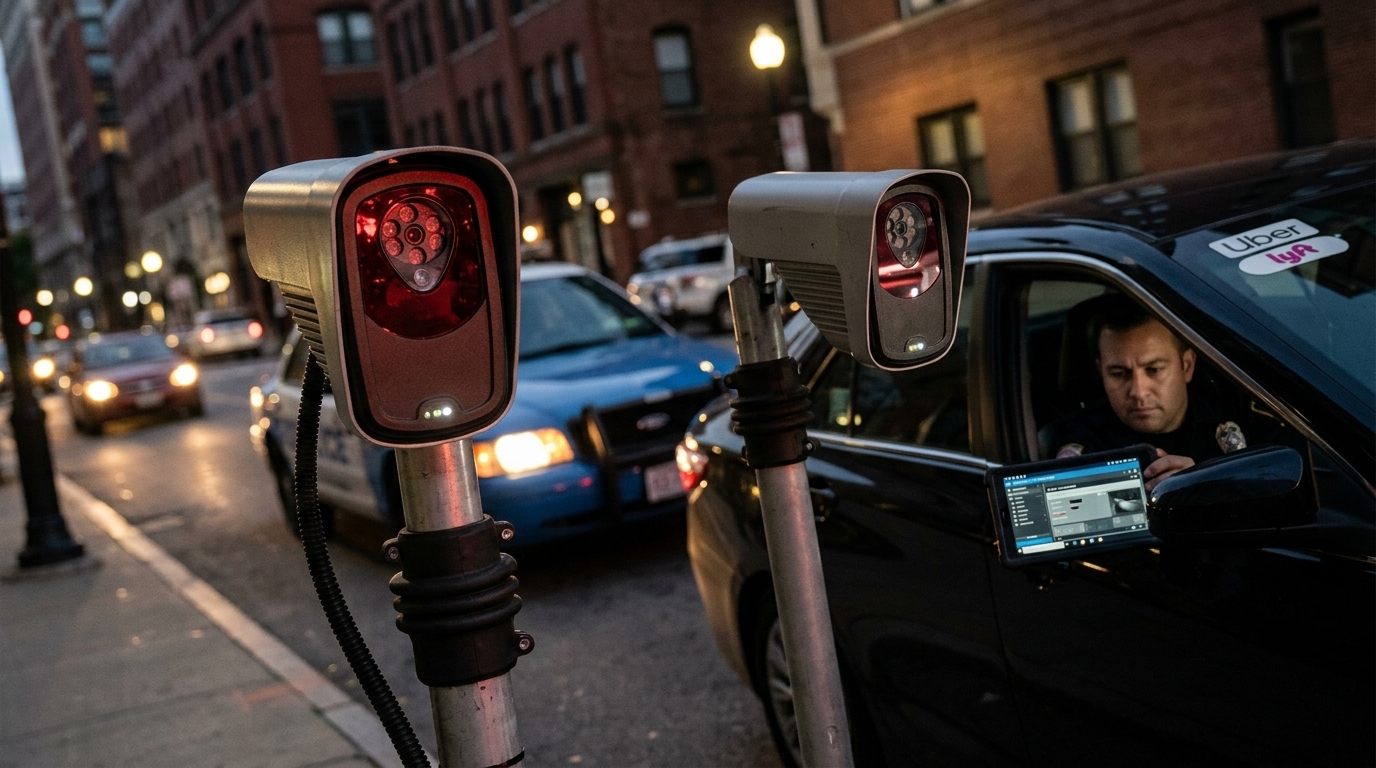
New revelations have surfaced regarding the scale of surveillance firm Flock Safety’s ambitions, which reportedly included plans to turn hundreds of thousands of Uber and Lyft vehicles into a mobile network of license plate readers. According to documents obtained by 404 Media, the company pitched a plan last year to collect data from 350,000 Nexar dashcams, extending its surveillance reach far beyond fixed pole-mounted cameras.
Police Coaching and Internal Friction
While Flock stated the partnership never materialized, the documents reveal a controversial strategy for engaging with authorities. The company reportedly provides police with a "coaching guide" on how to influence city councils, advising officers to brief officials privately before public meetings and to shift the debate from financial cost to "the cost of unresolved crime."
Furthermore, a former government affairs manager resigned, alleging that Flock provided ICE and CBP with direct camera access through a pilot program, despite internal assurances to staff that the company did not work with those agencies.
Landmark Privacy Ruling
Simultaneously, a federal judge in Mississippi issued a significant ruling, holding that "cell tower dumps"—orders requiring phone companies to hand over records for every device connected to a specific tower during a set window—violate the Fourth Amendment. U.S. District Judge Carlton Reeves emphasized that the government cannot search "an entire haystack because it may contain a needle."
Cyberattacks on Infrastructure and Defense
On the cybersecurity front, attacks on U.S. water systems have now been reported in at least 12 states, with federal investigators suspecting Iran-backed hackers. Additionally, IEH Corporation, a manufacturer of electrical connectors for defense programs including Patriot and THAAD missiles, disclosed a breach of a company email account via a phishing attack, potentially exposing sensitive technical documentation covered by export controls.