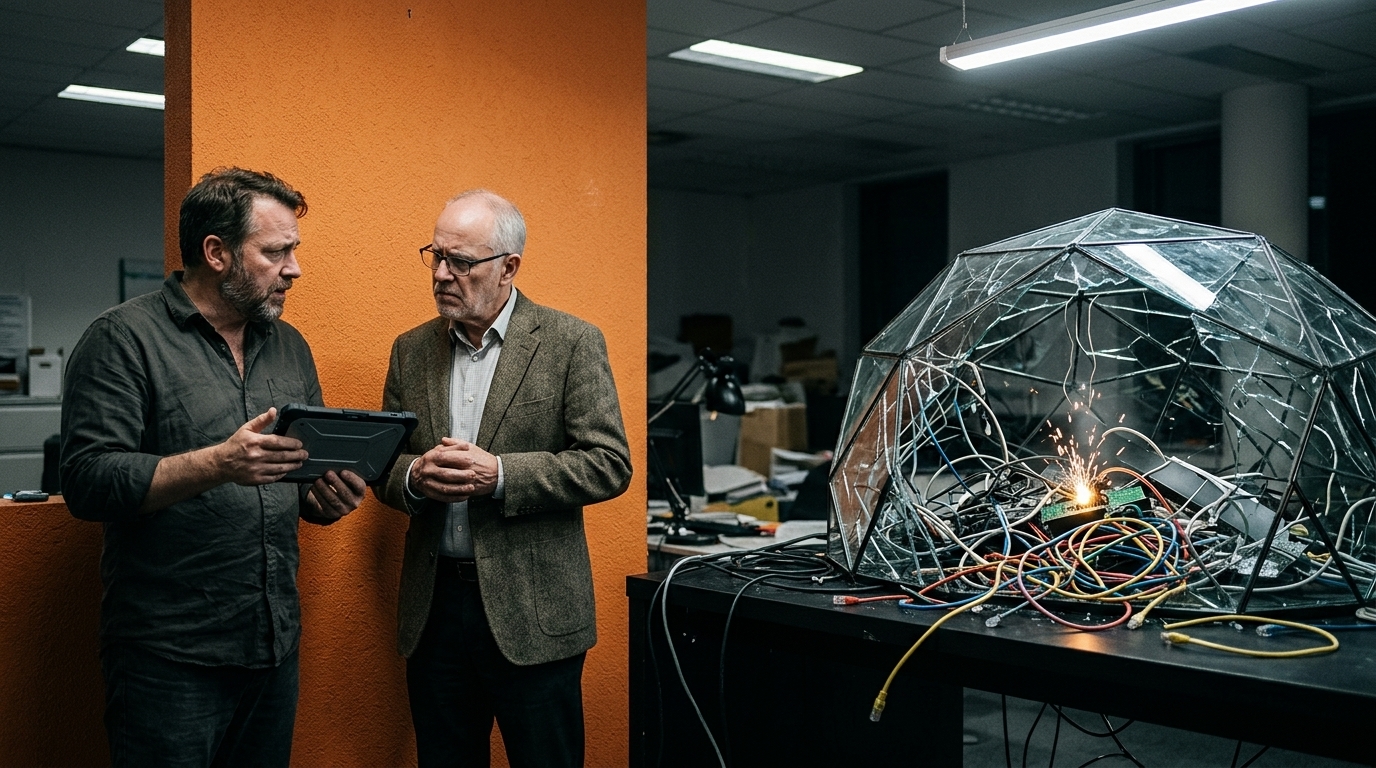
In an era where digital innovation promised to streamline hiring, Artificial Intelligence (AI) appears to have created an unexpected trust gap between employers and candidates. A recent report from Vietnam.vn highlights a global trend: employers are feeling frustrated and deceived as a growing percentage of job seekers leverage tools like ChatGPT to complete technical assessments, draft cover letters, and ace psychometric tests. What was once considered 'assistance' has devolved into an arms race that threatens to render traditional recruitment methods obsolete.
The Erosion of Authenticity
The problem extends far beyond simple text copying. Employers report that candidates are now using sophisticated AI models to solve complex programming problems in real-time during online assessments, or even to simulate their personality in tests designed to measure cultural fit. The result is a flood of 'perfect' candidates on paper who, when required to perform in real-world conditions without digital support, fail miserably.
According to labor market analysts, the use of AI in applications has led to a 'homogenization' of qualifications. When all candidates use the same algorithms to optimize their resumes, the ability of recruiters to distinguish genuine talent from algorithmic excellence is neutralized. This situation creates massive costs for businesses, which waste hundreds of hours interviewing individuals who do not possess the skills they initially presented.
Candidate Backlash: 'Fighting Fire with Fire'
However, the candidate perspective offers a different narrative. Many argue that using AI is a necessary response to the Applicant Tracking Systems (ATS) that companies have employed for years. These systems often automatically reject resumes that lack specific keywords, frequently without any human intervention. 'If the company uses robots to reject me, I will use robots to pass their filter,' is a common sentiment found on forums like Reddit and LinkedIn.
"We are at a point where technology no longer facilitates connection but acts as a veil hiding human capability and corporate reality."
The use of AI has also raised ethical questions. Is it 'cheating' to use an LLM to draft an email, or is it simply 'efficiency'? For many employers, the line is clear when it comes to technical skills. If a developer uses AI to pass a coding test but cannot fix a bug under pressure without it, then the hire is doomed to fail.
Return to the 'Analog' Future
Faced with this phenomenon, many companies are beginning to shift their strategies. There is a noticeable move back toward in-person interviews and 'whiteboarding' sessions, where candidates must think and solve problems in front of evaluators without internet access. Other firms are investing in AI detection software, though these tools often prove inaccurate, leading to false accusations against honest candidates.
The future of recruitment seems to demand a radical reassessment of what we define as a 'skill.' In a world where AI can generate code and text, critical thinking, emotional intelligence, and collaborative ability become the only true differentiators. Employers who will thrive in this new reality are those who stop looking for the 'perfect answer' and start looking for the 'human process' behind it.
Implications for the Global Workforce
As the barrier to entry for high-quality application materials drops to near zero, the value of those materials also plummets. We are witnessing the 'Dead Internet Theory' applied to HR: a loop where AI-generated resumes are screened by AI-powered filters, resulting in a process devoid of human essence. To break this cycle, both parties must return to a social contract based on transparency. Candidates must disclose AI use, and employers must humanize the filtering process, ensuring that talent is not lost in a sea of synthetic perfection.