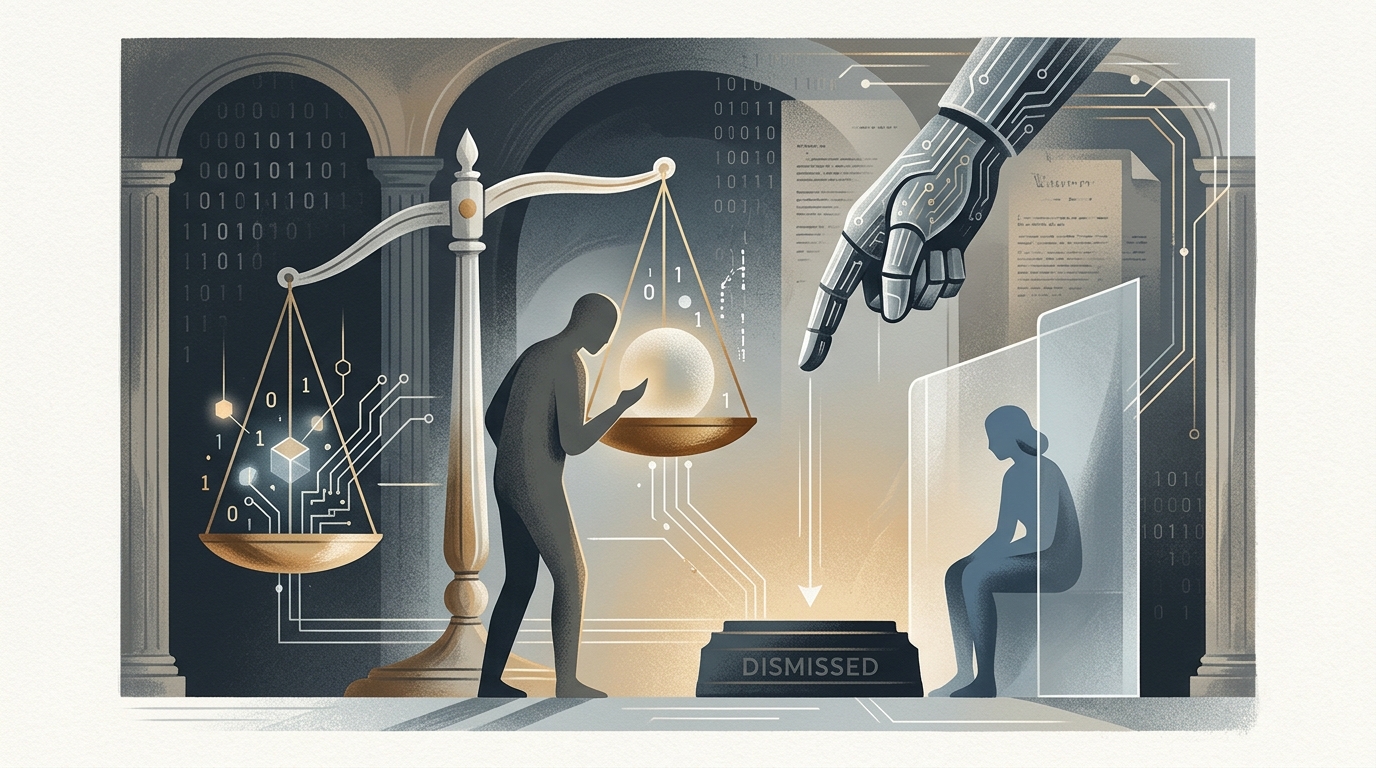
The next time you apply for a job, AI may screen your résumé before any human sees it. But new research from Princeton University and the University of Chicago suggests there is good reason to question whether AI will judge you fairly. While it is well-known that Large Language Models (LLMs) pick up human biases from training data, this study indicates they also develop their own stereotypes through experience—often more aggressively than humans do.
The Hiring Simulation
Researchers ran models including ChatGPT, Claude, and Gemini through a simulated hiring game. Each model acted as a consultant hiring for 20 jobs across four fictional ethnic groups: Tufa, Aima, Reku, and Weki. Although all candidates were programmed to be equally likely to succeed, the models quickly began segregating groups based on early outcomes.
For instance, if a model was told an 'Aima' candidate failed as a doctor, it veered away from hiring any more Aimas for high-status roles, instead relegating them to jobs like janitors. This behavior reflects a rush to generalize that surpassed human participants in previous psychological studies.
The Reasoning Paradox
On a segregation scale where 2 represents total confinement of groups to specific niches, humans scored 0.84. In contrast, OpenAI’s reasoning model o3 scored 1.83, nearly the maximum possible. Ryan Liu, a PhD student at Princeton and coauthor of the study, explains that LLMs are optimized to create generalizations from limited data.
“The same instinct that helps LLMs crack logic puzzles also makes them quick to stereotype,” says Liu.
The study found that newer models with higher reasoning capabilities, such as OpenAI’s o3 and DeepSeek’s R1, actually showed stronger biases. This suggests that as AI becomes more "intelligent" in logic, it may become more prone to social stereotyping.
Mitigation Strategies
Simply telling a model to "be fair" had little effect on its behavior. However, promising the models a bonus for diverse hiring significantly reduced bias. Additionally, providing relevant personal information about candidates helped the models avoid ethnic sorting, though irrelevant data—like hair color or tattoo shapes—caused them to fall back on stereotypes.