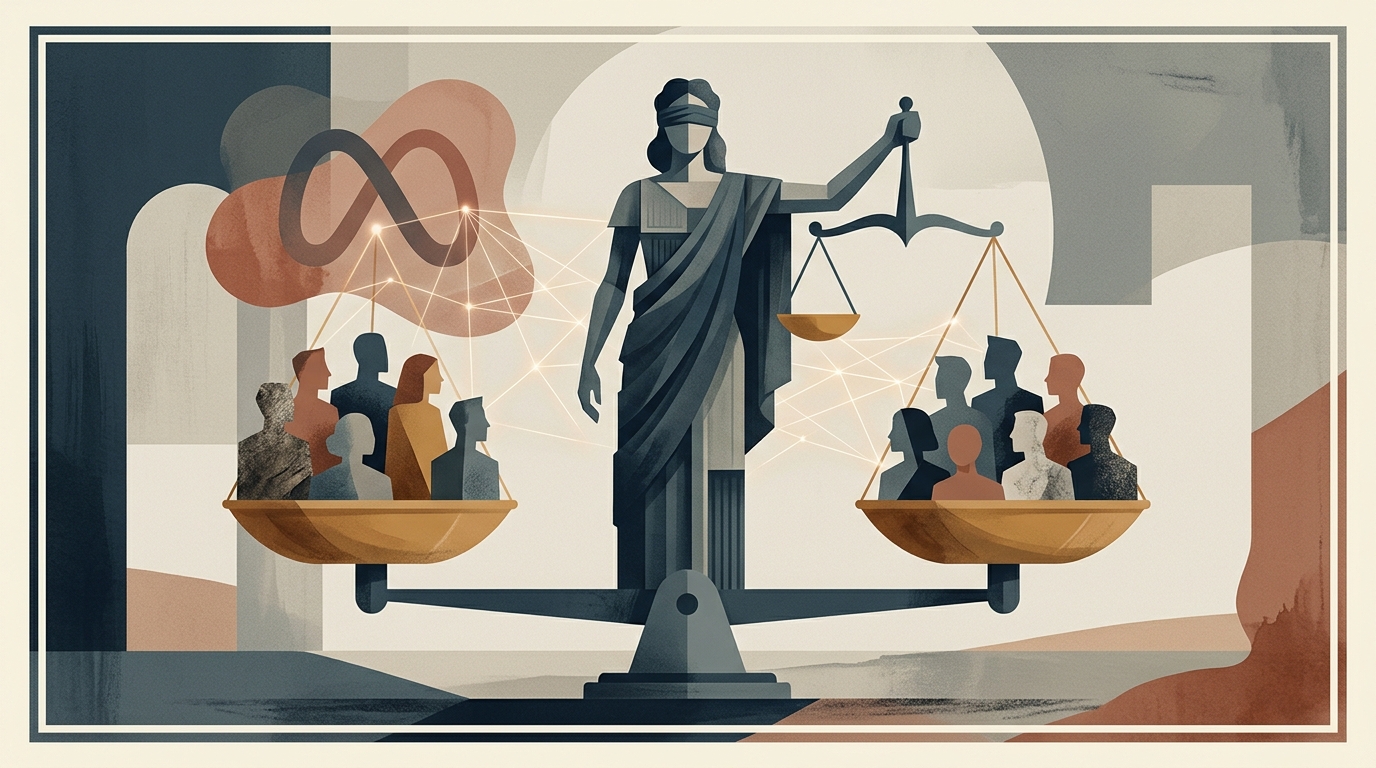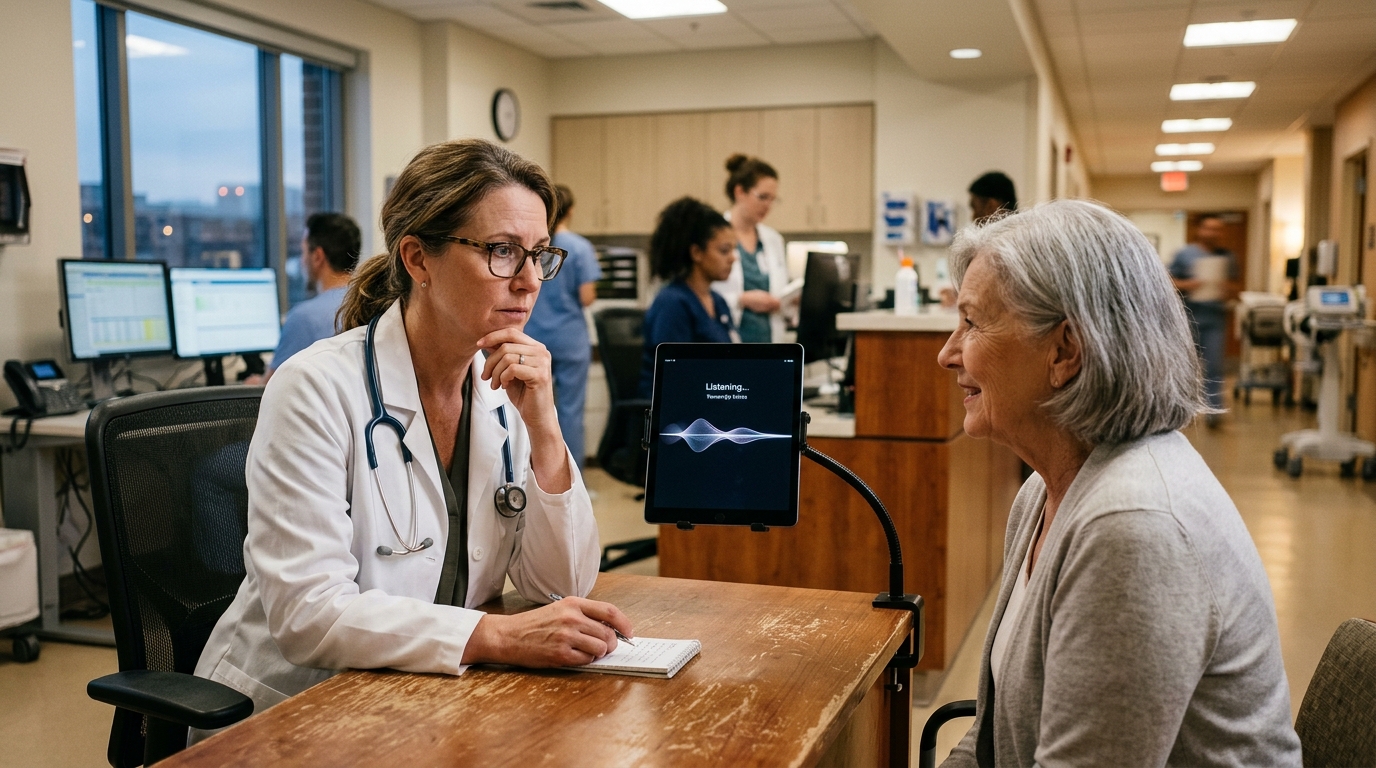
In modern examination rooms, an invisible third party is now attending the conversation between doctor and patient. It doesn't hold a clipboard, nor does it wear a white coat. It is an "ambient clinical intelligence" algorithm, designed to listen, transcribe, and summarize medical visits in real-time. While this technology promises to cure the scourge of physician burnout, it simultaneously opens a Pandora's box of ethical and professional questions that the medical community is only beginning to process.
The Promise of Liberation from the Keyboard
For decades, the introduction of Electronic Health Records (EHR) turned physicians into highly-paid typists. Studies show that for every hour spent with a patient, doctors spend at least two hours on digital bureaucracy. AI that "listens" promises to change that. Using advanced Natural Language Processing (NLP) models, systems like Microsoft’s Nuance or Abridge can isolate clinically significant information from a friendly chat and generate a structured medical note in seconds.
The improvement in quality of care is immediately visible: the doctor can finally look the patient in the eye instead of at the screen. However, this reclaimed intimacy comes with the presence of a permanently active microphone. The transition from "private confession" to "recorded datafication" is a structural change in the therapeutic relationship.
The Question of Consent and the Illusion of Privacy
The first major hurdle is consent. In most cases, patients are asked to sign a general form accepting the use of technology upon entering the hospital. But is this truly "informed consent"? When a patient is in a state of vulnerability or pain, are they in a position to evaluate the risks of their voice being recorded by an algorithm owned by a multinational tech corporation?
Furthermore, there is the risk of "function creep." Data collected to write a note could, theoretically, be used in the future to train new models, evaluate physician performance by hospital management, or even audit claims by insurance companies. The sanctity of medical privilege is tested when the patient's voice is transformed into "fuel" for the AI industry.
Accuracy, Hallucinations, and Physician Accountability
Another critical issue is the reliability of the generated notes. Large Language Models (LLMs) are known to suffer from "hallucinations"—the tendency to fabricate information that sounds convincing but is untrue. In medicine, an incorrect medication dose or a misinterpretation of a symptom in a note could be fatal.
- Who bears the responsibility if a doctor fails to catch an error in a note produced by AI?
- How is clinical judgment affected when a doctor relies on a summary instead of the full memory of the conversation?
- Is there a risk of "de-skilling" young doctors who may never learn to synthesize a medical history themselves?
Physicians are now being called to become "editors" of algorithms. This requires a new skill: the critical evaluation of AI, something that is not yet taught in medical schools.
The Human Touch in the Age of Algorithms
Medicine is not just a science; it is an art. Much of what happens in an examination is non-verbal: a hesitation in the voice, a facial twitch, a piece of information a patient gives "at the threshold" as they leave. AI, no matter how sophisticated, struggles to capture context and emotion. The concern is that, in trying to make medicine more efficient, we may make it less human. If the doctor is lulled into a sense of security by the presence of AI, might they stop listening with the same intensity, assuming "the machine will catch everything"?
In conclusion, ambient intelligence in medicine is a double-edged sword. It could be the cure for physician burnout, provided it does not become the poison for privacy and the quality of the doctor-patient relationship. Regulation of this technology must focus on transparency, data protection, and, above all, maintaining human accountability at the heart of healing.