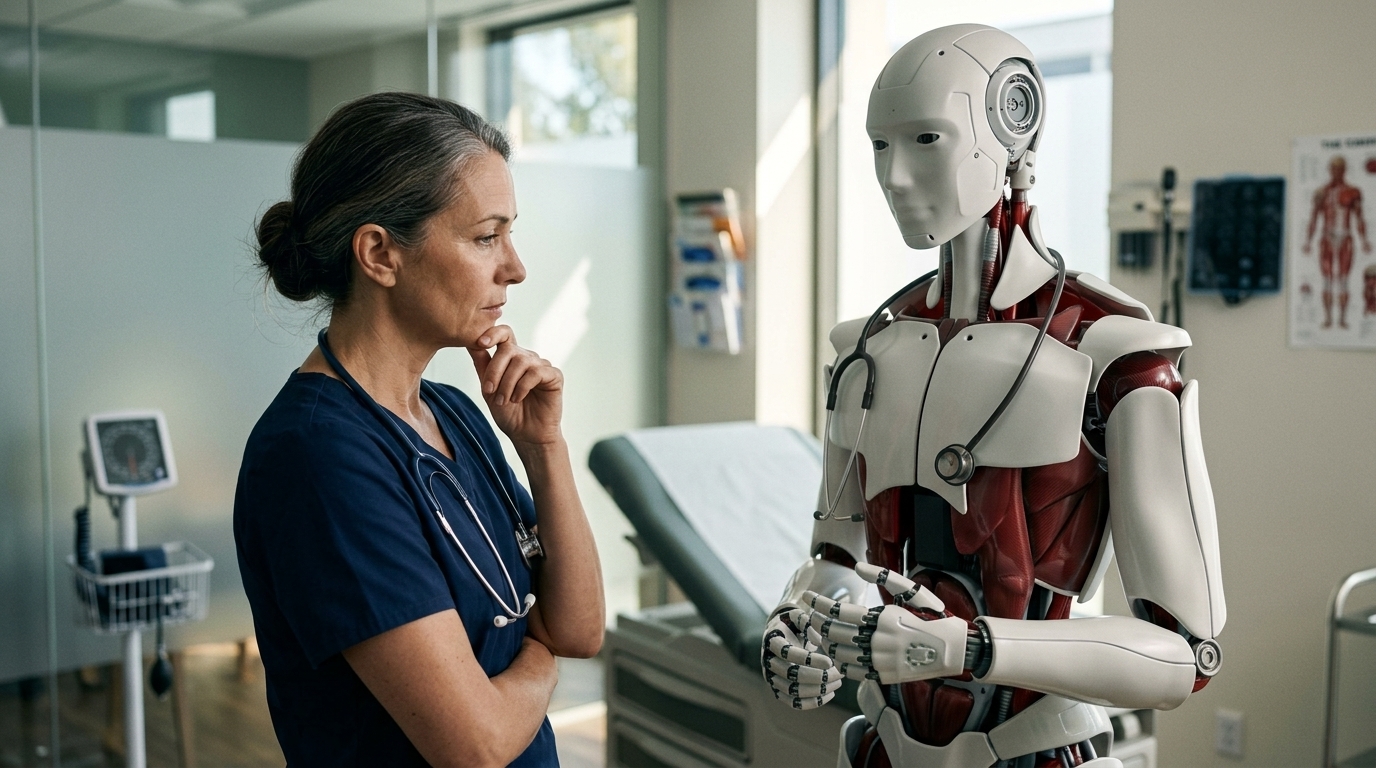
A provocative article published this month in the Journal of the American Medical Association (JAMA) is sending shockwaves through the medical community. The authors, including medical ethicist Ezekiel Emanuel and venture capitalist Vinod Khosla, pose a rhetorical question: Will autonomous AI exceed physicians as the best medical care? Their answer is an emphatic yes.
The Shift to Autonomous Care
The paper argues that medicine is rapidly approaching a transition point where AI alone will outperform humans in five core tasks: taking medical histories, establishing diagnoses, identifying necessary tests, prescribing treatments, and managing chronic diseases. Crucially, the authors suggest that "humans in the loop" may actually degrade AI performance, suggesting that clinicians should step back from these specific functions.
Emanuel, who once dismissed the idea of AI replacing core medical functions, changed his stance after witnessing the rapid advancement of large language models. The co-authors predict that by 2030, a "superior autonomous AI" will likely surpass human-AI hybrids in clinical efficacy.
Dissent and the "Doorman Fallacy"
John Whyte, CEO of the American Medical Association (AMA), has emerged as a leading dissenting voice. He argues that AI tools must be utilized within a care plan governed by a physician and points to a February 2026 Nature study showing that patients often struggle to converse effectively with AI models in real-life scenarios.
Robert Wachter of UCSF offers a different perspective through the "doorman fallacy." Just as doormen remained relevant by providing high-value services after doors became automated, doctors may pivot toward empathy, complex communication, and breaking grim news. However, the threat of "de-skilling" remains a primary concern; if residents rely on AI for every assessment, they may never develop the fundamental clinical judgment that defines the profession.
The Future of Medical Labor
While hands-on roles like surgery and emergency medicine appear safe for now, intellectual medical expertise is becoming increasingly automated. Bill Gates has suggested designating certain tasks as "human-reserved" to prevent economic disruption, though such measures may face resistance from corporate interests focused on efficiency and ROI.