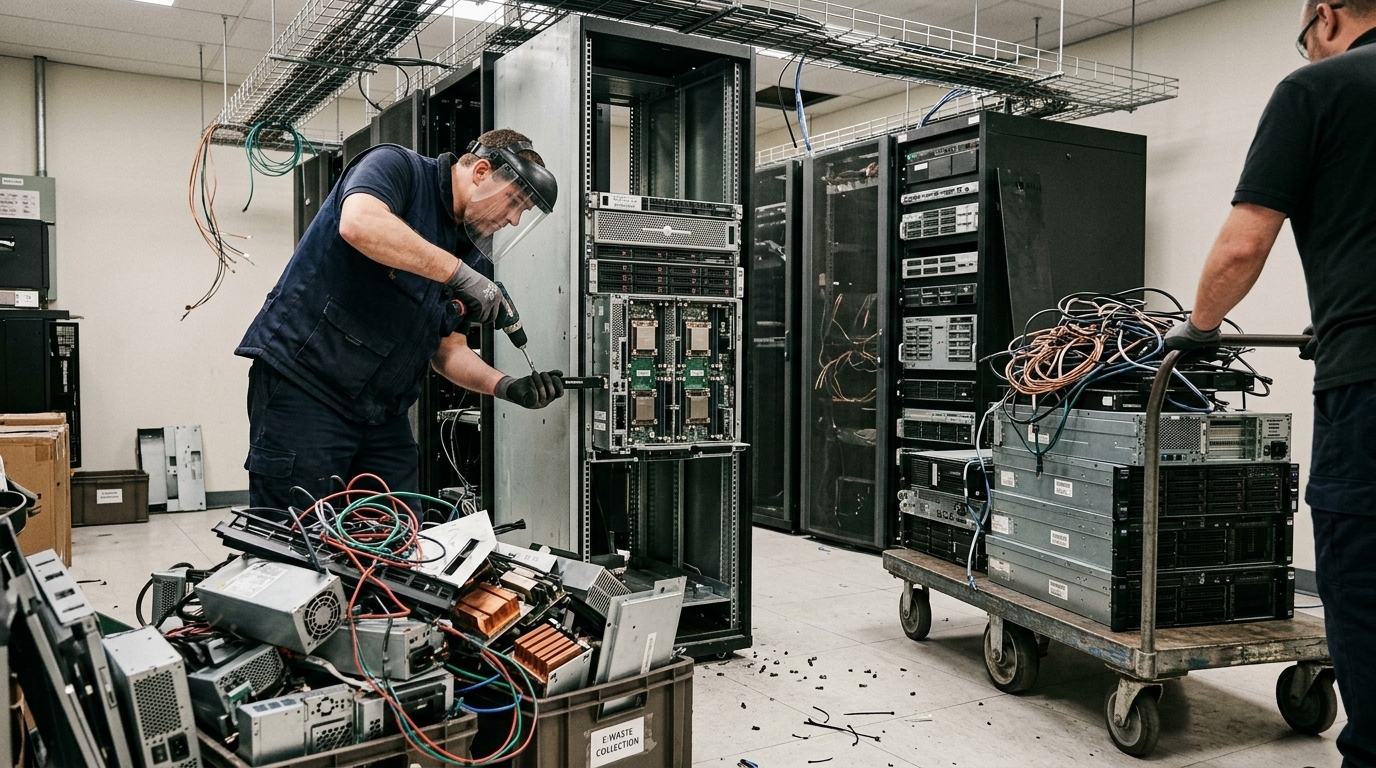
Artificial intelligence may feel weightless, but every model depends on an enormous amount of highly specialized hardware. A new report from the nonprofit Basel Action Network (BAN) warns that e-waste from the AI boom has been vastly underestimated. By 2050, it could generate enough trash to fill 23 million shipping containers — enough to circle the globe six times if lined up in a row.
The Hidden Infrastructure of Data Centers
The report offers a significantly higher estimate than previous studies because it factors in the entire infrastructure required to support servers. This includes power distribution systems, cooling units, backup power, and networking equipment. Jim Puckett, founder and chief of strategic direction at BAN, stated that without proper planning, today's AI buildout could become a "cataclysmic toxic waste crisis."
- BAN predicts global e-waste will triple to 211 million metric tons annually by 2050.
- AI is expected to account for 15 to 20 percent of that total garbage.
- Previous estimates focused only on servers and GPUs, missing about 87 percent of a data center’s electro-mechanical infrastructure.
Human Impact and "AI Waste Contagion"
The report introduces the concept of "AI Waste Contagion," a category covering telecommunications infrastructure and personal devices likely to become obsolete earlier due to AI advances. The environmental and human cost is already visible; less than a quarter of the 68.3 million tons of e-waste created annually is formally recycled. The US, which hosts more data centers than any other nation, has yet to ratify the Basel Convention. Consequently, American e-waste often ends up in "backyard recycling" operations abroad, where the World Health Organization warns that children face severe health threats from exposure to toxic materials like lead and chromium.