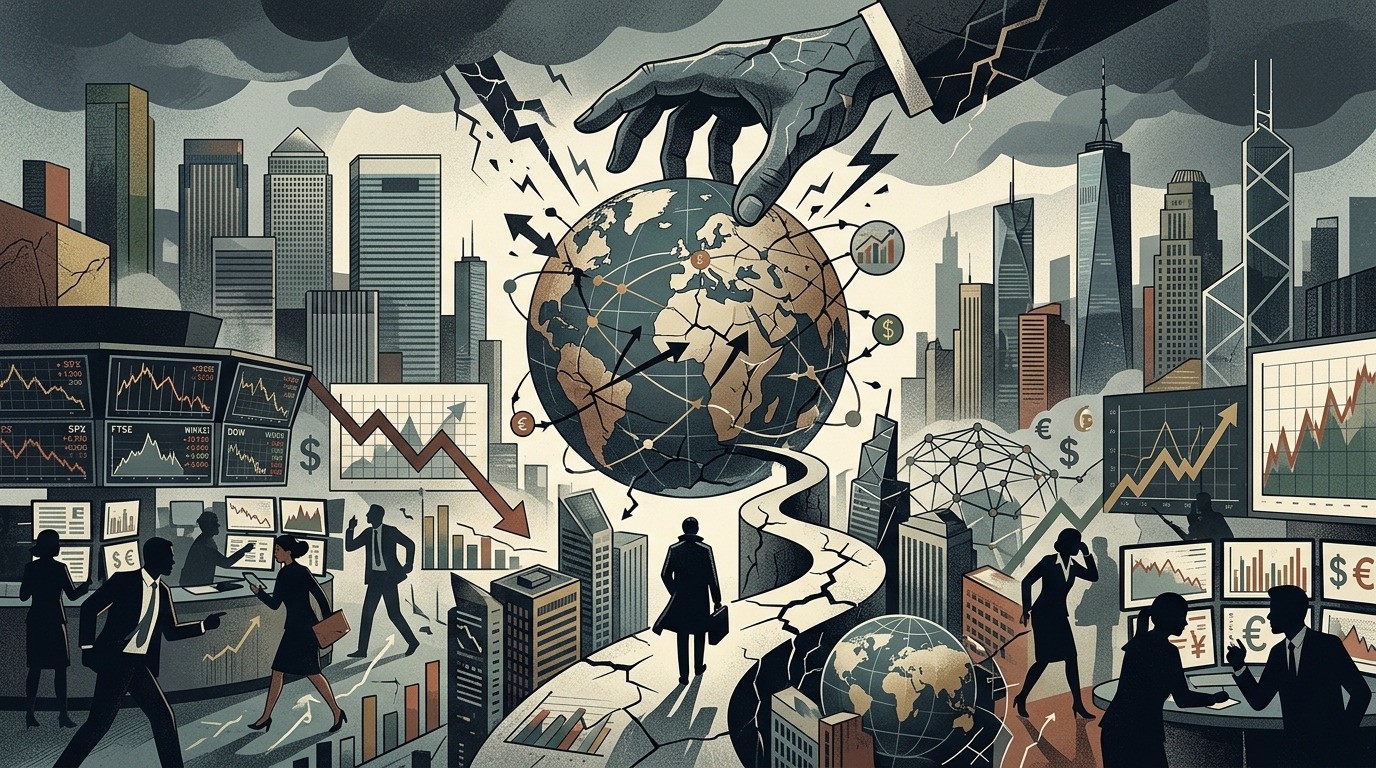
Despite successive crises and negative supply shocks in recent years, the global economy and stock markets have demonstrated unexpected resilience. Following the turbulence of US tariffs in the spring of 2025 and the energy shock triggered by conflict in Iran—the most severe since the 1970s—global growth in 2025 remained at 3.5%. Economist Nouriel Roubini analyzes the factors that averted a recession, forecasting a recovery to 3.4% by 2027.
The Four Pillars of Economic Resilience
According to Roubini, the avoidance of a generalized recession rested on four key mechanisms:
- Market Reaction: The spike in US tariffs to 21.5% in April 2025 caused such market instability that it forced a policy reversal and negotiations, bringing the average rate down to 9.6%.
- Supply Adaptability: The entry of new energy producers and the release of strategic reserves, particularly by China, mitigated the impact of high prices.
- Policy Support: Fiscal and monetary easing in 2025 provided a necessary safety net when growth was threatened.
- The AI Boom: The positive supply shock from AI investments is the most significant pillar, with the US and China leading a global spillover of capital expenditure.
Risks on the Horizon
Despite the optimism, geopolitical tensions remain a major concern. Restrictions in the Strait of Hormuz keep oil prices above $100 per barrel, while Sino-American frictions over Taiwan and the escalation in Ukraine sustain uncertainty. Furthermore, rising public debt and a potential sharp correction in the AI market could overturn the base-case scenario, placing central banks before difficult dilemmas regarding interest rates and financial stability.