Wall Street finds itself at a critical juncture once again, with investors' eyes firmly fixed on the movements of the U.S. Federal Reserve (Fed). Despite hopes for a steady path toward lower borrowing costs, recent macroeconomic data from June 2026 suggests that inflation remains a "Hydra" that refuses to be fully tamed. This uncertainty has sent tremors through the markets, as the scenario of another interest rate hike—which many considered unlikely at the beginning of the year—is making a strong comeback to the discussion table.
The Persistence of Inflation and Energy Costs
The primary reason for the change in sentiment is the unexpected resilience of core inflation. While goods prices have stabilized, the services sector and rising energy costs—fueled by massive demand for Artificial Intelligence data centers—continue to exert upward pressure. The Fed, under the leadership of Jerome Powell, has made it clear that its mandate for price stability is non-negotiable, even if it means curbing economic growth.
Analysts point out that the labor market remains "tight," with unemployment hovering at historically low levels. This creates a vicious cycle of wage increases, which in turn fuel consumption and inflation. For investors, this translates into a simple but painful reality: interest rates will remain "higher for longer," upending strategies that relied on cheap money.
Market Reaction and the Role of Technology
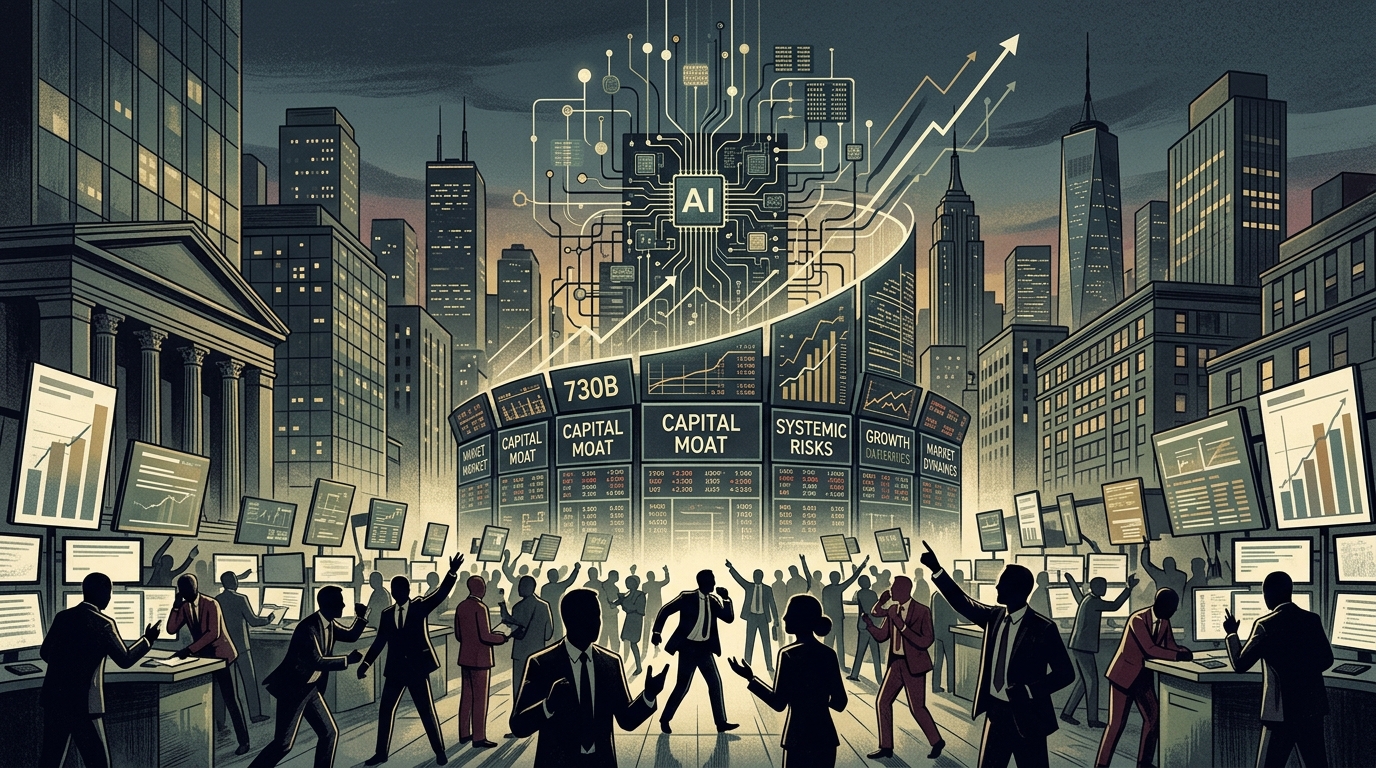
Wall Street's reaction was immediate. The S&P 500 and Nasdaq indices have shown significant volatility in recent weeks, as growth stocks are particularly sensitive to interest rate changes. However, there is a notable divergence: the tech giants leading the AI revolution seem to be resisting the pressure, as their profitability remains robust.
"We are no longer in a market where a rising tide lifts all boats. Now, liquidity is selective, and the Fed is the sole referee of the game," says a leading analyst from Goldman Sachs.
Investor strategy is now shifting toward "quality." They are seeking companies with strong cash flows and low debt that can withstand the increased cost of capital. At the same time, the bond market is sending distress signals, with 10-year U.S. Treasury yields approaching levels not seen since the 2008 crisis, drawing capital away from equities.
Geopolitical Implications and the International Context
U.S. monetary policy does not just affect Wall Street; it has a global impact. A strong dollar, a result of high interest rates, puts pressure on emerging economies and complicates the work of the European Central Bank (ECB). If the Fed proceeds with a new hike, the ECB will face the dilemma of following suit—risking a recession in Europe—or letting the euro depreciate, thereby importing more inflation.
In this environment, geopolitical uncertainty in Eastern Europe and the Middle East adds another layer of complexity. Supply chain disruptions remain a real threat, capable of overturning any forecast for price reduction. Wall Street, therefore, is not just watching the charts but also diplomatic moves on a global scale.
Conclusions and Outlook
As we head into the second half of 2026, the keyword is "patience." The Fed has made it clear that its decisions will be entirely data-dependent. For investors, this means that every announcement regarding the Consumer Price Index (CPI) or job reports will be treated as a high-stakes event, capable of triggering violent reactions in asset prices.
The next Fed meeting will be decisive. If the signals remain hawkish, Wall Street may need to adjust to a new reality where growth is no longer the only objective, but survival in a restrictive policy environment. The market's ability to absorb these shocks will determine whether 2026 ends on a positive note or marks the beginning of a broader correction.