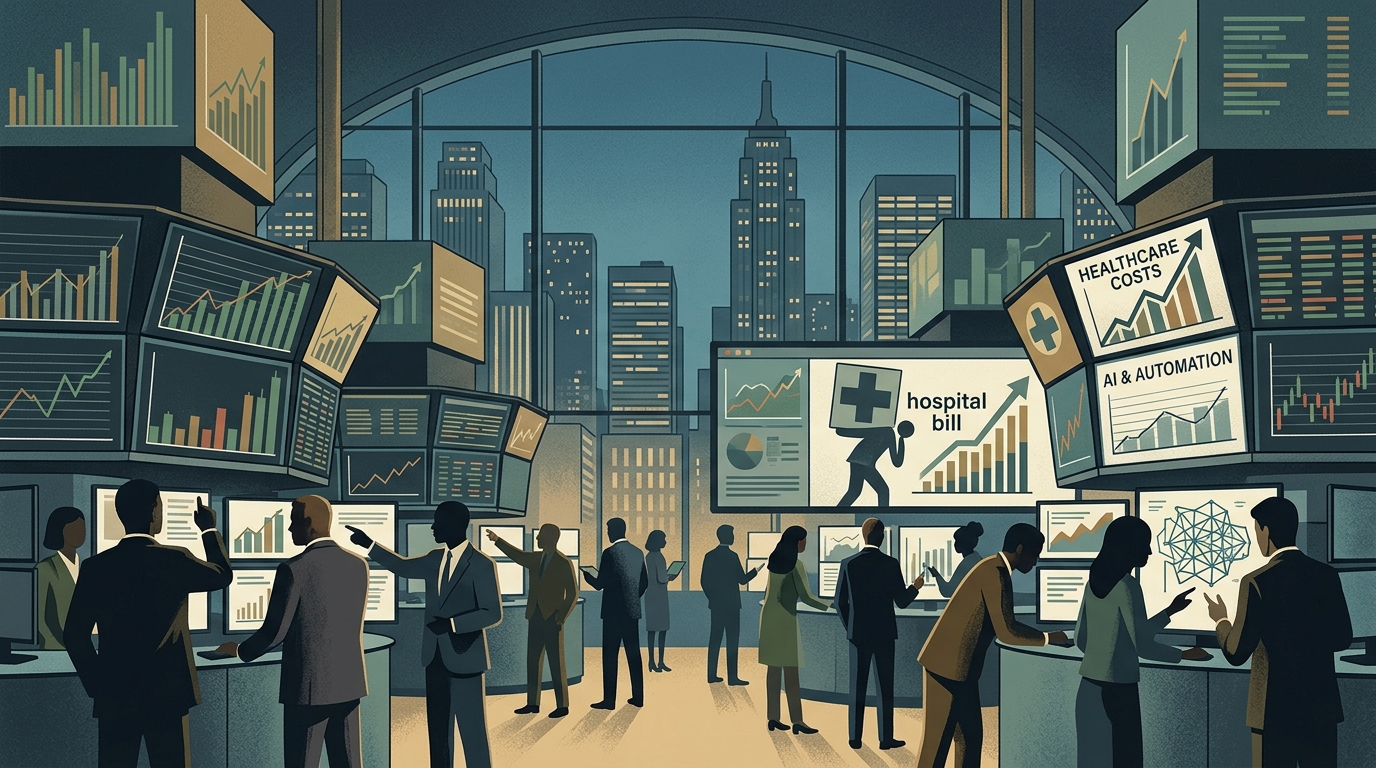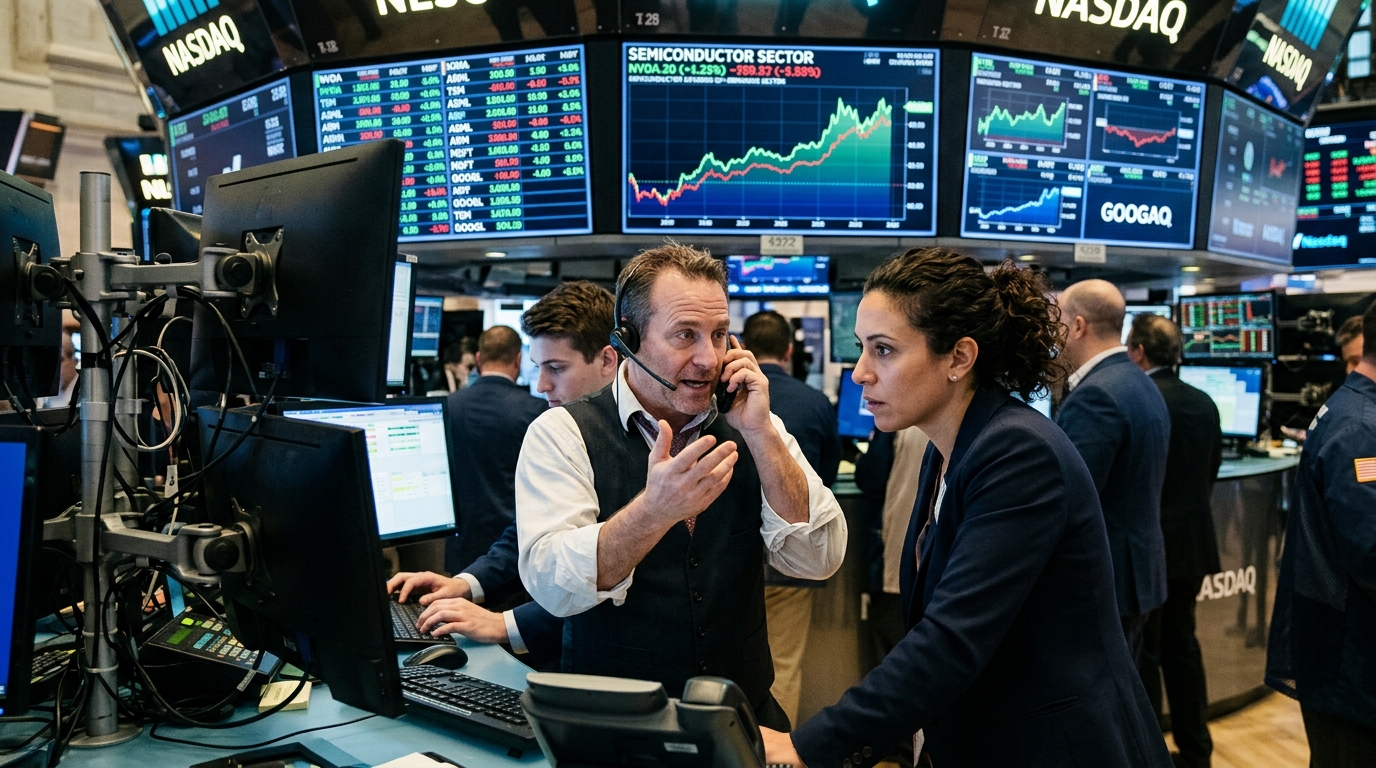
The history of financial markets is often a tale of cycles, but what we are witnessing in the summer of 2026 on Wall Street seems to transcend traditional cyclical boundaries. Artificial Intelligence (AI), which many were quick to label a passing "bubble" just a year ago, has returned with a vengeance, fueling an impressive rally in the Nasdaq technology index and placing semiconductors back at the heart of investor interest. The recent surge is not merely a reaction to positive corporate earnings, but a confirmation that AI infrastructure has become the backbone of the global economy.
The Semiconductor Dominance: The New 'Digital Oil'
Semiconductors have long ceased to be viewed as mere computer components. In today's market, they are treated as the new oil—the resource that powers the engines of productivity. Nvidia, AMD, and Broadcom continue to deliver performances that defy analyst forecasts. The demand for next-generation chips, capable of training increasingly complex Large Language Models (LLMs), remains insatiable. Investors observe that tech giants (Hyperscalers) like Microsoft, Google, and Meta show no signs of slowing down their capital expenditures (Capex).
This continuous flow of capital toward AI hardware creates a spillover effect. When semiconductors rise, they pull the entire ecosystem of data centers, energy providers, and networking equipment manufacturers along with them. Wall Street now understands that the transition to AI is not a one-time event but a structural shift requiring constant upgrades and maintenance, guaranteeing long-term revenue for industry players.
Nasdaq and the Psychology of Growth
The Nasdaq, the traditional index of technological innovation, has evolved into a barometer of AI confidence. The recent rally reflects a shift in market psychology: initial uncertainty regarding the profitability of AI applications is giving way to the realization that this technology is essential for any business's survival. Analysts point out that despite high valuations, the P/E (price-to-earnings) ratios of many tech giants are justified by their earnings growth rates, which remain in double digits.
Furthermore, the macroeconomic environment of 2026 appears to favor this trend. With inflation showing signs of stabilization and central banks adopting a more predictable stance on interest rates, capital is once again seeking growth. Currently, the most compelling growth story in the world is the digitalization of everything through Artificial Intelligence. The market is no longer just investing in the promise of AI, but in the tangible benefits companies are reaping from automation and data analytics.
Challenges and Geopolitical Balances
Despite the euphoria, the road is not without obstacles. Wall Street is closely monitoring geopolitical developments, particularly U.S.-China relations and technology export controls. The semiconductor supply chain remains vulnerable to political tensions, and any disruption in Taiwan could cause a shock to the markets. However, current dynamics suggest the market is willing to "buy the news" and overlook risks, focusing instead on long-term value.
"We are not in a simple bubble, but in a period of re-evaluating the value of information," says a leading analyst at Goldman Sachs. "Companies that control computing power control the future of productivity."
In conclusion, the return of AI as the primary driver of Wall Street marks a new phase in the global economy. The Nasdaq and semiconductors are no longer just indices but the engines of a revolution transforming how we produce, consume, and invest. For investors, the challenge remains distinguishing between true winners and those merely riding the wave in a market that does not forgive a lack of innovation.