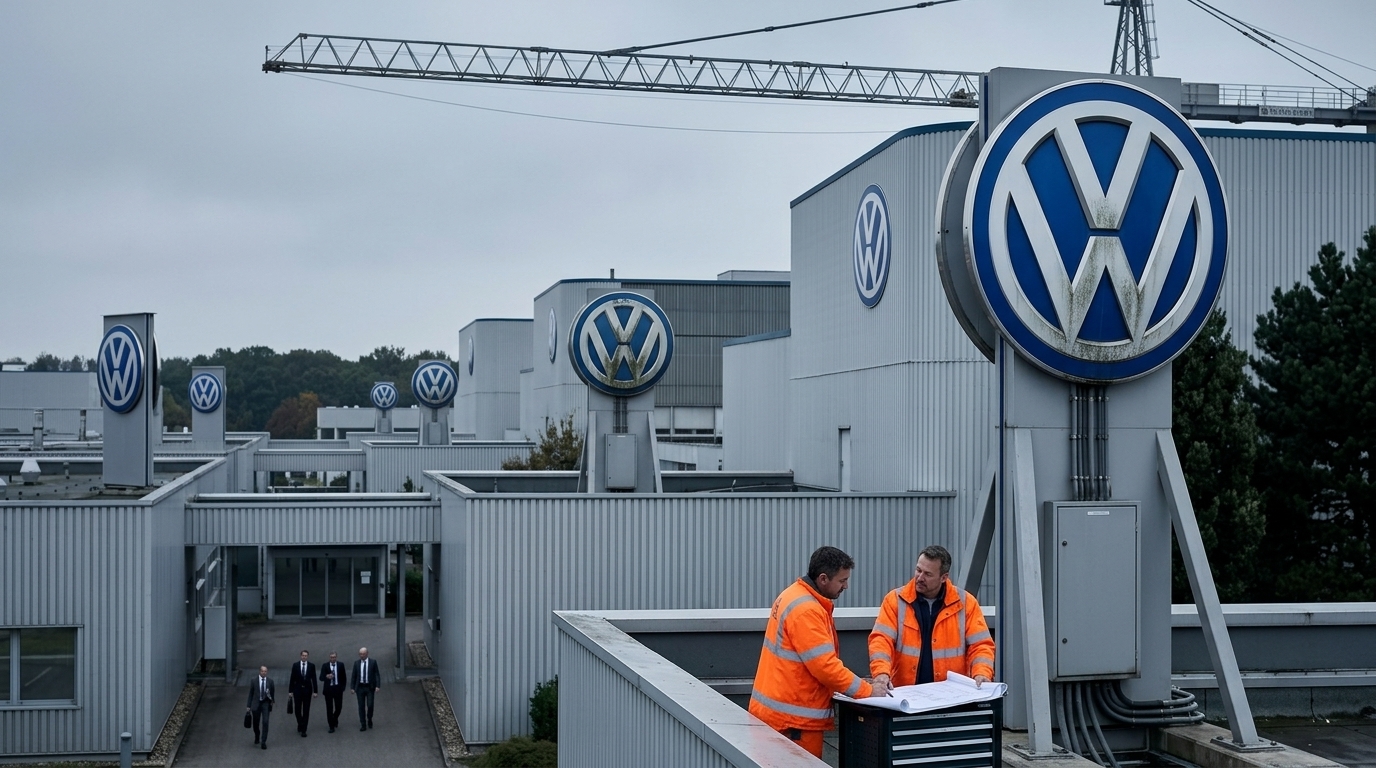
The news struck the heart of European industry like a thunderbolt, though not an entirely unexpected one. Volkswagen, the behemoth that for decades symbolized the German economic miracle (Wirtschaftswunder), is accelerating its restructuring program with a staggering goal: the departure of at least 28,000 employees by 2030. This is not merely a corporate decision; it is an admission that the old manufacturing model in Europe is reaching its breaking point.
The Strategy of 'Voluntary' Contraction
According to the latest reports from Wolfsburg, VW management has already secured agreements for the majority of these departures. The method is not mass layoffs in the traditional sense—which would trigger a social explosion in Germany—but a complex blend of early retirements, voluntary buyout programs, and the non-replacement of staff who leave naturally. The cost of this operation is immense, but VW considers it the necessary price to achieve its goal of saving approximately €10 billion annually.
Pressure is mounting from two fronts. On one hand, energy costs in Germany remain at levels that make factories in Lower Saxony less competitive compared to those in Asia or the US. On the other, the transition to electromobility requires fewer physical hands but more software engineers—a skill set VW has struggled to integrate through its troubled subsidiary, CARIAD.
The Chinese Dragon and the Loss of Primacy
Perhaps the most significant factor behind these dramatic moves is China. For decades, China was Volkswagen's "money printing machine." Today, the situation has flipped. Domestic players like BYD and Xiaomi are not just producing cheaper electric vehicles; they are offering software technology that German engineers are struggling to match. Falling sales in the Chinese market have forced VW to re-evaluate its entire cost structure.
- Reducing development time for new models from 50 to 36 months.
- Cutting administrative costs by 20%.
- Focusing on profit margins rather than sales volume.
The German government is watching with bated breath. Volkswagen is not just a company; it is the nation's largest employer and the backbone of its middle class. Every job lost in Wolfsburg has a multiplier effect on thousands of suppliers across Europe, including firms in peripheral economies that support the automotive supply chain.
A Social Contract Under Strain
IG Metall, Europe's most powerful labor union, is walking a tightrope. On one hand, it must protect workers; on the other, it recognizes that if the company fails to modernize, everyone’s future is at risk. The agreement for 28,000 departures is a bittersweet victory: forced redundancies were avoided, but the "deindustrialization" of Germany, however managed, is now an undeniable reality.
"We cannot continue to produce with yesterday's costs in a market that demands tomorrow's prices," a senior executive remarked, highlighting the existential dilemma facing the European auto industry.
In conclusion, Volkswagen is attempting a Herculean task: changing the engine while the plane is in flight. The success of this program will determine not only the future of the brand but also whether Europe can remain a global industrial power in the age of AI and green energy.