

It is mid-2026, and the discourse surrounding Artificial Intelligence (AI) has shifted from the awe-inspiring capabilities of chatbots to the cold reality of balance sheets and unemployment rates. The promise of a new era of abundance is clashing with the challenges of social unrest and wealth concentration. The economic impact of AI is no longer a future projection; it is a daily variable determining the fate of nations and corporations alike.
The Good: A Productivity Renaissance
The positive side of the equation is undeniable. For the first time after decades of stagnation, developed economies are witnessing a substantial rise in labor productivity. AI is not merely replacing humans; it is acting as a force multiplier. In the healthcare sector, drug discovery that once took a decade is now achieved in eighteen months. In manufacturing, AI-driven predictive maintenance has slashed operational costs by 30%, allowing European firms to remain competitive against low-cost labor markets in Asia.
Furthermore, AI has birthed entirely new job categories. From 'algorithm ethics architects' to 'synthetic data trainers,' the labor market is undergoing a profound renewal. The democratization of knowledge is another massive gain: a junior developer in Athens can now, with AI assistance, produce senior-level code, closing the experience gap and accelerating innovation. This 'augmented labor' is driving a surge in GDP that many economists compare to the post-WWII boom.
The Bad: Middle-Class Erosion and Inequality
However, the 'bad' scenario is unfolding rapidly across global labor markets. Unlike the first industrial revolution which impacted manual labor, AI targets the heart of white-collar employment. Legal assistants, data analysts, translators, and middle-management professionals are seeing their roles shrink. The displacement is occurring at such a velocity that traditional retraining systems are failing to keep pace.
The most significant issue is the concentration of gains. While productivity rises, the fruits of this growth are not being distributed equitably. 'Big Tech' companies that control the computational infrastructure and foundation models are absorbing the lion's share of economic value. This is giving rise to a new form of 'techno-feudalism,' where other businesses pay an 'innovation tax' to the few holders of the technology, widening the chasm between the digital elite and the rest of society.
The Ugly: Systemic Risks and Social Cohesion
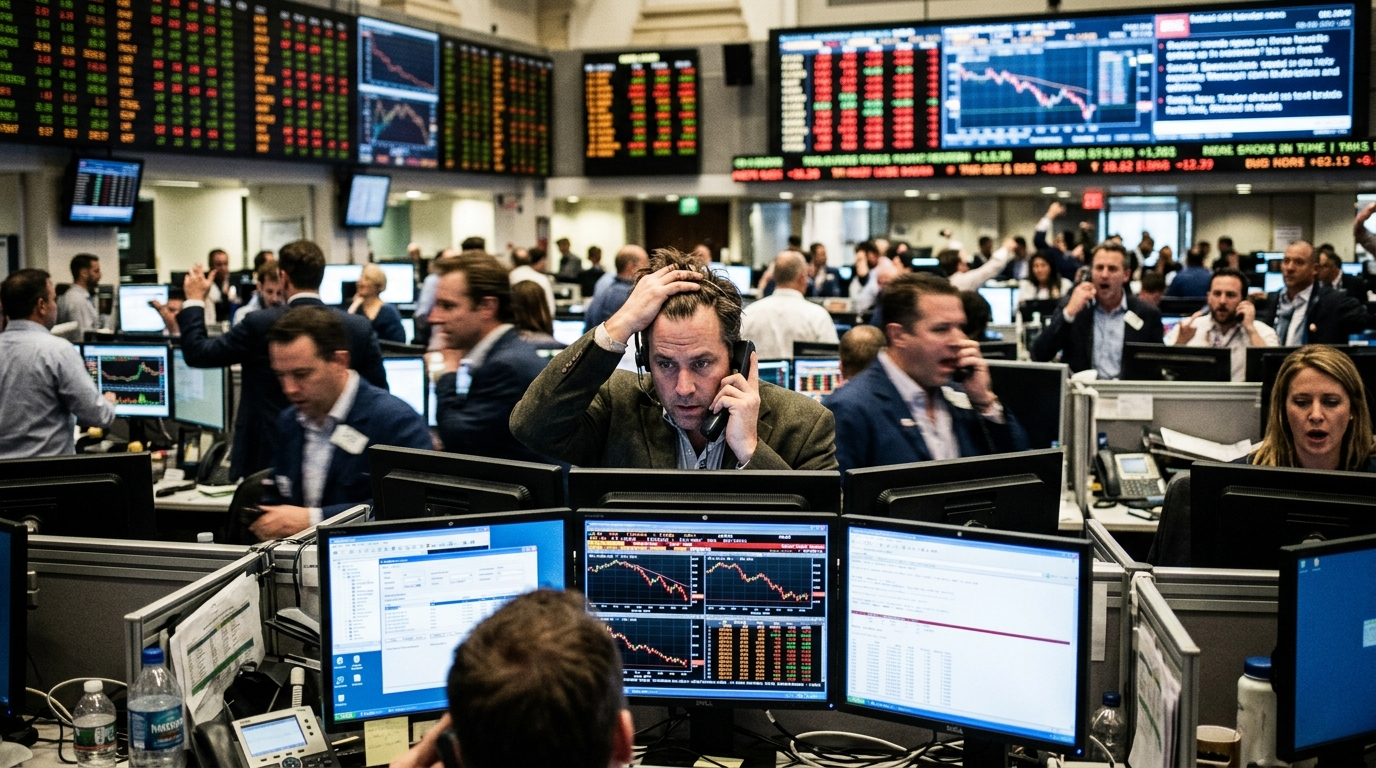
The 'ugly' aspect involves the unintended consequences of rapid integration. The global economy’s reliance on opaque algorithms has introduced new forms of systemic risk. We have already witnessed the first 'algorithmic flash crashes' in commodity markets, where AI models simultaneously reacted to deepfake news, causing artificial shortages of essential goods. The difficulty in assigning liability when an AI system makes a catastrophic financial decision remains a glaring legal vacuum.
On a social level, the perceived devaluation of human effort is fueling populist movements. If labor is no longer the primary mechanism for wealth distribution, the social contract requires a radical overhaul. Discussions regarding Universal Basic Income (UBI) are no longer utopian but imperative, as governments face the prospect of a permanently 'unemployable' class. Finally, the environmental cost is the 'ugly' truth often silenced: the energy required to train and run these massive models threatens to derail climate goals, creating a direct conflict between digital progress and ecological survival.
Conclusion: The Need for a New Political Economy
The economic impact of AI is a multi-faceted coin. For the 'good' to prevail, active intervention is required. Taxing automation rents, investing heavily in human capital, and strictly regulating data monopolies are the tools at our disposal. AI can indeed be the engine of a new golden age, provided we remember that the economy must serve humanity, and not the other way around.





