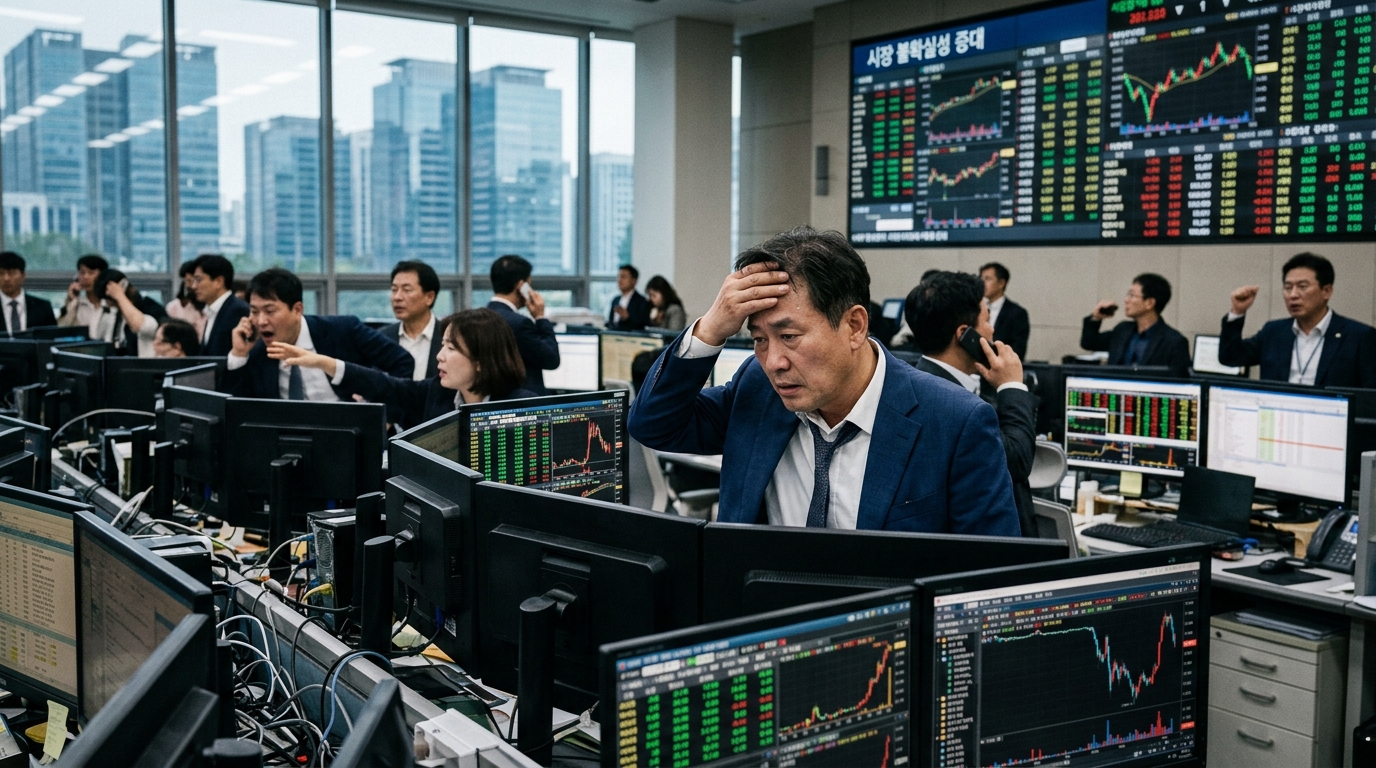
Seoul is no longer just the capital of K-Pop; it is the epicenter of a global economic experiment testing the limits of Artificial Intelligence euphoria. Over the past year, the KOSPI index and tech-related stocks have recorded a staggering 200% rise, fueled by insatiable global demand for high-end semiconductors. However, beneath the surface of prosperity, analysts and economists are beginning to discern signs of a classic bubble that threatens to burst, dragging down not only the local economy but also global confidence in the AI infrastructure sector.
The Semiconductor Duopoly and Concentration Risk
The surge in the South Korean stock market is not uniform. In fact, it is a story of two companies: Samsung Electronics and SK Hynix. These two giants control the lion's share of global High Bandwidth Memory (HBM) production, which is essential for powering Nvidia’s processors. The Korean stock market's reliance on these two stocks has reached levels that cause concern. When more than 30% of a whole market's capitalization depends on a single industry, volatility is not just possible – it is inevitable.
Investors, particularly the retail ones affectionately called "Ants" in South Korea, have jumped into the fray with a mindset reminiscent of a casino. Using high leverage and loans, they attempt to catch the next big wave of growth. This behavior creates a vicious cycle: rising prices attract more speculative capital, which in turn pushes valuations to levels not justified by economic fundamentals. Bloomberg Tech warns that this "mania" is a red flag for markets worldwide, as South Korea often acts as the "canary in the coal mine" for the global tech cycle.
The China Factor and International Competition
One of the biggest risks the market is ignoring is China's rapid progress in the memory chip sector. Despite US sanctions, Chinese companies like CXMT are investing billions to bridge the gap. If China succeeds in producing HBM at competitive prices, South Korea's monopoly will collapse, leading to a sharp drop in profit margins. Furthermore, there is the issue of the "Korea Discount" – the tendency of Korean stocks to trade at lower valuations due to corporate governance issues and geopolitical tensions with the North. The current mania has temporarily overshadowed these structural problems, but it has not solved them.
"The market is behaving as if AI demand will be linear and endless. But history teaches us that infrastructure is built in waves, and every wave is followed by a period of digestion and often a downturn," analysts in Seoul note.
Conclusion: A Warning for Wall Street
The situation in South Korea serves as a mirror for what could happen in the US and Europe. If a market so closely tied to hardware production shows signs of fatigue or extreme instability, it means that profit expectations from AI might be overly optimistic. Investors should take heed: a 200% rise may look impressive on a chart, but the fall from such heights is usually steep and painful. South Korea reminds us that while technology may change the world, the laws of economic gravity remain unchanged.