

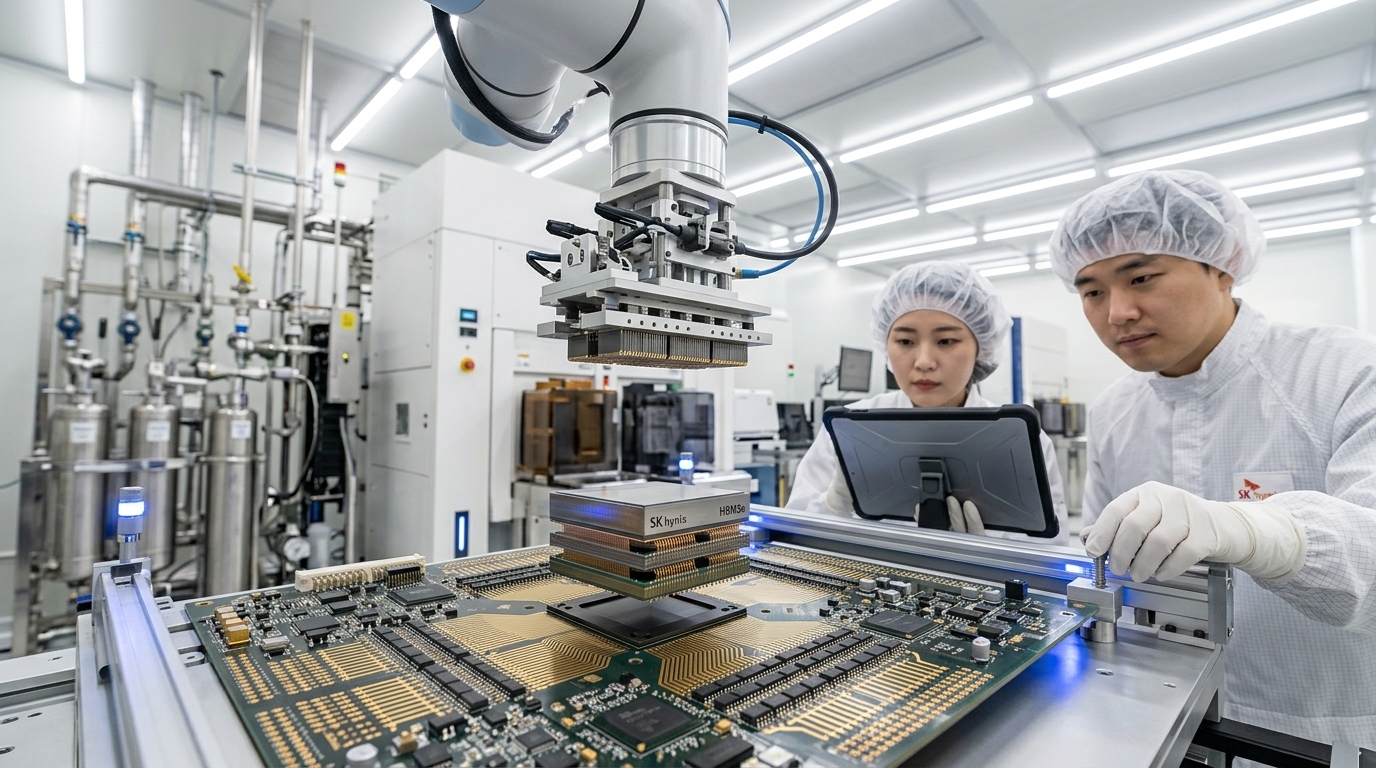
In a move that reshapes the balance of power in the global technology landscape and capital markets, South Korea's SK Hynix has made a historic debut on Wall Street, with its listing valuation reaching a staggering $26.5 billion. This move is not merely a corporate expansion; it is the definitive confirmation that the "heart" of artificial intelligence now beats to the rhythm of high-performance semiconductors.
The Dominance of HBM Memory
SK Hynix is no ordinary player. It is the primary supplier for NVIDIA, the company that has become the symbol of the AI explosion. SK Hynix's High Bandwidth Memory (HBM) chips are essential for processing the vast volumes of data required by Large Language Models (LLMs). The company's ability to mass-produce the HBM3E version and pave the way for HBM4 has given it a strategic advantage over Samsung and Micron.
The listing on the New York Stock Exchange comes at a time when demand for AI infrastructure far outstrips supply. Investors view SK Hynix as the "pyrotechnician" providing the necessary energy for NVIDIA's GPUs to function. The company's capitalization now reflects the market's conviction that the AI revolution is not a bubble, but a structural shift in the global economy.
Strategic and Geopolitical Significance
The decision to list on Wall Street has deep geopolitical implications. At a time when the US is attempting to "fortify" the semiconductor supply chain away from Chinese influence, the presence of a giant like SK Hynix on the American stock exchange strengthens the ties between Seoul and Washington. The company has already announced billions in investments for the construction of semiconductor packaging plants in Indiana, aligning with the mandates of the CHIPS Act.
- Boosting liquidity for further R&D in HBM4 technology.
- Access to a broader base of institutional investors seeking exposure to AI hardware.
- Reducing dependence on the fluctuations of South Korea's local market (Kospi).
SK Hynix CEO Kwak Noh-jung stated during the opening ceremony that the company aims to become the "total memory solution provider for the AI era." This statement highlights the transition from a commodity chip manufacturer to a specialized partner for the world's largest tech giants.
Challenges and Competition
Despite the triumph, the road ahead is not without obstacles. Samsung Electronics, the perennial rival, has begun to recover, investing heavily to close the gap in HBM technology. Simultaneously, American Micron Technology enjoys the support of the US government, creating an extremely competitive environment. SK Hynix will need to prove it can maintain high yields and technological leadership, as the semiconductor cycle is traditionally volatile.
"You aren't just buying shares in a memory company; you're buying a front-row ticket to the computing power of the future," noted a Goldman Sachs analyst.
On a macroeconomic level, SK Hynix's success on Wall Street sends a message to Asian tech firms: global dominance requires a presence in Western decision-making centers. As 2026 unfolds, the battle for who will control the "memory" of artificial intelligence will define the winners of the next decade.





