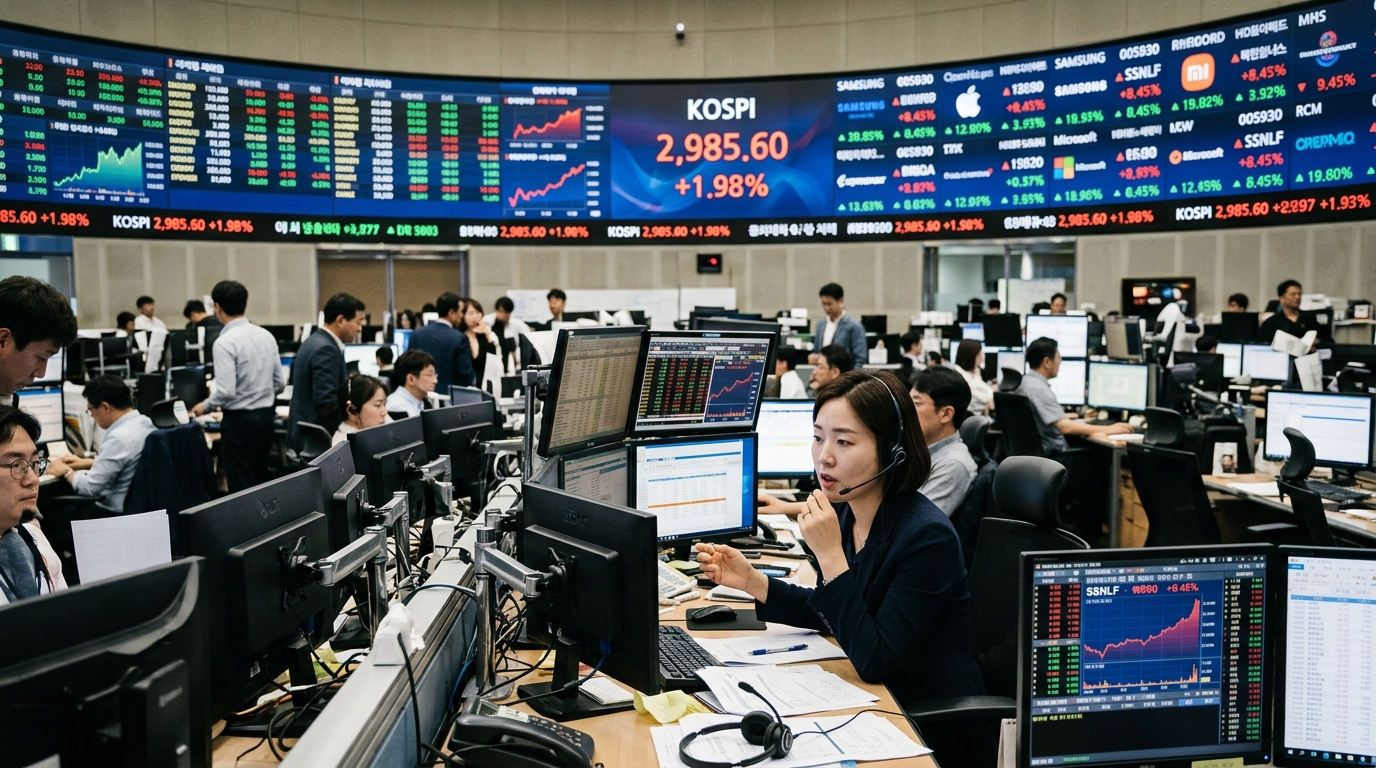
In an era where the global economy is desperately seeking firm footing, Samsung Electronics has arrived to confirm that the "AI Revolution" is not just technological noise, but an economic force reshaping the global landscape. The company’s earnings announcement for the second quarter of 2024 (with implications stretching into 2026) sent shockwaves through the markets, with operating profits jumping 1,800% compared to the same period last year.
The Semiconductor Renaissance and HBM Dominance
This spectacular rise is attributed almost entirely to the recovery of the semiconductor market and, most importantly, the explosive demand for High Bandwidth Memory (HBM) chips. These specialized chips are the "lungs" of Nvidia's AI processors, which in turn power large language models (LLMs) like GPT-5 and Claude 4.
After a difficult two-year period where oversupply had driven DRAM and NAND memory prices to historic lows, Samsung managed to turn the tide. The company's strategy to invest billions in the development of HBM3E technology, despite fierce competition from SK Hynix, is clearly paying off. Memory chip prices increased by an average of 15-20% in a single quarter as Big Tech giants rush to fortify their data centers.
The 'AI Smartphone' Factor and Consumer Demand
However, Samsung's success is not limited to components alone. The integration of artificial intelligence features into the Galaxy S24 series and its newer foldable models has created a new wave of consumer excitement. Samsung is no longer just selling phones; it is selling "personal AI assistants" that operate locally on the device (on-device AI), offering speed and privacy that competitors like Apple were slower to match.
- 12% increase in high-end device sales.
- Reduction in production costs through factory automation using AI.
- Significant improvement in profit margins for the Foundry division (manufacturing chips for third parties).
Geopolitical Chess and Future Challenges
Despite the triumph, the road ahead is not without obstacles. The ongoing US-China trade war over semiconductors forces Samsung to balance on a tightrope. On one hand, US subsidies (CHIPS Act) for its new Texas plant provide financial relief, but on the other, export restrictions to China deprive the company of one of its largest markets.
"Samsung is no longer just competing on a product level, but on a level of strategic survival within a fragmented global trade environment," says a Seoul-based market analyst.
Furthermore, rising energy and raw material prices remain a constant risk. Samsung must prove that this profit surge is not a "bubble" caused by temporary chip shortages but a sustainable path for growth. The focus on the next generation of 2nm semiconductors will be the next big bet that determines whether the company remains at the top of the technological pyramid until the end of the decade.