

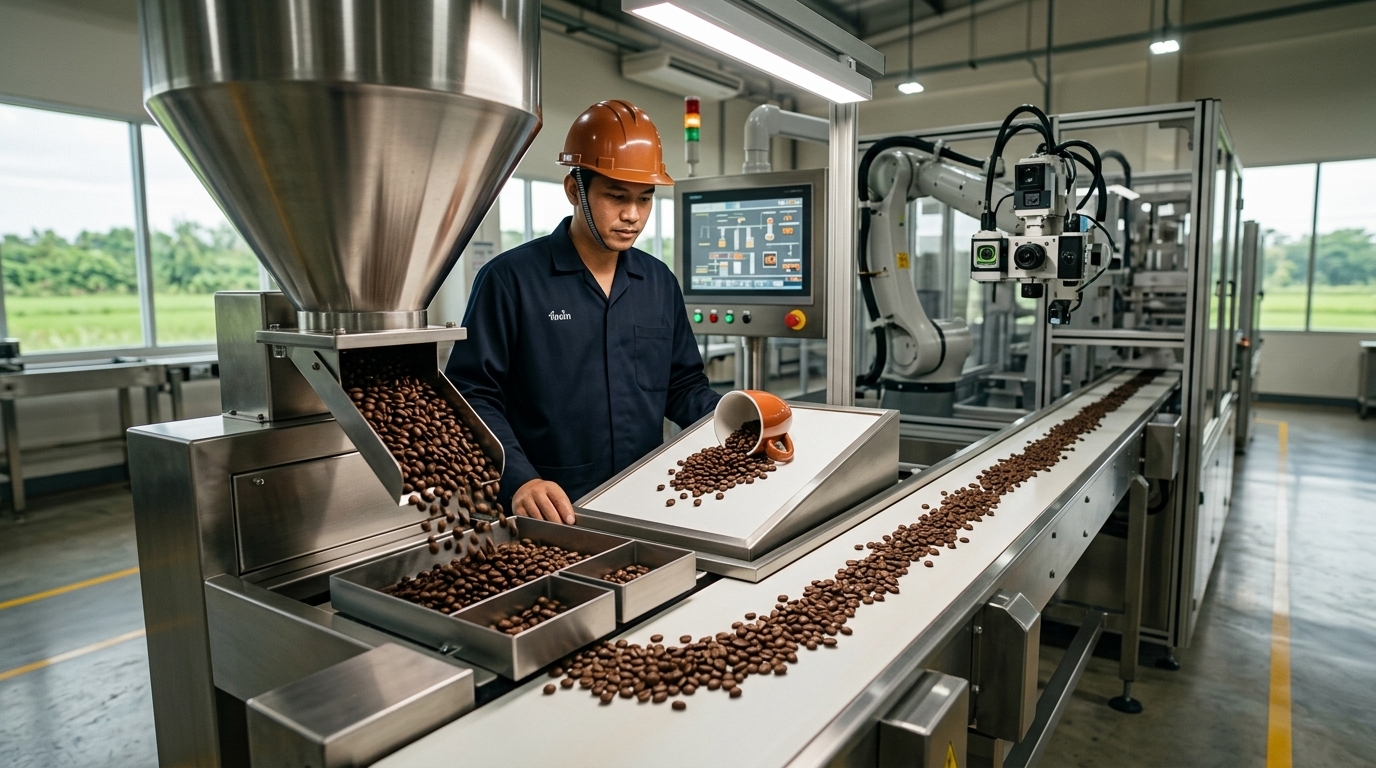
In a move that underscores the strategic shift of multinational giants toward digital upgrading and regional self-sufficiency, Nestlé has announced an investment of 24 billion baht (approximately $688 million) to establish a new "smart" factory in Thailand. This move, which received official approval from the country's Board of Investment (BOI), is not merely a production capacity expansion but a clear signal for the future of the global food supply chain.
The Strategic Importance of Thailand
Thailand, traditionally known as the "kitchen of the world," has been attempting in recent years to transform itself into a high-tech hub through the "Thailand 4.0" initiative. Nestlé's investment fits perfectly into this context. The country offers a combination of stable infrastructure, a skilled workforce, and attractive tax incentives, making it an ideal springboard for the Southeast Asian (ASEAN) market, which is experiencing an explosive rise in the middle class.
The new factory is expected to focus on high-value-added products, utilizing cutting-edge technologies that reduce production costs and increase precision. According to analysts, the choice of Thailand also reflects the need for multinationals to diversify their production sources away from China, seeking more stable and investment-friendly environments in the broader Pacific region.
AI Technology and Automation in Manufacturing
But what makes a factory "smart"? In Nestlé's case, it involves the full integration of the Internet of Things (IoT), Artificial Intelligence (AI), and advanced robotics. Production lines will be equipped with sensors that collect real-time data, allowing for predictive maintenance of machinery before a breakdown even occurs.
Furthermore, the use of AI in inventory management and demand analysis will allow Nestlé to adapt its production almost instantaneously to market trends. This level of flexibility is crucial in an era where consumer preferences for healthier and more sustainable products are changing rapidly. Automation is not just about speed; it's about minimizing human error and raw material waste, boosting profit margins in an industry pressured by commodity price inflation.
Sustainability and the Green Transition
Another critical aspect of the investment is environmental sustainability. Nestlé has committed to Net Zero emissions by 2050, and the new factory in Thailand will serve as a model for "green" operations. It is expected to utilize renewable energy sources, closed-loop water recycling systems, and technologies that drastically reduce the carbon footprint per unit of product.
"This investment is not just about size, but about the quality and future of food production. Thailand offers the ecosystem we need to lead in the digital age," company sources stated.
This strategy aligns with the growing demands of consumers and regulators worldwide for transparency and environmental responsibility. Nestlé seems to realize that future profitability will be inextricably linked to a company's ability to produce with respect for natural resources.
Economic Impact and Competition
$688 million investment is expected to create thousands of jobs, both directly and indirectly, boosting the local economy and the supplier network in Thailand. At the same time, it puts pressure on competitors like Unilever and PepsiCo, who are also fighting for market share in the region. Nestlé's move to invest in "smart" infrastructure gives it a significant long-term cost and quality advantage.
In conclusion, the new unit in Thailand is a crucial piece in the puzzle of Nestlé's global strategy. By combining technological superiority with geographic location and a commitment to sustainability, the Swiss giant is fortifying its position against the challenges of the 21st century, turning Thailand into one of the most important pillars of its global industrial network.





