

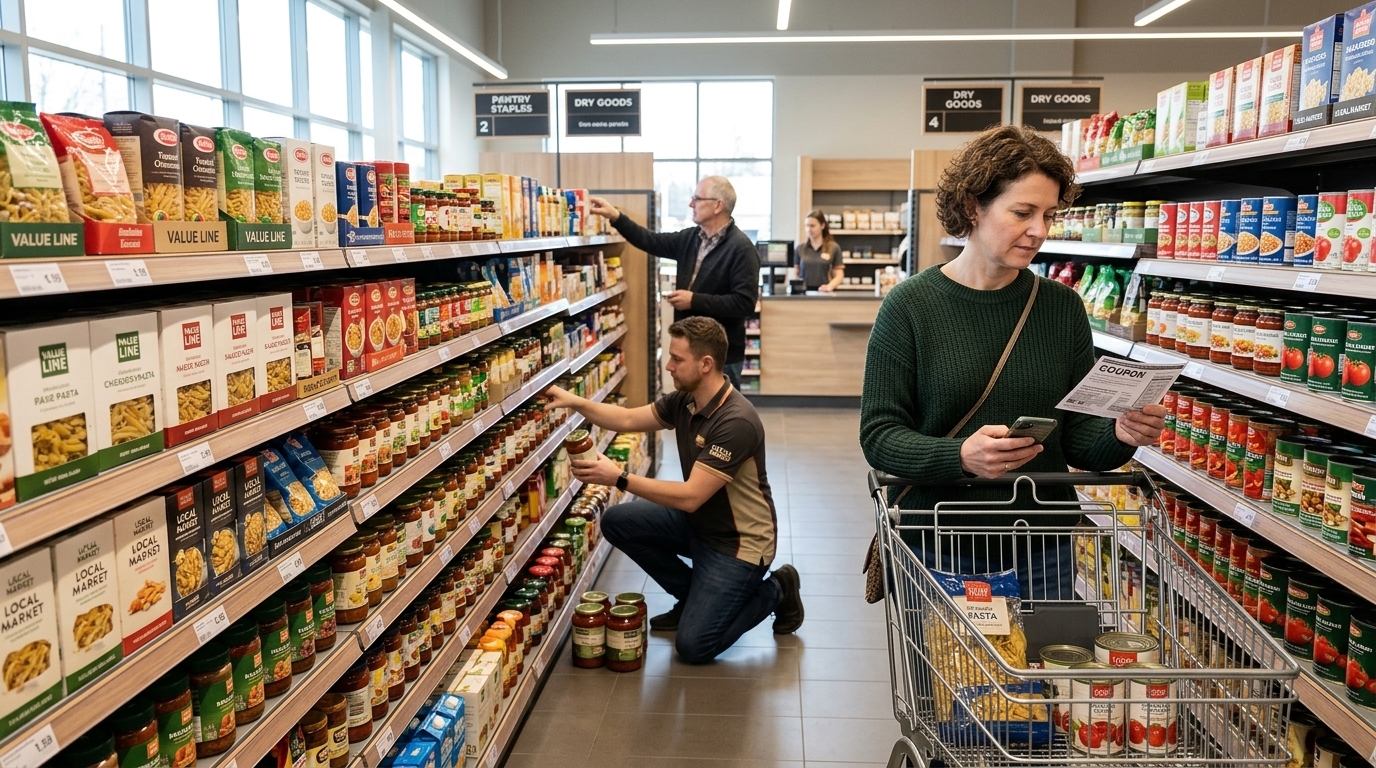
Greek food retail is entering a phase of intense transformation as consumers tighten their belts and competition between chains intensifies. According to a new analysis by McKinsey & Company, the sector in Greece has experienced more upheaval in the last five years than in the previous 25 years combined.
Squeezed Margins and Market Fragmentation
The study highlights that EBITDA margins for Greek retail businesses remain lower than the European average (~5% vs. ~6%). At the same time, the Greek market remains highly fragmented, with small and independent points of sale holding approximately 30% of the market, compared to 18% in the rest of the European Union. This structure creates fertile ground for future partnerships and acquisitions.
Shifting Consumer Behavior: The Decline of Loyalty
Greek consumers appear particularly price-sensitive, with 63% stating an intention to reduce food spending. There is a structural decline in loyalty to specific chains; only 15% of consumers shop exclusively at one store, while 73% visit two to three different chains in search of deals.
The Momentum of Private Labels and AI
Although private label penetration in Greece is lower than in Europe (~24% vs. ~40%), 91% of consumers now believe they offer equal or better value for money. Simultaneously, Artificial Intelligence is beginning to play a decisive role, with early applications showing up to a 20% increase in add-to-cart rates through personalized recommendations.
Strategic Pillars for the Future
McKinsey proposes three key pillars for business growth:
- Investment in private brands and digital capabilities.
- Optimization of efficiency through AI and supply chain improvements.
- Seeking new revenue streams via retail media and third-party services.





