

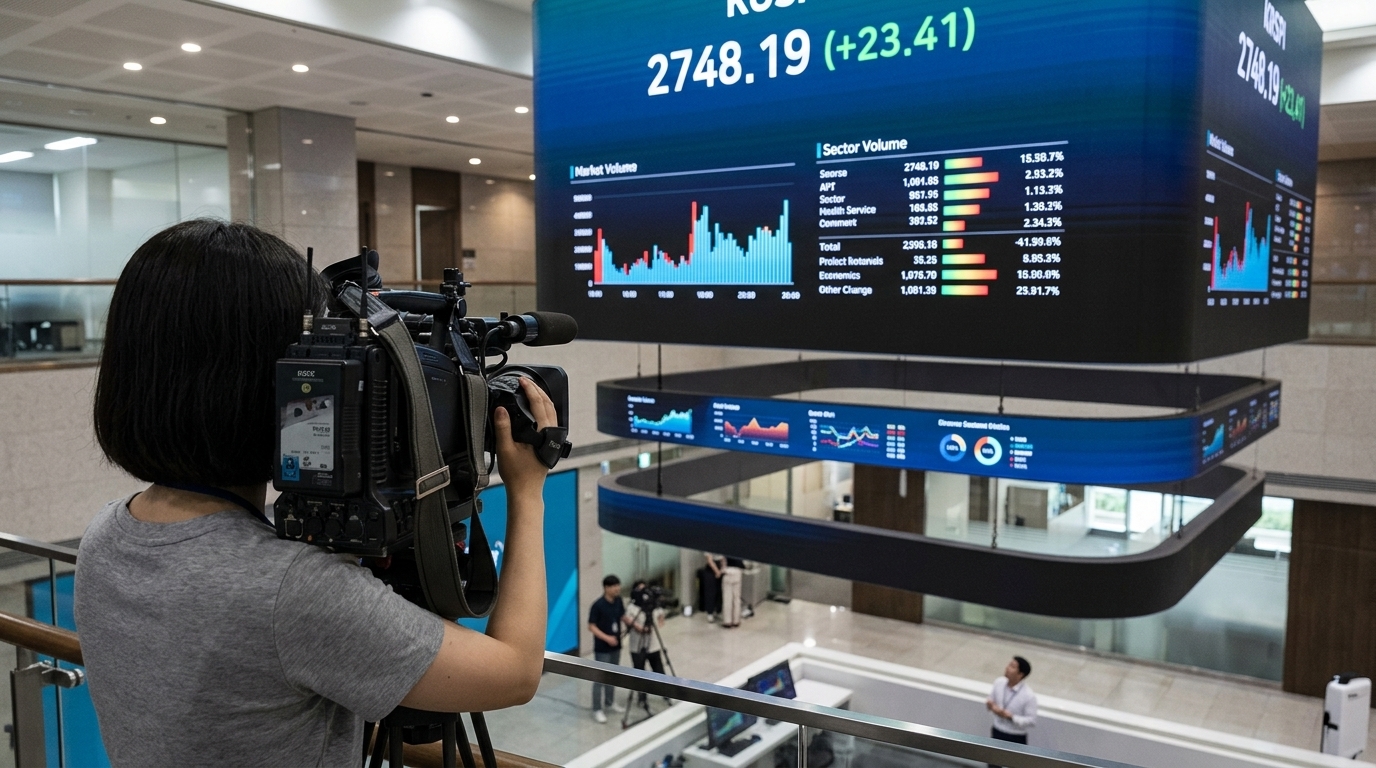
For fund managers in global financial hubs like London, New York, and Tokyo, the trading day now begins with a mandatory check of the South Korean markets. Once considered a peripheral emerging market, South Korea’s $4 trillion equity landscape has become the primary indicator for global risk appetite, specifically regarding artificial intelligence and semiconductor stocks.
The New Global Benchmark
The Kospi Index, dominated by tech giants Samsung Electronics Co. and SK Hynix Inc., is now reshaping global investment routines. According to Hani Redha, a portfolio manager at PineBridge Investments, "We are all Korean investors now." This sentiment is echoed across major firms; JPMorgan Asset Management recently presented on Korea to its global team for the first time in 14 years, while Japanese traders have added the Kospi to their essential watch lists.
The influence of Korean stocks is particularly evident in their correlation with US markets. Data compiled by Bloomberg shows the 60-day correlation between the Kospi and the Nasdaq 100 has reached 0.46—nearly triple its five-year average of 0.16. Ivan Feinseth of Tigress Financial Partners notes that Korea has become part of the same "volatility ecosystem" as the Nasdaq, providing a pre-market read on US AI and semiconductor risk.
Volatility and Leveraged Risks
However, this newfound influence comes with significant instability. The Kospi has become one of the world's most volatile benchmarks, partly due to heavy leveraged trading. A recent selloff, triggered by skepticism over AI demand, saw the Kospi drop nearly 9% in a single day, a move that immediately spilled over into Wall Street, where SK Hynix’s US-listed shares fell 9.3%.
Despite a 25% tumble from its June peak—resulting in a $1 trillion wipeout—the Kospi remains up 62% for the year. To curb extreme speculation, Korean authorities have temporarily halted new listings of certain leveraged exchange-traded products. Analysts suggest that as long as the AI rally continues, the Korean market will remain the "heartbeat" of global tech investment due to its pivotal role in the memory chip supply chain.





