

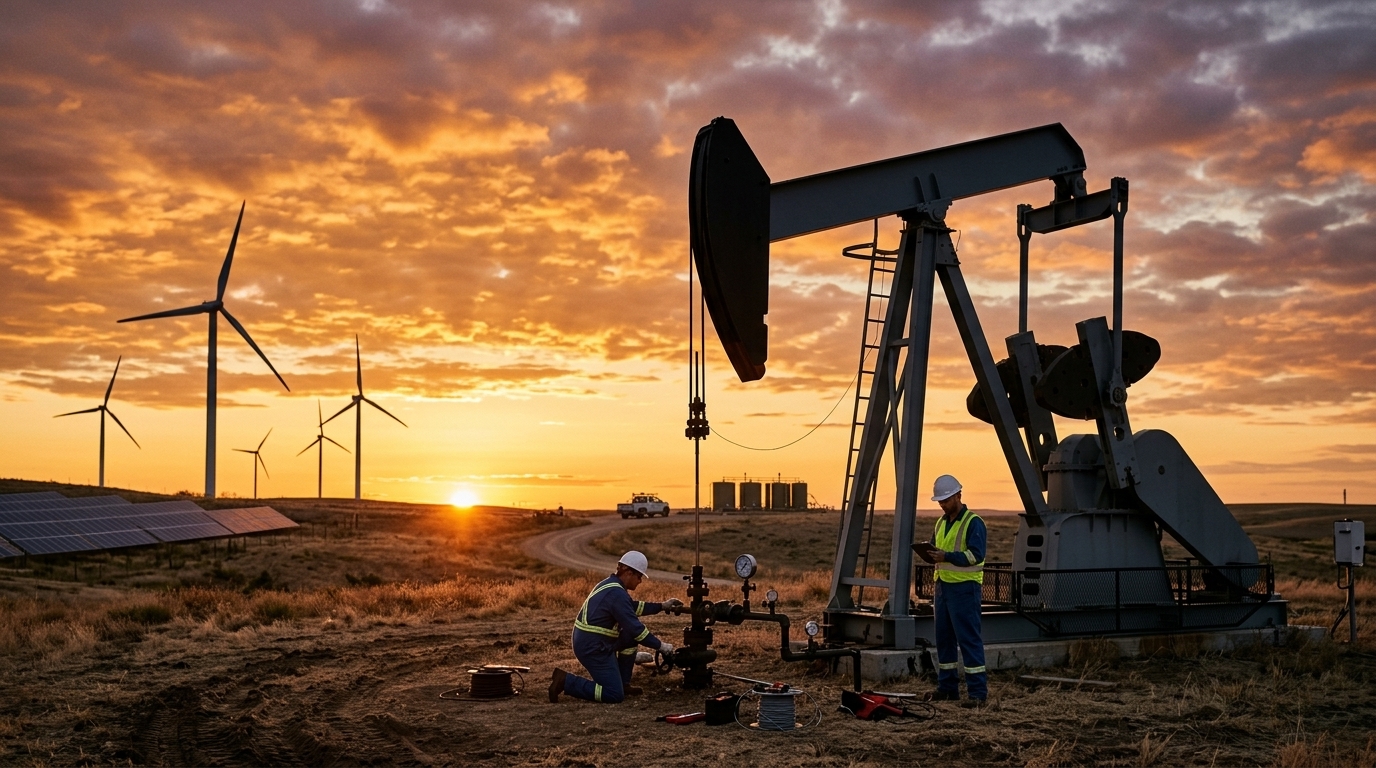
At a time when the global community is attempting to accelerate its shift away from fossil fuels, the reality of the energy market appears to be following a more complex and often contradictory path. The International Energy Agency’s (IEA) latest report for July 2026 brings to light data that overturns the more pessimistic forecasts of previous years. Oil demand is not only far from collapsing but is demonstrating remarkable resilience, rebounding dynamically despite the volatile geopolitical climate prevailing in key production regions.
Geopolitical Instability as the New Normal
The Middle East remains the world's "powder keg," with tensions directly impacting maritime transport routes and extraction infrastructure. However, the IEA notes that markets have developed a unique defense mechanism against geopolitical shocks. Increased production from non-OPEC+ countries, led by the US, Brazil, and Guyana, has created a safety cushion that absorbs pressure from disruptions in the Red Sea and the Strait of Hormuz.
According to the Agency's analysis, the demand recovery is largely driven by a resurgence in industrial activity in emerging economies. China and India continue to lead the consumption race, as their domestic needs for transportation and plastics production remain high. Meanwhile, global air traffic has now surpassed pre-pandemic levels, significantly boosting the demand for jet fuel.
The Role of Technology and Energy Efficiency
An interesting aspect of the report concerns how technology, and particularly Artificial Intelligence, is influencing the oil market. While AI is often associated with the energy transition, it is currently being used intensively by oil companies to optimize drilling and reduce extraction costs. This allows deposits previously considered economically unviable to remain in production, keeping supply at high levels.
"The oil market in 2026 is not the same as that of the previous decade. It is more flexible, more digitized, but also more vulnerable to political decisions than to the laws of supply and demand," the report states.
The Green Transition: A Tightrope Walk
The recovery in demand raises serious questions about the speed of the green transition. The IEA warns that if demand continues to grow at these rates, the "Net Zero" targets for 2050 become increasingly unattainable. The difficulty lies in the fact that investments in renewable energy sources, although increased, are not yet sufficient to meet the entirety of the growing global energy demand.
Furthermore, the high borrowing costs that prevailed in previous years have delayed some large offshore wind farm and hydrogen infrastructure projects, leaving oil and gas as the only reliable solutions for meeting immediate needs. Europe, in particular, finds itself in a difficult position, trying to decouple from Russian resources while simultaneously facing the high prices of alternative sources.
Conclusions and Outlook
As we head into the second half of 2026, the oil market remains the barometer of the global economy. The IEA's forecast for a demand recovery serves as a reminder that the path to decarbonization will be long and fraught with obstacles. Geopolitical tensions may cause short-term volatility, but the structural dependence of the global economy on oil remains the dominant factor.
- Demand is expected to increase by 1.2 million barrels per day in 2026.
- Non-OPEC+ production is meeting most of the new demand.
- The Middle East remains the primary risk factor for sudden price spikes.
- AI technology is increasing extraction efficiency, prolonging the "oil age."
In this environment, governments are called upon to find the balance between ensuring affordable energy for their citizens and adhering to their environmental commitments. The IEA report is not just a set of numbers but a roadmap of the challenges that will define the end of the decade.





