

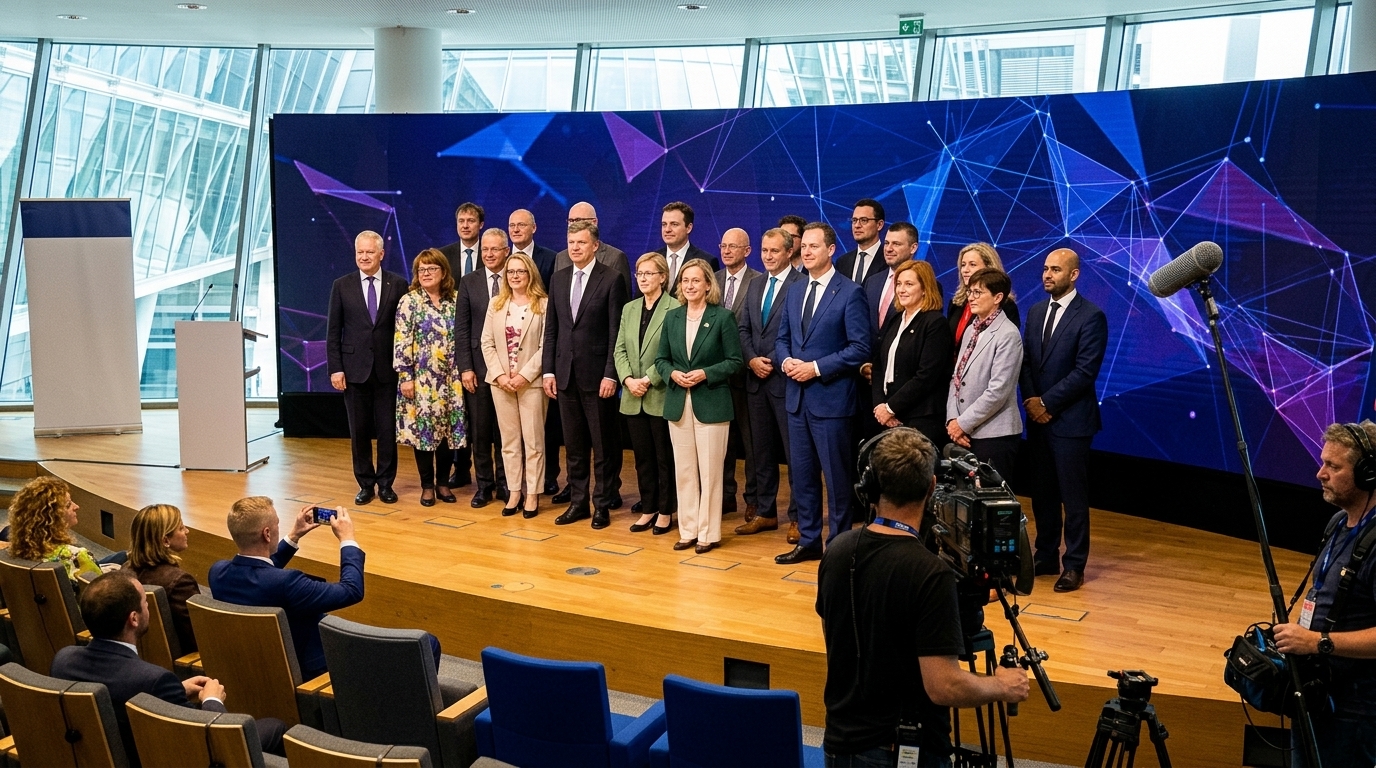
In a move that signals Europe's shift from defensive to offensive economic policy in the technology sector, Greece and Cyprus have officially announced their participation in the second phase of the European Tech Champions Initiative (ETCI 2.0). This initiative, under the aegis of the European Investment Bank (EIB) Group, is not merely a financial tool but a strategic bulwark against the dominance of American and Asian capital that traditionally 'absorbs' the most promising European startups during their growth stage.
Bridging the Scale-up Gap
The primary problem ETCI 2.0 seeks to solve is the so-called 'scale-up gap.' While Europe excels at creating innovative startups, it often fails to retain them within its borders when they require capital exceeding €50 million to expand globally. At this critical juncture, European companies frequently turn to US venture capital funds, leading to a loss of intellectual property, talent, and ultimately, tax revenue for the Continent.
By mobilizing €80 billion, ETCI 2.0 aims to support more than 1,500 cutting-edge tech companies. The participation of Greece and Cyprus underscores the maturity of their domestic ecosystems and the will of both states to become innovation hubs in the Eastern Mediterranean. This participation is not just symbolic; it allows Greek and Cypriot companies to have privileged access to capital that was previously out of reach, enhancing their extroversion and competitiveness.
Strategic Importance for Greece and Cyprus
For Greece, participating in ETCI 2.0 is a continuation of a successful recovery path. After a decade of crisis, the country has managed to build a vibrant innovation ecosystem, with companies now claiming a place in the global market. Cyprus, on the other hand, is consolidating its position as a growing tech hub, leveraging its favorable tax framework and strategic location.
"Our participation in ETCI 2.0 is not just an investment in the future of technology, but an investment in our national economic sovereignty,"government sources state, emphasizing that cooperation with the EIB Group provides the necessary expertise for managing such large-scale funds.
The initiative will focus on cutting-edge sectors such as Artificial Intelligence, Cybersecurity, Biotechnology, and Green Technologies. The choice of these sectors is not accidental, as they constitute the pillars of the fourth industrial revolution. For Greece and Cyprus, strengthening these industries means creating high-skilled jobs, halting brain drain, and converting it into brain gain.
The 'Fund of Funds' Model
The ETCI operates as a 'Fund of Funds.' This means it does not invest directly in companies but in large private investment funds (venture capital funds) which, in turn, channel liquidity into businesses. This model ensures that the selection of companies is based on strictly commercial criteria, while simultaneously maximizing the leverage of public resources. For every euro of public investment, the goal is to mobilize multiple times more private capital, creating a self-sustaining ecosystem.
In conclusion, the participation of Greece and Cyprus in ETCI 2.0 is a bold statement of intent. In a world being redefined by technological power, Europe chooses to invest in its own 'champions,' ensuring that the innovation born in European universities and laboratories remains European until its final success on the global stage.





