

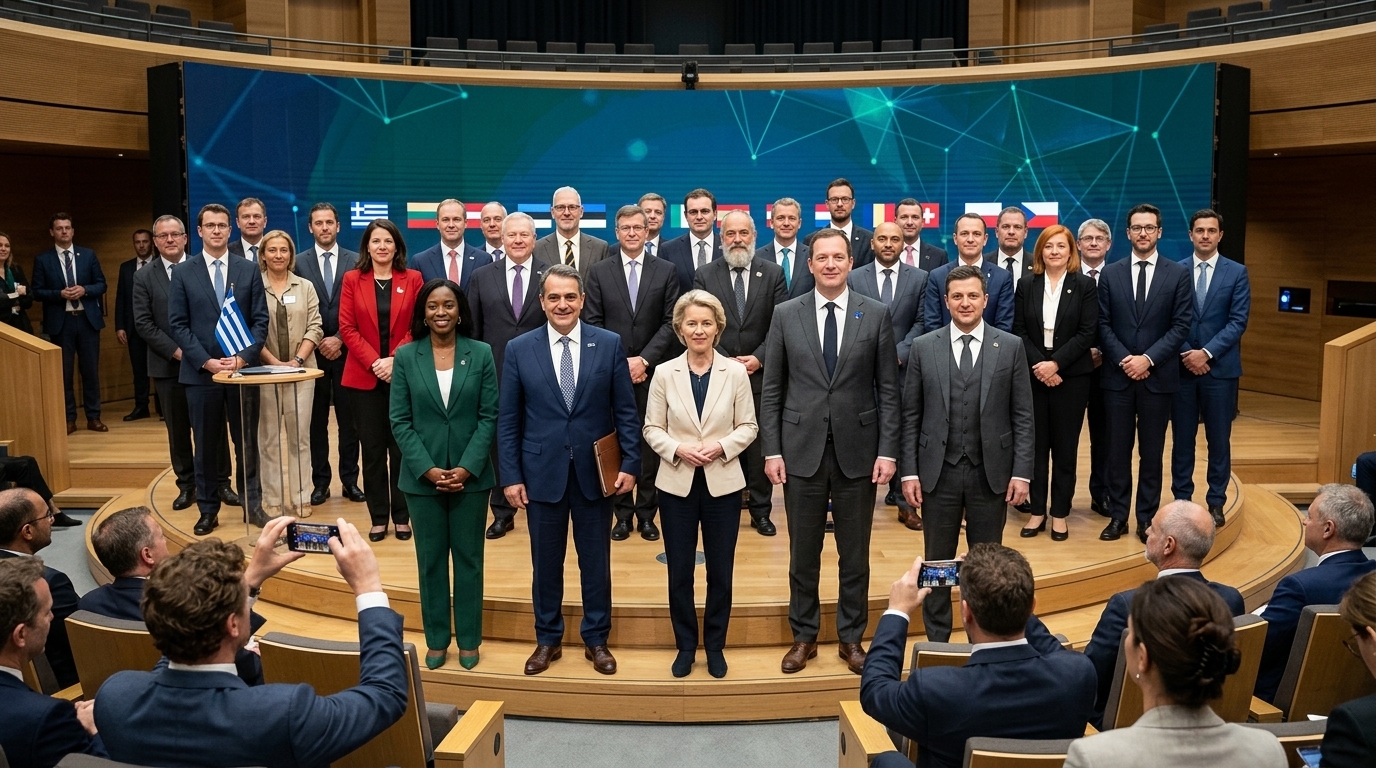
In a move that underscores Greece's ambition to transform into a regional innovation hub, the country has officially joined the second phase of the European Tech Champions Initiative (ETCI). This step, under the auspices of the European Investment Bank (EIB), is not merely a financial commitment but a profound political and economic statement regarding the future of European strategic autonomy.
For decades, the European startup ecosystem has suffered from the so-called "scale-up gap." While Europe births exceptional ideas and successful startups, these companies are often forced to seek capital in the United States or Asia when they reach growth stages such as Series C and beyond. The result is a consistent loss of intellectual property, talent, and tax revenue. The ETCI functions as a "fund of funds," channeling significant capital into European venture capital firms that focus specifically on this critical stage of development.
Greek Participation and the Evolving Ecosystem
Greece's entry into the second phase of the program comes at a time when the domestic innovation ecosystem is showing remarkable maturity. Following the success of the EquiFund program and the emergence of the first Greek "unicorns," Athens is now seeking to ensure that the next major success stories remain on European soil. The Greek contribution to the ETCI will allow high-tech Greek companies to access institutional capital that was previously out of reach.
According to analysts, this move bolsters Greece's credibility in international markets. It is no longer just a country in economic recovery but an active participant in shaping 21st-century European industrial policy. Collaboration with the European Investment Fund (EIF) will provide the necessary expertise for managing these resources, ensuring that allocation is based on strict market criteria rather than bureaucratic hurdles.
Addressing the Scale-up "Valley of Death"
The ETCI directly targets the "valley of death" in European technology: the stage where a company requires between €50 million and €200 million to expand internationally. In the past, European funds could rarely cover such amounts independently. The second phase of the initiative, which now includes Greece alongside all 27 member states, aims to aggregate capital that will enable the creation of large-scale European investment vehicles.
- Enhancing liquidity for cutting-edge technologies (AI, Biotech, CleanTech).
- Reducing reliance on American and Chinese venture capital.
- Creating high-skilled jobs within the EU.
- Promoting Europe's digital sovereignty.
The challenge remains the speed of implementation. While the US benefits from a unified and deep capital market, Europe still struggles with fragmentation. Greece's participation sends a message of unity, showing that even smaller economies understand that technological survival requires collective action.
The Geopolitical Stakes
Beyond the numbers, participation in the ETCI carries a geopolitical dimension. In a world where technology is the new battlefield for power, Europe cannot afford to remain a mere consumer of foreign technologies. Greece, positioned at the crossroads of three continents, can leverage these funds to support companies involved in cybersecurity, telecommunications, and energy—sectors critical to national and European security.
"Our participation in the ETCI is not just a financial investment; it is an investment in our sovereignty," a government source noted. "We want Greek scientists to build global giants from Athens, not from Palo Alto."
In conclusion, Greece's integration into the EIB initiative represents a milestone. The baton now passes to the private sector and fund managers, who must prove that Greek and European talent can compete on equal terms with Silicon Valley, provided they have the right tools at their disposal.





