

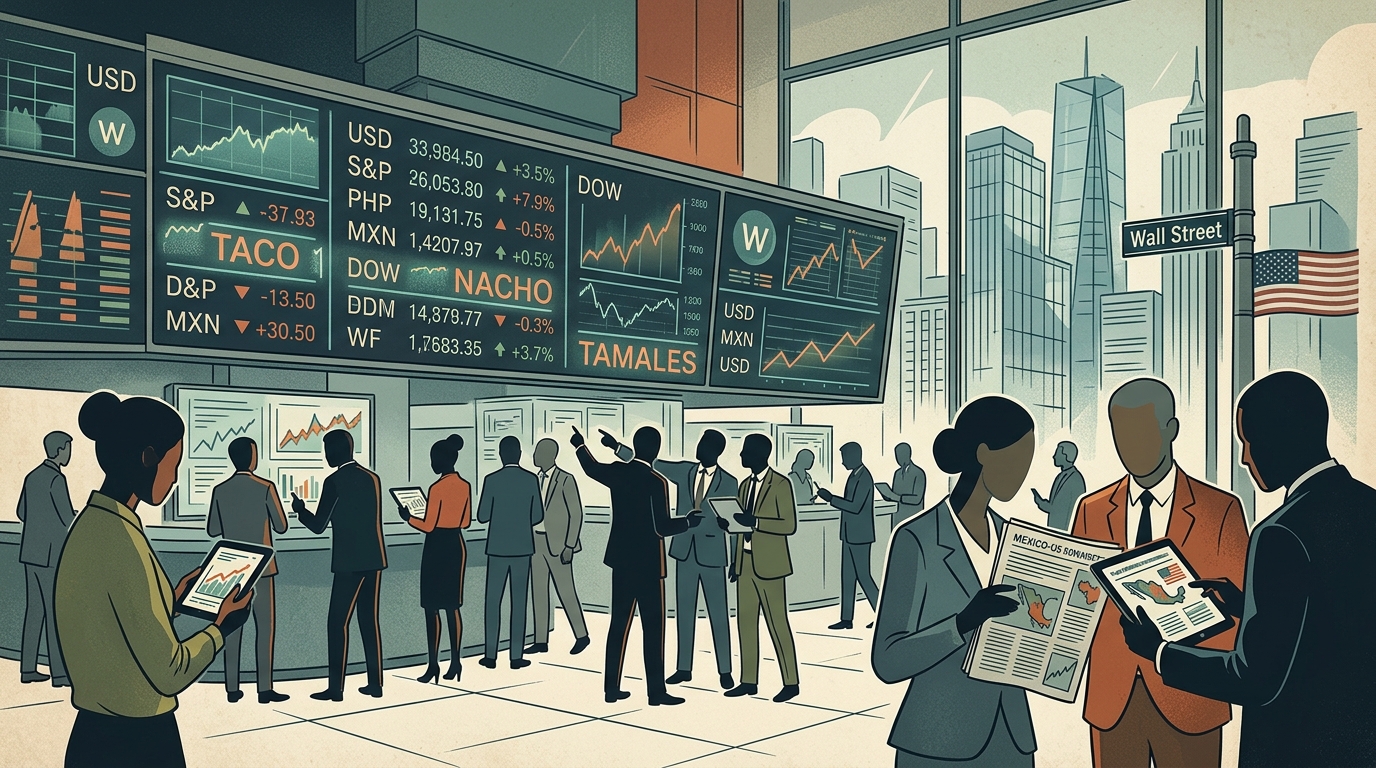
In the world of high finance and stock market trading, language rarely remains static. Wall Street analysts have a peculiar talent for "christening" complex trends with memorable names. However, the latest trend in investment basket nomenclature has an unexpected, spicy flavor. As we move through the summer of 2026 and Donald Trump's tariff policies continue to dominate the agenda, markets have adopted terms like TACO, NACHO, and TAMALES to describe their strategies.
The Semiotics of Flavor in the Markets
This is not the first time Wall Street has used acronyms. From BRICS to FANG, investors are always looking for a way to group their expectations. In the context of Trump's second term (or the prolonged influence of his policies), interest has shifted from technology to production and trade. Mexico, as the primary US trading partner and simultaneously the main target of tariff threats, is at the epicenter. "TACO" (Trump’s American-Centric Operations) refers to companies reshoring production to the US, while "NACHO" (North American Cross-border High-yield Opportunities) focuses on businesses that manage to profit despite border frictions.
Protectionism as an Investment Tool
The use of these terms is not just a joke among traders. It reflects a profound change in how the global supply chain operates. Tariffs, once considered a "nuclear weapon" that no one wanted to use, have now become a daily negotiating tool. The TAMALES (Tariff-Adjusted Manufacturing and Logistics Export Stocks) basket includes logistics companies that have adjusted their models to minimize tariff costs through "nearshoring" strategies.
- TACO: Focuses on domestic production and US infrastructure.
- NACHO: Seeks opportunities in Mexican companies that remain indispensable to the US market.
- TAMALES: Focuses on supply chain flexibility and exports.
These "tasty" acronyms hide a harsh reality: volatility. For Mexico, the fluctuation of the peso has become directly linked to posts and statements coming out of Washington. Investors following the "NACHO" bet, for example, are wagering that pragmatism will eventually prevail over rhetoric, allowing cross-border flows to continue.
The Geopolitical Dimension of the Dish
Beyond the numbers, there is also a cultural irony. The use of Mexican food names to describe policies that often aim to limit Mexico's economic power has not gone unnoticed. Many analysts point out that this vocabulary distances investors from the social impacts of these policies. When we talk about "TAMALES," we often forget the thousands of workers in factories (maquiladoras) whose lives are disrupted by the sudden imposition of a 25% tariff.
"Markets have no feelings, they only have a need for categorization. If a policy can be encoded into a catchy name, then it can be sold as a product," says a leading strategist at Goldman Sachs.
In conclusion, the "Mexicanization" of Trump's economic vocabulary shows how deeply uncertainty has permeated the markets. It's no longer about whether there will be tariffs, but how we will "serve" them to the investing public. As 2026 progresses, the question remains: will the global economy's stomach handle this spicy menu, or are we headed for unprecedented economic indigestion?





