In the high-stakes world of technology, where AI processors and quantum chips dominate the headlines, a humble component often goes unnoticed despite being the literal backbone of every electronic device: the Multi-Layer Ceramic Capacitor (MLCC). Known in the industry as the 'rice of the electronics industry' due to their ubiquity, MLCCs are essential for stabilizing electric current flow in circuits ranging from basic smartphones to complex missile guidance systems and AI servers.
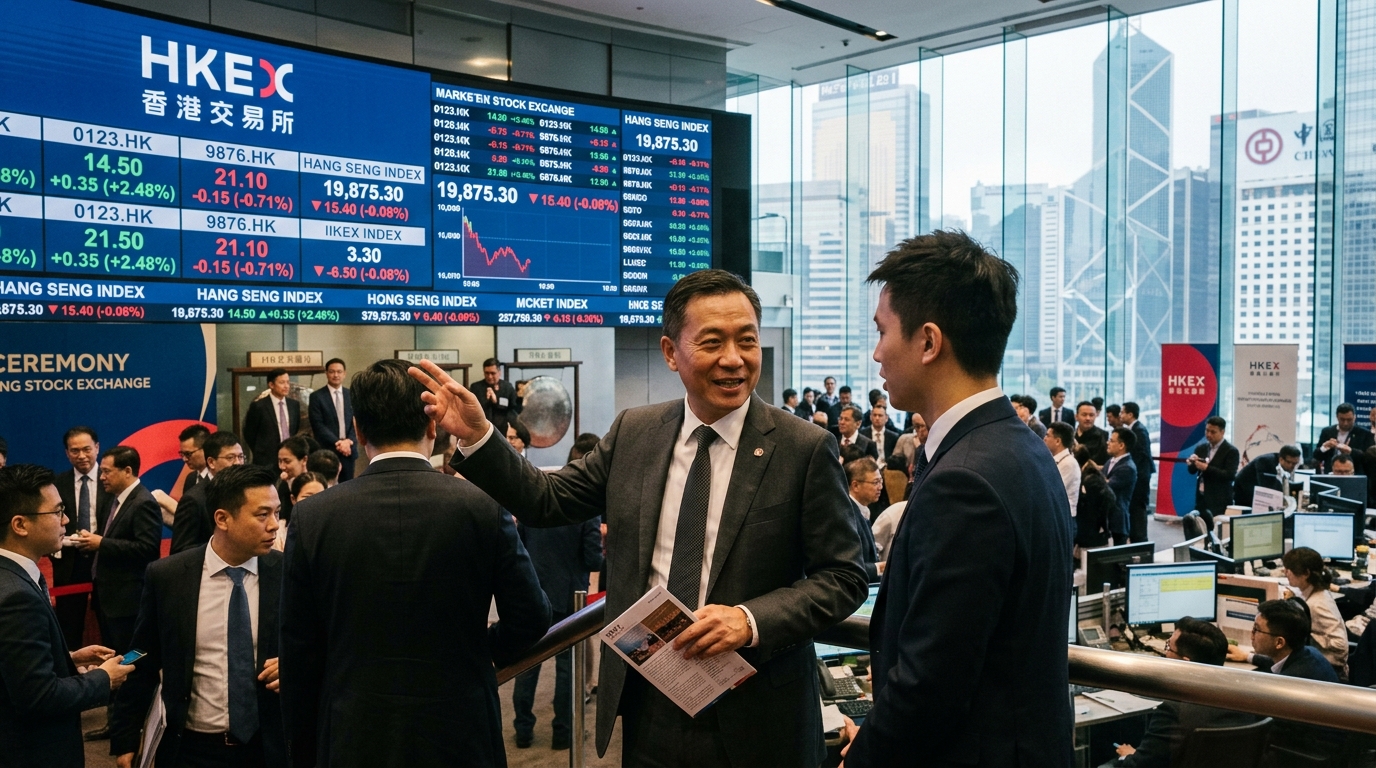
As we navigate mid-2026, a significant shift is occurring in the global supply chain map. Chinese firms that traditionally produced low-end components are rapidly upgrading and seeking listings on the Hong Kong Stock Exchange (HKEX). This move is more than just a capital raise; it is a strategic declaration of China's intent to decouple from the Japanese and South Korean giants that have dominated this market for decades.
The Strategic Importance of MLCCs in the AI Era
Why have MLCCs suddenly become so critical? The answer lies in the explosion of demand for raw computing power. An average smartphone contains about 1,000 MLCCs, while an electric vehicle (EV) can require over 10,000. With the rise of generative AI and the subsequent need for massive data centers, the demand for high-performance capacitors—capable of withstanding extreme temperatures and high voltages—has skyrocketed.
Chinese firms like Chaozhou Three-Circle and Fenghua Advanced Technology are investing billions in R&D to bridge the technological gap with Japan’s Murata and Korea’s Samsung Electro-Mechanics. Moving to Hong Kong allows these companies to access international capital while shielding themselves from the stringent restrictions the US imposes on Chinese tech firms seeking to list on American exchanges.
Hong Kong: A Sanctuary and a Launchpad
The choice of Hong Kong is deliberate. Following years of geopolitical tension, Beijing has been encouraging 'hard tech' domestic firms to favor the HKEX. For MLCC makers, an IPO provides the liquidity necessary to scale production. Manufacturing high-grade MLCCs requires incredibly expensive equipment and access to rare earth elements and specialized ceramic materials.
Furthermore, the proximity to the supply chain hub of Guangdong province creates an ecosystem where design, financing, and production happen within a few hundred kilometers. Analysts estimate that the Chinese MLCC market will grow at a rate of 15% annually through 2030, as 'domestic substitution' becomes a central pillar of Chinese economic policy.
"It is no longer a question of whether China can produce these capacitors, but how quickly they can dominate the high-end segment where the margins are fattest," says a senior investment banker in Hong Kong.
Challenges and the Road to the Top
Despite the optimism, the path forward is fraught with challenges. Japanese manufacturers maintain a significant lead in material science, holding key patents for the ceramic powders that allow for the miniaturization of capacitors without performance loss. Chinese firms must prove they can maintain quality in mass production—a feat that is exceptionally difficult for components the size of a grain of sand.
Moreover, global trade frictions remain a volatile factor. If the US or EU imposes tariffs on Chinese electronic components, the outward-looking strategy via Hong Kong could be tested. However, for now, the market seems to be betting on their success. Investors view MLCCs as an opportunity similar to semiconductors a decade ago: an essential technology undergoing a geopolitical realignment.
- Increased R&D investment in ceramic powder materials.
- Focus on high-growth sectors like EVs and AI servers.
- Leveraging the Stock Connect program to attract mainland Chinese capital.
In conclusion, the migration of MLCC makers to Hong Kong marks another chapter in the great technological competition of the 21st century. When the 'rice' of the industry becomes a subject of strategic contention, it is clear that the global economy is entering an era where even the smallest component carries immense political and economic weight.