In the evolving investment landscape of July 2026, where the initial euphoria surrounding large language models has matured into a rigorous search for fundamental value, the Amundi Investment Institute is directing its focus toward an unexpected quarter: European heavy industry. According to Monica Defend, Head of the Institute, European industrial firms are no longer the 'dinosaurs' of the old economy; they are the critical 'enablers' making the Artificial Intelligence revolution physically possible.
The Shift from Software to Infrastructure
For years, the AI narrative was monopolized by Silicon Valley giants. However, as computational demands skyrocket, the focus is shifting from algorithms to the physical infrastructure that houses them. AI requires massive data centers, which in turn demand unprecedented levels of power management, cooling systems, and grid stability. This is precisely where Europe steps in. Companies like Schneider Electric, Siemens, and ABB are at the forefront of providing the hardware that powers the digital age.
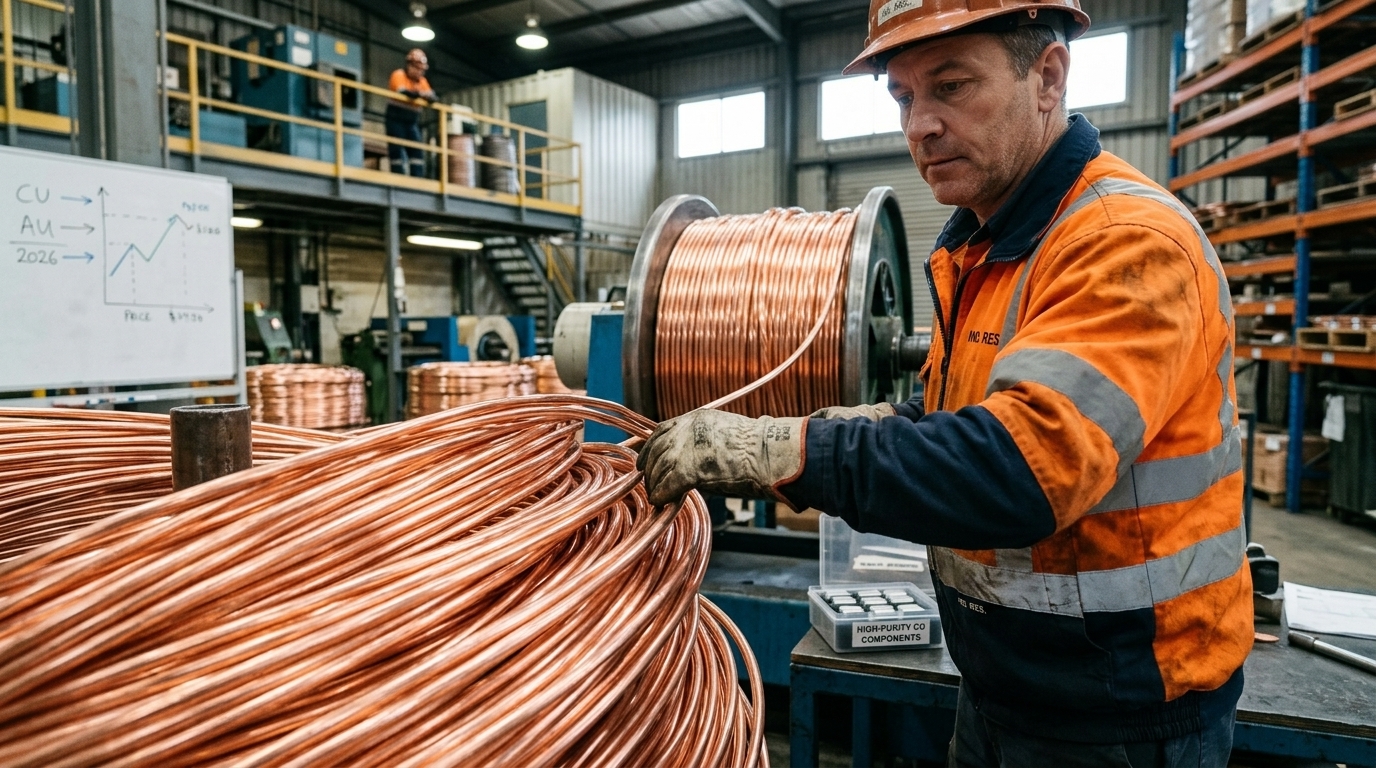
Defend emphasizes that the industrial sector in Europe carries a market weight that is often underestimated. "Industrial is going to be a key sector because of its weight on the market and because this is the sector where we have the AI enablers," she told Bloomberg Television. These companies aren't necessarily developing the next ChatGPT, but they are manufacturing the transformers, switchgear, and automated control systems without which AI could not function. European expertise in electrical engineering and industrial automation is becoming a strategic asset connecting traditional manufacturing with cutting-edge tech.
Energy Efficiency: The AI Holy Grail
One of the most significant hurdles for the continued expansion of AI is its staggering energy consumption. Data centers now consume percentages of global electricity comparable to entire nations. European industry, pressured for decades by high energy costs and stringent EU environmental regulations, has developed the most advanced energy efficiency solutions in the world. This 'necessity' has been transformed into a high-value export product.
Amundi's analysts argue that investors should look beyond the obvious semiconductor players. While Nvidia remains the king of chips, the physical installation and operation of these chips require an entire supply chain where Europe dominates. The digitization of factories and the use of 'digital twins' allow European industrials to optimize production in real-time, integrating AI into their own processes, which significantly boosts their profit margins and operational resilience.
Strategic Autonomy and Investment Timing
The geopolitical dimension cannot be ignored. As the US and China engage in a technological cold war, Europe is attempting to carve its own path through 'strategic autonomy.' Strengthening the domestic industrial base via AI is a central pillar of Brussels' policy. This creates a favorable environment of subsidies and regulatory support for companies in the sector.
According to Amundi, valuations of European industrial stocks remain attractive compared to the often-overstretched US tech sector. There is a significant valuation discount that is not justified by fundamentals, especially considering their role in the AI supply chain. Monica Defend highlights that the market is only just beginning to realize this connection, suggesting we are at the start of a long-term upward cycle for the sector.
Conclusion: The Return of the Real Economy
Amundi’s analysis serves as a reminder that the digital revolution does not happen in a vacuum. It requires steel, cables, sensors, and smart grids. Europe, often criticized for its lack of homegrown 'Googles' or 'Metas,' is rediscovering its strength as the world's engineer. Artificial Intelligence is not just a software tool; it is the catalyst that could lead to an industrial renaissance on the Old Continent, transforming traditional manufacturing into a dynamic, technologically advanced engine of growth.