

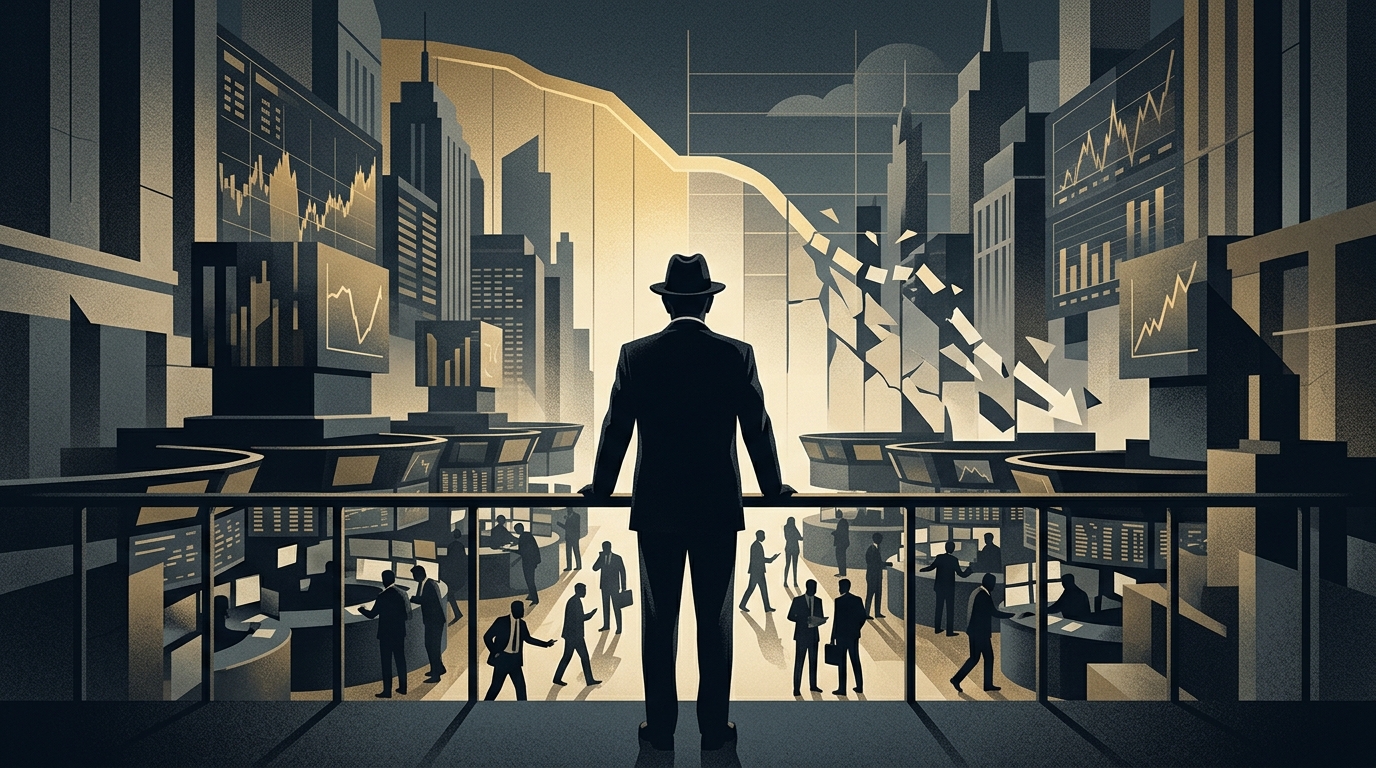
The news of Alan Greenspan’s passing at the age of 100 marks the definitive end of an era for global capitalism. The man dubbed 'The Maestro' by his admirers and the 'architect of disaster' by his critics was the longest-serving Chairman of the Federal Reserve, steering the U.S. central bank from 1987 to 2006. His life was not merely about numbers and interest rates; it was a journey that began in the jazz clubs of New York and ended in the most powerful decision-making rooms in Washington.
From the Saxophone to Market Philosophy
Born in 1926 in Manhattan, Greenspan was not initially destined to be an economist. In his youth, he was a talented saxophonist who toured with jazz big bands, an experience he later said taught him the value of improvisation and rhythm—elements he translated into monetary policy. However, his meeting with the philosopher Ayn Rand changed his life. Influenced by Rand’s 'Objectivism,' Greenspan adopted an unshakeable belief in free markets and minimal government intervention, an ideology that would define his decisions for decades to come.
When Ronald Reagan appointed him to lead the Fed in 1987, Greenspan was immediately faced with 'Black Monday,' the largest single-day stock market crash in history. His calm response, providing ample liquidity to the system, earned him his first major victory and solidified his reputation as the 'savior' of the markets. This was the birth of the so-called 'Greenspan Put,' the investor belief that the Fed would always intervene to halt a decline in asset prices.
'Irrational Exuberance' and Criticism
During the 1990s, Greenspan oversaw one of the longest periods of growth in American history. In 1996, in a speech that became legendary, he famously questioned whether the markets were in a state of 'irrational exuberance.' Despite this warning, he continued to keep interest rates low, allowing the tech bubble (dot-com) to inflate until its eventual burst in 2000.
The most significant criticism leveled against him, however, concerned the period following the September 11, 2001, attacks. In an effort to stimulate the economy, he lowered interest rates to a historic low of 1%, a move many believe fueled the housing bubble. His faith in bank self-regulation led him to ignore warnings about risky subprime mortgages. When the system collapsed in 2008, two years after his departure, Greenspan admitted before Congress that there was a 'flaw' in his ideological model of how the world works.
A Personality Beyond Economics
Greenspan was not a typical bureaucrat. His marriage to renowned NBC journalist Andrea Mitchell turned him into a Washington celebrity. His appearances were always calculated, and his statements so enigmatic that the term 'Greenspeak' was coined to describe his ability to speak for hours without revealing his intentions. 'If I turn out to be particularly clear, you’ve probably misunderstood what I’ve said,' he once joked.
At 100, Greenspan remained an active observer of global trends. His legacy remains a subject of intense debate: was he the wise leader who guided the world into a golden age of growth, or the dogmatic libertarian who sowed the seeds of the century's greatest financial crisis? The truth likely lies somewhere in the middle, in the shadows of the charts and interest rates he handled with such dexterity.
Conclusion
Alan Greenspan’s death closes the chapter on an America that believed firmly in the market's 'invisible hand.' As the global economy moves into uncharted waters with the rise of AI and geopolitical shifts, the figure of 'The Maestro' will remain a reference point—either as an example to follow or as a warning about the dangers of over-reliance on market self-regulation.





