

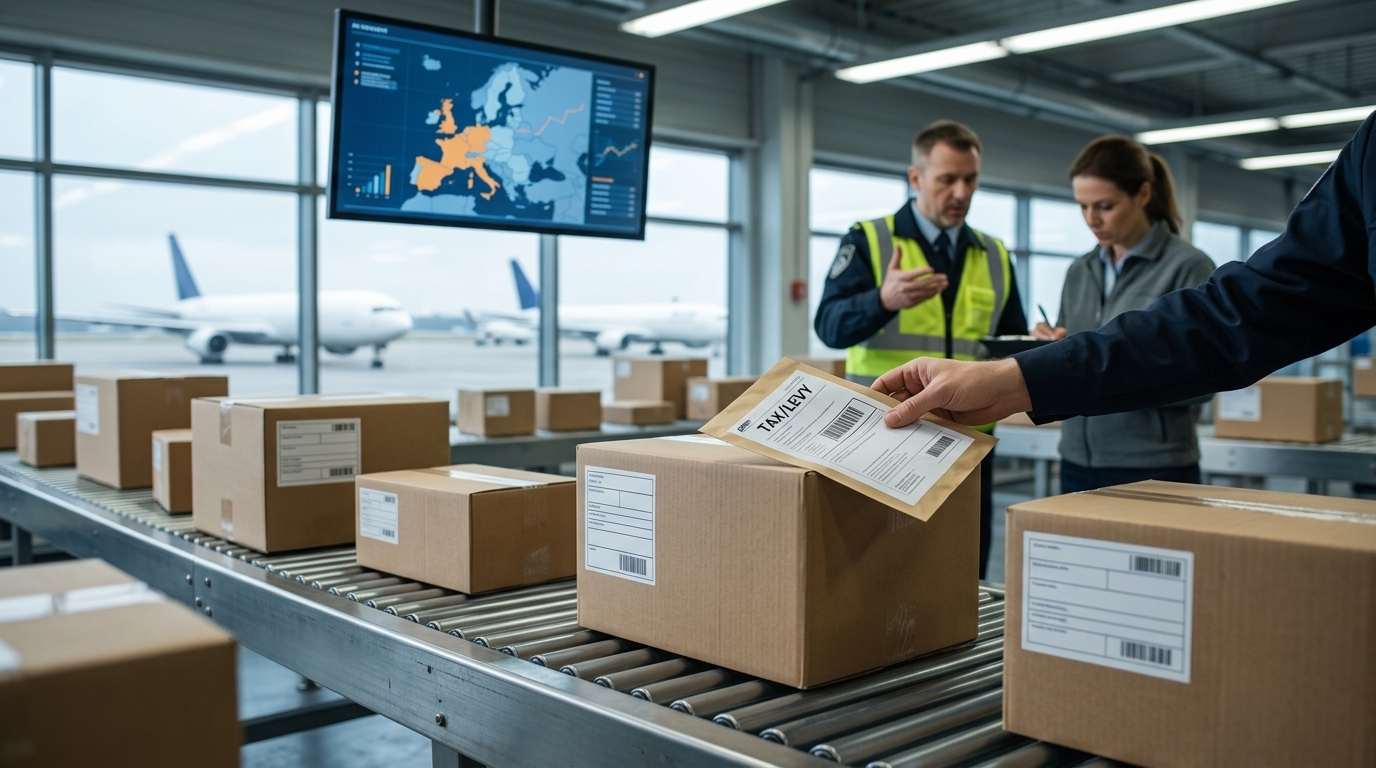
A fundamental shift in the e-commerce landscape is set to take effect on July 1st, marking the end of an era where consumers could purchase gadgets, accessories, and apparel at prices often lower than the cost of a cup of coffee. The Greek government, aligning with broader European Union directives, is proceeding with the imposition of a special administrative fee—already dubbed a "levy" (haratsi) by the market—of 3 euros per item for parcels originating from non-EU countries, primarily targeting Chinese giants Temu, Shein, and AliExpress.
The Anatomy of the New Charge
This decision did not come out of the blue; it is the culmination of a long period of consultation regarding the unfair competition faced by European retail businesses. Until now, the strategy of Chinese platforms relied on exploiting de minimis thresholds for customs duties, as well as extremely low shipping costs often subsidized by the Chinese state. With the new measure, a parcel containing five different items worth 2 euros each will now be burdened with an additional 15 euros (3 euros per item), making the purchase economically unviable.
The measure directly targets the model of "ultra-fast fashion" and "micro-purchasing." These platforms have flooded the Greek market, with thousands of parcels arriving daily at sorting centers, causing congestion in postal services and a massive loss of revenue for local commerce, which is obliged to follow strict safety rules, environmental standards, and remit VAT from the first cent.
Protectionism or a Necessity for Sustainability?
Proponents of the measure argue that it is a survival move for the European market. Domestic retailers, burdened with rents, salaries, social security contributions, and taxes, were unable to compete with prices that were often lower than the cost of raw materials in Europe. Furthermore, there is the issue of product quality and safety. Many items traded through these platforms do not carry CE certification or contain substances banned in the EU, posing a risk to public health.
On the other hand, there is the environmental dimension. The Temu and Shein model is based on the air transport of millions of small parcels from China directly to the consumer's door. This "carbon footprint per item" is disproportionately high compared to traditional logistics methods, where products are transported in bulk by sea. The 3-euro fee essentially functions as an informal "pollution tax," discouraging the reckless consumption of disposable products.
Consumer Reactions and the Road Ahead
For the Greek consumer, hit by inflation and reduced disposable income, these platforms served as a "pressure relief valve." The ability to buy household goods or clothing at rock-bottom prices was a solution of necessity for many households. The imposition of the fee is expected to cause a wave of reactions, as it increases costs in some cases by up to 200% or 300% over the original product price.
"This is not just a tax, but a paradigm shift in the way we consume. The era of 'free' is ending because its cost was ultimately paid by the environment and the local economy," says a logistics market executive.
Chinese companies, however, are not expected to sit idly by. They are already considering the creation of large fulfillment centers within European territory (e.g., in Hungary or Poland). If products are cleared through customs in bulk upon entry into the EU and shipped from a European warehouse, the 3-euro-per-item fee might be bypassed, as they would be considered intra-community transactions. The battle for control of the digital shelf has just entered a new, tougher phase.





