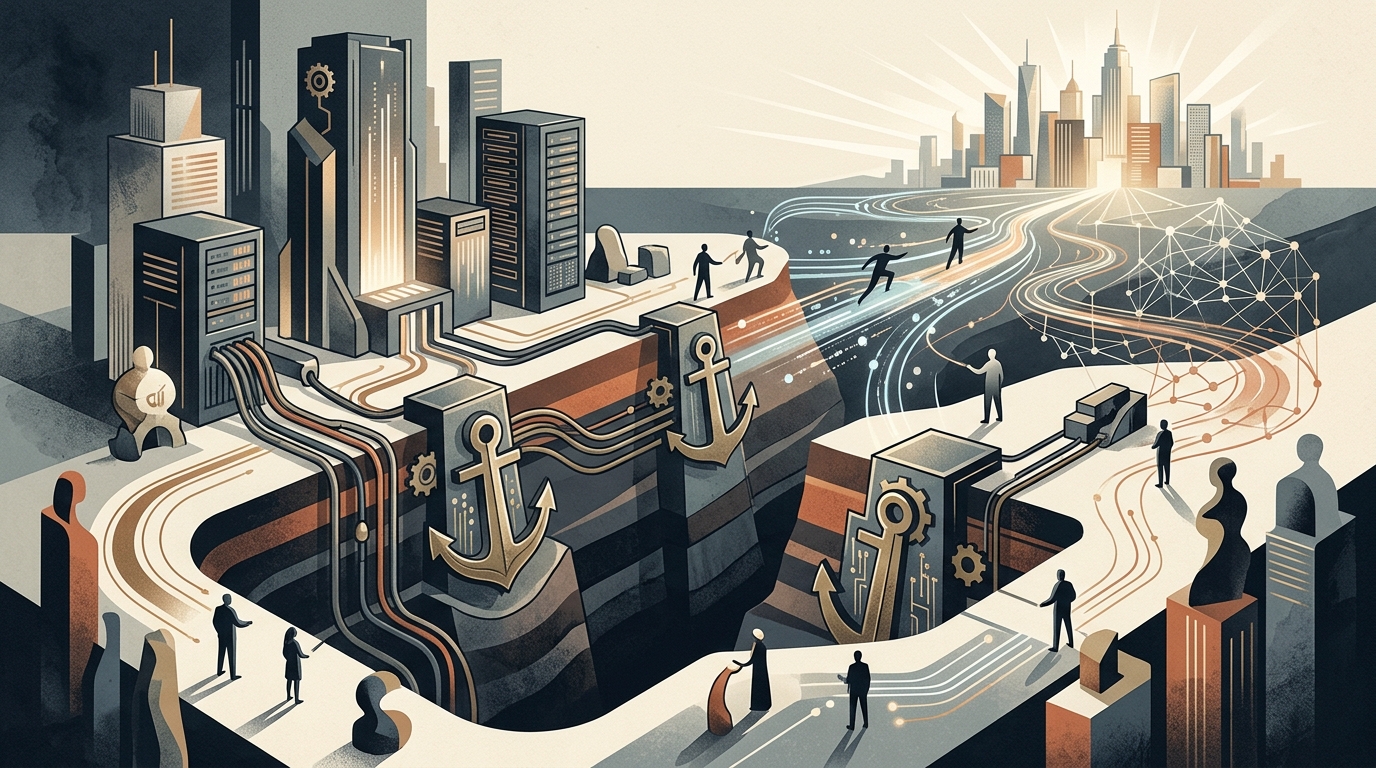
The workday doesn’t end for millions of workers when they clock out. Mopping floors, preparing meals, and tending to children constitute an "invisible" economy that keeps society functioning, yet it remains entirely absent from official Gross Domestic Product (GDP) measurements.
The Scale of Invisible Labor
A recent report from the Government Accountability Office (GAO) estimates the value of this unpaid household labor at up to $6 trillion annually—roughly one-fifth of the U.S. GDP. Because no money changes hands, this output isn't counted, despite 87% of Americans aged 15 and older performing such tasks for an average of 3.72 hours daily.
“Without those activities, we really wouldn’t have a functioning formal economy,” Misty Heggeness, an associate professor of economics at the University of Kansas, told Fortune. She noted that if families stopped providing these services themselves, they would have to be purchased from the service economy, significantly reducing the actual value of formal wages.
An "Artificially Boosted" Growth Rate
The exclusion of these figures distorts how economic progress is viewed over time. When women entered the formal workforce in large numbers during the 1960s, GDP recorded their earnings but failed to account for the corresponding loss of household labor. This, according to economist Nancy Folbre, "artificially boosted" the economy’s perceived growth rate.
GAO data confirms this discrepancy: from 1965 to 2020, conventional GDP grew at an average of 6.3% per year, while a measure accounting for household labor showed a slower growth of 6.1%. This gap explains why a family might look wealthier on paper with two paychecks, yet feel more stressed as they spend that extra income replacing services they once performed themselves.
The Gender Gap and Burnout
The burden of unpaid labor still falls disproportionately on women. The GAO found that 54% of those performing unpaid household work between 2021 and 2024 were women, who also spent more time on childcare. Even when women out-earn their male partners, they still perform twice the amount of cooking and cleaning.
This "invisible burden" of multitasking paid and unpaid labor has clear consequences: 48% of women face burnout at work, compared to 36% of men. Folbre argues that valuing this labor isn't about encouraging a return to traditional roles, but rather about rethinking efficiency and sharing the workload more equitably. Productivity, she suggests, should include the vital work of taking care of people, not just office output.