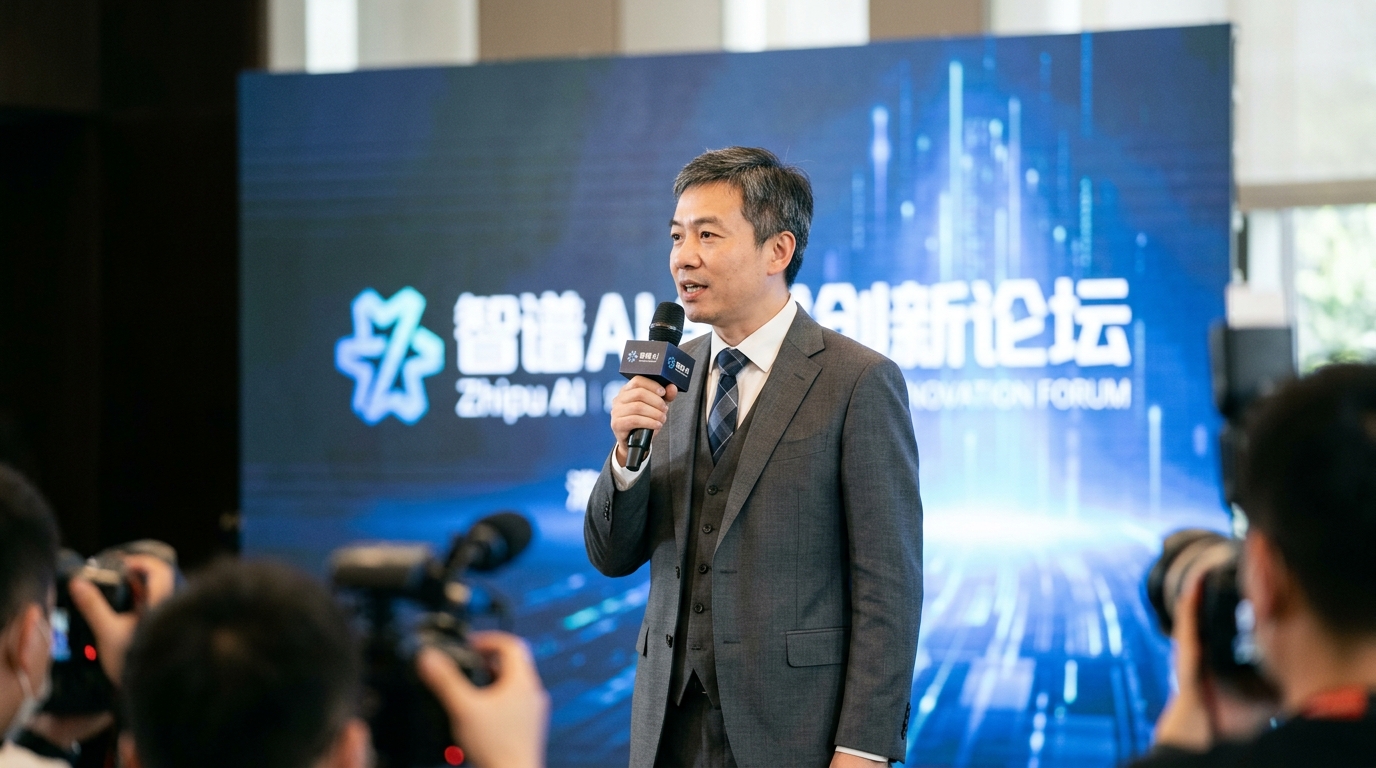
In the complex tapestry of the global race for Artificial Intelligence supremacy, Zhipu AI is emerging as the contender that refuses to be overshadowed by Silicon Valley’s titans. According to recent reports, the company—a high-profile spin-off from Beijing’s prestigious Tsinghua University—is planning a secondary share sale worth billions of dollars. This move is more than a mere financial transaction; it is a strategic assertion of power at a time when geopolitical tensions and semiconductor embargoes threaten to stifle Beijing’s technological ascent.
Strategic Liquidity Amidst a Market Rebound
Zhipu AI, one of the so-called “AI Tigers” of China, aims to capitalize on the renewed investor appetite for tech stocks. The planned share sale is expected to draw interest from both domestic heavyweights and international investors, despite Washington’s tightening grip on capital flows into sensitive Chinese technologies. Having already secured backing from the likes of Alibaba, Tencent, and Meituan, Zhipu possesses a level of institutional credibility that is rare among startups.
The hunger for capital is driven by necessity. Developing Large Language Models (LLMs) requires astronomical investment in compute power and top-tier talent. Unlike its American counterparts, Zhipu must also navigate the added costs of circumventing Nvidia chip bans, investing heavily in domestic hardware optimization and software architectures that can extract maximum performance from less powerful silicon.
The Tsinghua Pedigree and the GLM Advantage
What sets Zhipu apart from its domestic rivals is its deep academic lineage. Born out of the Knowledge Engineering Group (KEG) at Tsinghua University, the Zhipu team has developed the GLM (General Language Model) series. These models are widely regarded by analysts as the most capable Chinese challengers to OpenAI’s GPT-4, particularly in tasks requiring nuanced understanding of the Chinese language and its intricate cultural context.
“We are not just building an algorithm; we are constructing the infrastructure for China’s next industrial revolution,” sources close to the company suggest.
The company’s strategy operates on two fronts: providing proprietary, high-security models for large-scale enterprises and fostering a robust open-source community. This hybrid approach has allowed Zhipu to cultivate an ecosystem of thousands of developers who continuously refine its technology, creating a formidable bulwark against Western software hegemony.
Navigating the Geopolitical Minefield
The share sale comes as the United States intensifies its pressure on China’s tech sector. Export restrictions on high-end GPUs have forced Zhipu and its peers to become exceptionally resourceful. The firm has forged strategic alliances with domestic chipmakers like Moore Threads and Huawei, attempting to bridge the performance gap through software-level innovations and distributed computing techniques.
Yet, the fundamental question remains: can Chinese AI truly flourish in an environment of information control and resource scarcity? Zhipu is betting that the sheer scale of the Chinese market and the abundance of local data will compensate for hardware deficiencies. The success of this multi-billion dollar share sale will serve as a litmus test for investor confidence in China’s AI sovereignty.
Conclusion: A Race Without a Finish Line
Zhipu AI is more than a company; it is a symbol of China’s technological resilience. Its move to raise billions suggests that the AI war is entering a new, more capital-intensive phase. As the performance gap between Eastern and Western models appears to be narrowing, the ultimate victory may be decided by financial endurance and the ability to integrate AI into the real economy. For Zhipu, the goal is clear: to become the national champion that leads China into the age of generative intelligence.