

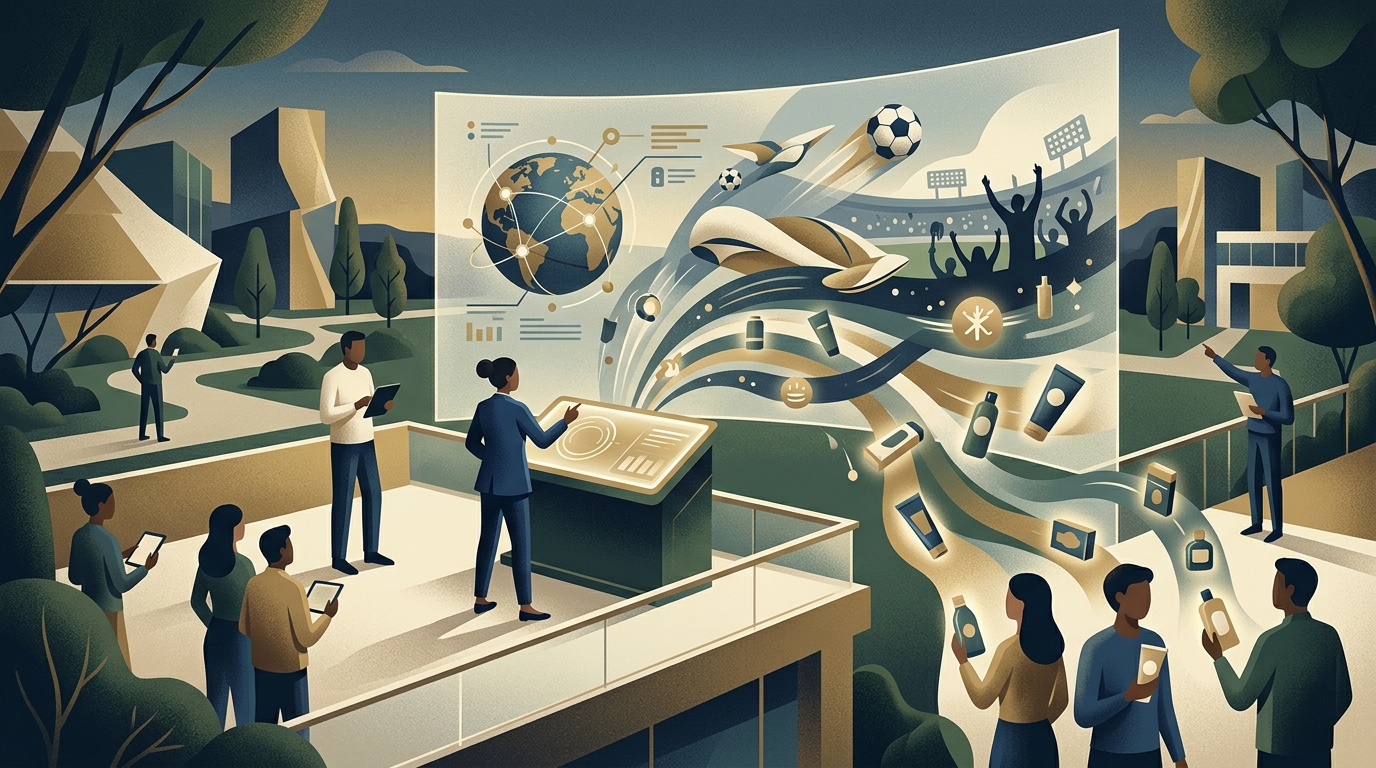
As World Cup 2026 fever grips the globe, consumer goods giant Unilever is moving far beyond traditional sponsorship models. With a strategy dubbed ‘desire at scale,’ the company behind iconic brands like Dove, Rexona, and Hellmann’s is attempting something unprecedented: utilizing Generative AI to bridge the emotional high of the stadium with the supermarket trolley in real-time.
The New Era of Marketing: From Mass to Individual
For decades, World Cup sponsorships were about 'awareness.' Corporations paid billions to see their logos plastered on stadium hoardings. But in 2026, Unilever is flipping the script. The concept of ‘desire at scale’ is no longer about everyone seeing the same advertisement; it’s about every fan seeing a version tailored to them, based on their data, location, and the live narrative of the match they are watching.
Using advanced AI algorithms, Unilever is generating thousands of content variations in seconds. For instance, if the Brazilian national team scores, fans in São Paulo might receive a personalized offer for Rexona deodorants themed around the ‘freshness of victory,’ while simultaneously in London, a Hellmann’s campaign might suggest recipes for a ‘commiseration party’ with a touch of British wit. This real-time adaptability is what the company’s leadership views as the 'Holy Grail' of modern commerce.
The Tech Behind the Emotion
Executing this strategy requires a formidable data infrastructure. Unilever has invested heavily in proprietary AI models that analyze social media trends, weather patterns, and match statistics. The goal isn't just a transaction, but a psychological bond. As company executives note, AI allows brands to behave more like 'friends' watching the game alongside the consumer, rather than faceless multinationals.
- Automated video and graphic creation for social media in over 40 languages.
- Predictive inventory analysis to ensure products are on shelves in high-demand areas during key matches.
- Collaborations with influencers powered by AI-generated insights to create content that resonates perfectly with their specific niche.
Challenges and Ethical Dilemmas
However, this strategy is not without its pitfalls. Hyper-personalization demands vast amounts of user data, raising privacy concerns at a time when regulations, particularly in the EU, are tightening. Furthermore, there is the risk of 'AI fatigue.' If consumers feel that every emotion they experience during a match is being commodified by an algorithm, the backlash could be significant.
“We aren’t just building campaigns; we are building ecosystems of desire,” a senior Unilever marketing executive stated. “The challenge is to remain human within an ocean of code.”
Ultimately, Unilever’s World Cup 2026 bet will serve as the definitive case study for the future of global retail. If successful, it will prove that AI can indeed scale human desire without sacrificing authenticity. If it fails, it will be a costly reminder that some things—like the raw passion of football—might be too complex for any algorithm to fully master.





