

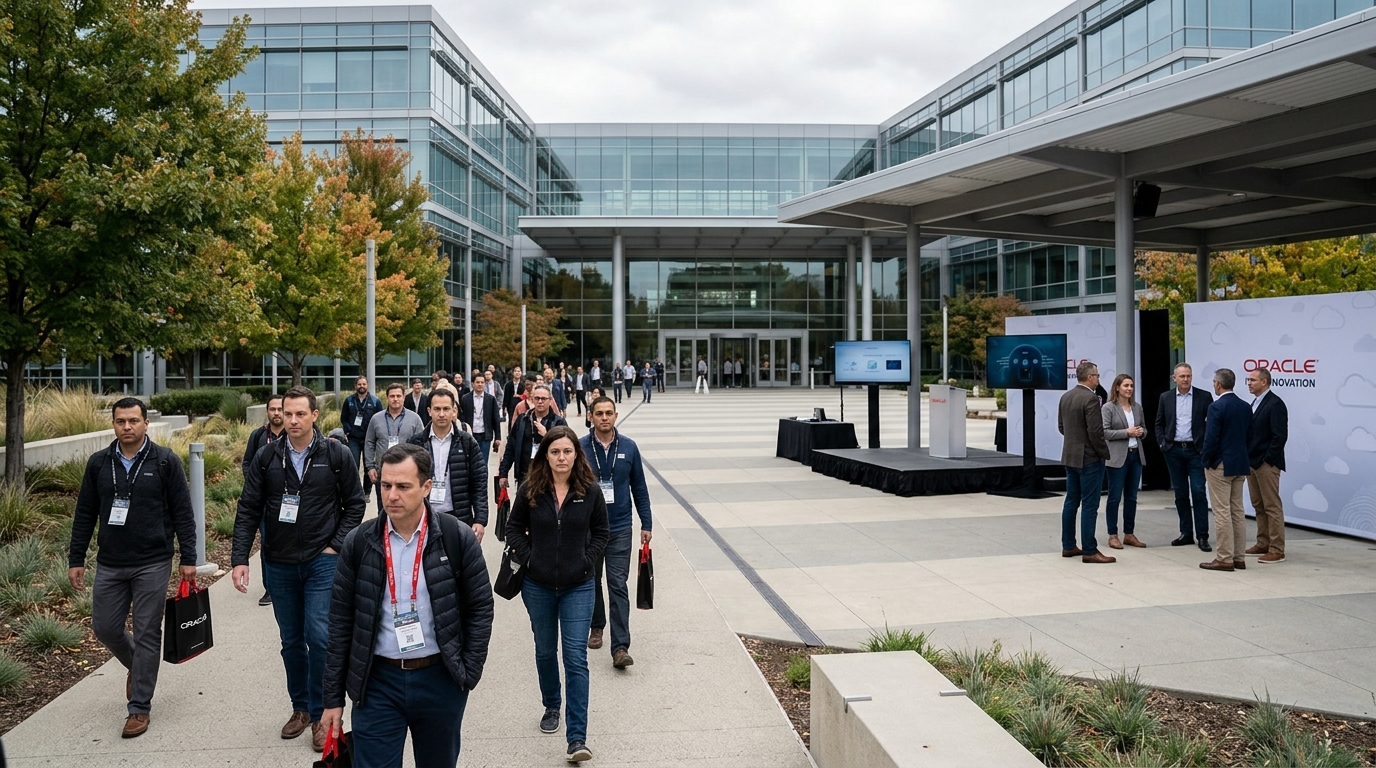
In a move that is sending shockwaves through the global technology industry, Oracle Corp. has revealed a reduction of 21,000 employees from its workforce over the past twelve months. The disclosure, detailed in the company's 2026 annual fiscal report, confirms a long-standing fear among analysts: Artificial Intelligence (AI) is no longer a peripheral threat to employment, but a primary driver of large-scale corporate restructuring.
The scale of these cuts is significantly larger than previously anticipated. According to Wall Street sources, Oracle did not merely engage in a post-pandemic "right-sizing" but executed a fundamental pivot in its operating model. Management has explicitly acknowledged that a substantial portion of these roles were eliminated because their functions are now handled more efficiently by automated systems and generative AI agents.
The Dawn of the 'Autonomous Enterprise'
Oracle's founder and chairman, Larry Ellison, has long been a vocal proponent of total automation. With the introduction of the "Autonomous Database" years ago, the company laid the groundwork for reducing the need for human database administrators. However, 2026 marks a decisive escalation. The integration of advanced large language models (LLMs) and AI agents into sales, customer support, and marketing functions has allowed the company to operate with a fraction of its former headcount.
"This isn't just about cost-cutting," said a senior Oracle executive speaking on condition of anonymity. "It’s about velocity and precision. The AI systems we’ve deployed can handle Tier 1 and Tier 2 support queries in milliseconds, with zero fatigue and near-zero error rates. The need for massive call centers and junior development teams has essentially evaporated."
Sectors Most Impacted by the Shift
The layoffs were not distributed evenly across the organization. The hardest-hit areas include customer support, cloud sales operations, and administrative services. Interestingly, even software engineering departments were affected; AI-powered code generation tools have so significantly boosted the productivity of senior engineers that fewer junior developers are required for routine coding and testing tasks.
- Customer Support: Over 40% of global support roles were replaced by next-generation AI chatbots capable of complex problem-solving.
- Sales: Predictive AI models have reduced the necessity for human-led cold calling and lead qualification.
- Data Management: Full automation of cloud infrastructure has rendered thousands of technical support positions redundant.
Social and Economic Implications
Oracle’s move is being viewed by many as a bellwether for the broader service and technology sectors. While shareholders reacted positively—Oracle’s stock rose 4% following the announcement due to expected margin expansion—labor unions and sociologists are sounding the alarm. The pressing question remains: where will these displaced workers go?
"Oracle is showing us the harsh face of digital transformation. If a company of this scale can replace 15% of its workforce with algorithms in a single year, the social contract between technology and labor has been permanently broken," says Dr. Nicholas Pappas, a labor relations analyst.
The debate over Universal Basic Income (UBI) and radical workforce retraining is expected to intensify in both the US and Europe. Oracle’s data serves as empirical evidence that "digital unemployment" is no longer a theoretical scenario but a reality that is costing thousands of livelihoods daily.





