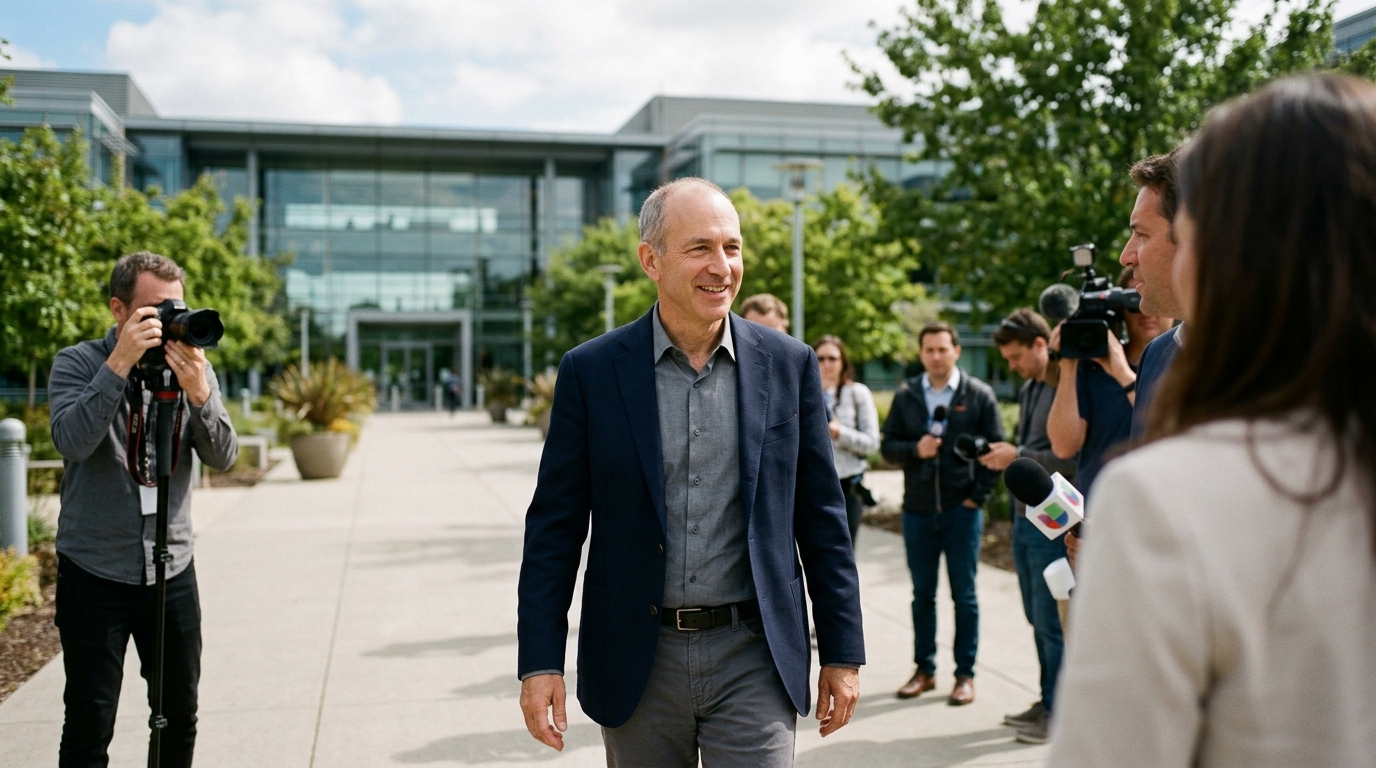
The history of artificial intelligence is often written as a series of high-stakes talent migrations, but the latest news from Reuters marks a watershed moment for the industry. Noam Shazeer, a titan of computer science and a co-lead of Google’s Gemini project, has decided to cross the lines. His move to OpenAI, which is currently navigating the complex waters of a pre-IPO restructuring, is far more than a simple career change; it is a seismic shift in the balance of power within Silicon Valley.
The Architect of the Modern Era
To understand the weight of this defection, one must look back to 2017. Shazeer was a primary author of the seminal paper "Attention Is All You Need," which introduced the Transformer architecture. This single breakthrough is the foundation of every major AI model today, from GPT-4 to Gemini and Claude. Shazeer is not merely a researcher; he is one of the few individuals whose intellectual DNA is embedded in the very tools we use daily. His recent return to Google—facilitated by a multi-billion dollar deal to license technology from his startup, Character.ai—was seen as a crowning achievement for CEO Sundar Pichai. His departure now, for OpenAI, is a staggering blow to Google’s morale and strategic roadmap.
OpenAI’s IPO Ambitions and the Talent Monopoly
OpenAI is no longer the idealistic non-profit lab of its founding days. Under Sam Altman’s leadership, it has transformed into a commercial juggernaut with a valuation exceeding $150 billion. As the company prepares for a historic Initial Public Offering (IPO), the acquisition of Shazeer serves as a powerful signal to Wall Street. It suggests that OpenAI is not just maintaining its lead through first-mover advantage, but by systematically vacuuming up the world’s most critical intellectual capital. For institutional investors, Shazeer’s presence on the payroll is a de-risking mechanism for the upcoming S-1 filing.
- The move solidifies OpenAI’s dominance in the LLM space ahead of GPT-5’s release.
- Google faces a leadership vacuum in its core Gemini development team.
- The impending OpenAI IPO is poised to become the largest tech listing in history.
- Regulatory scrutiny regarding "acqui-hiring" and talent concentration is expected to intensify.
The Geopolitics of Brain Drain
The movement of a single individual might seem trivial in a global economy, but in the AI sector, talent is the only true currency. We are witnessing the creation of a "talent monopoly" where a handful of firms control the trajectory of AGI. This concentration of power has profound implications for global policy. If OpenAI successfully centralizes the creators of the Transformer architecture, they effectively control the evolution of the technology. This raises significant antitrust questions: can a company be considered a monopoly if it doesn't just control the market, but the very minds capable of creating competitors?
"AI is not built with silicon alone, but with the intuition of the pioneers who envisioned it. Losing Shazeer is akin to a major power losing its lead scientist during the Manhattan Project."
As OpenAI moves toward its public debut, the stakes could not be higher. Shazeer’s defection highlights the brutal reality of the 2026 AI landscape: it is an all-or-nothing race where the winner takes all, and the losers are left with legacy systems and empty labs. Google, once the undisputed king of research, now finds itself in the uncomfortable position of a feeder club for the new elite.