The story of Nest Labs is not merely a tale of a successful startup; it is the chronicle of Silicon Valley’s attempt to venture into our most private sanctuary: the home. It all began with a frustration. Tony Fadell, the man instrumental in the creation of the iPod and iPhone, retired from Apple to build an energy-efficient home in France. There, he discovered that the thermostats on the market were ugly, difficult to use, and technologically archaic. This personal annoyance gave birth to Nest, a company that would transform a boring wall fixture into an object of desire.
The Aesthetics of Utility and the Apple Spirit
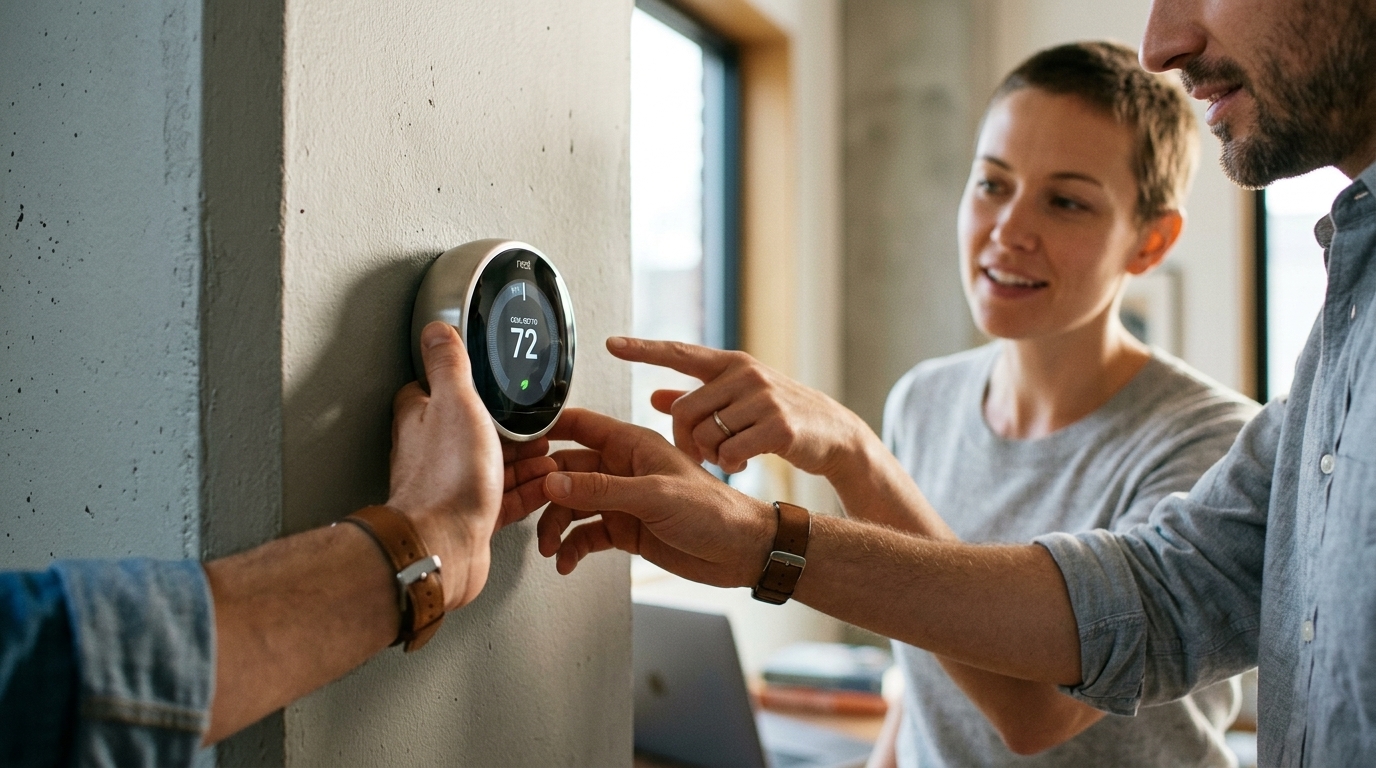
When Fadell and co-founder Matt Rogers unveiled the Nest Learning Thermostat in 2011, the market was stunned. It wasn't just its circular, metallic appearance reminiscent of Henry Dreyfuss’s classic designs, but also its intelligence. The device "learned" user habits, lowering the heat when they were away and adjusting temperatures based on their schedule. It was the first time a home appliance was treated with the same level of care in design and software as a smartphone.
Nest’s strategy was clear: take the "unloved" objects in the home and make them smart. The thermostat was followed by the Nest Protect smoke detector, which, instead of screaming incessantly, spoke to the user in a calm voice. Nest wasn't just selling hardware; it was selling the promise of a "conscious home" that looks after its inhabitants without demanding constant attention.
The Google Acquisition and Cultural Friction
In 2014, Google acquired Nest for $3.2 billion, a move that sent shockwaves through the tech world. For Google, Nest was the bridge to the Internet of Things (IoT). However, integration was far from seamless. Nest’s culture, influenced by Apple’s perfectionism and secrecy, clashed with Google’s open, data-driven approach. Reports of Fadell’s abrasive leadership and delays in new product development began to surface.
"We’re not just building gadgets. We’re building the infrastructure of the future," Fadell stated at the time, but the reality proved more complex.
Fadell’s departure in 2016 marked the end of an era. Nest ceased to be an independent entity and was gradually absorbed into Google’s hardware division, eventually being rebranded as Google Nest. This transition was accompanied by significant privacy concerns. Users who once trusted a small startup with their home heating now had to reconcile with the idea that an advertising giant had access to their motion sensors and home cameras.
From Closed Ecosystems to the Matter Standard
Today, Nest’s legacy stands at a critical juncture. The smart home market, which Nest helped create, suffered for years from fragmentation. Nest devices didn't always play well with Amazon or Apple ecosystems. This "walled garden" approach began to crumble with the advent of the Matter standard, an alliance of major tech players aimed at ensuring device interoperability.
Nest, under Google’s umbrella, is now trying to redefine itself not as a manufacturer of individual devices, but as the brain of a proactive home. With the help of artificial intelligence (Gemini), the thermostat doesn't just follow a schedule; it understands the context of the energy crisis and dynamic electricity pricing. The challenge remains: can technology become truly invisible and helpful, or will it remain a source of constant notifications and digital anxiety?
- Nest proved that industrial design is as vital as software in home appliances.
- The Google acquisition highlighted the difficulties of integrating a hardware startup into a service-oriented organization.
- Privacy remains the single largest hurdle for the universal adoption of smart home tech.
- The shift toward the Matter standard indicates that the future belongs to collaboration rather than exclusion.
Ultimately, Nest didn't just build a better thermostat; it changed our expectations of the objects that surround us. Whether this "smart" future is ultimately in the interest of the consumer or the corporations collecting their data remains the defining question of our decade.