In the heart of the American automotive industry, Detroit, the word "innovation" is often synonymous with the promise of total automation. However, Ford Motor Company recently faced a stark reality: Artificial Intelligence (AI), no matter how sophisticated, cannot yet replace the instinct and decades of experience held by seasoned professionals. After a period of intense pressure to cut costs through digitalization, the company announced it is rehiring veteran inspectors—the so-called "gray beards"—to rectify the errors that AI systems are consistently missing.
The Price of Rushed Digitalization
Ford has struggled for years with massive warranty costs and product recalls. In 2023, the company spent nearly $4.8 billion on warranty repairs, a figure that significantly exceeds its primary competitors. The initial solution proposed was the mass implementation of computer vision systems and machine learning algorithms across assembly lines. The promise was simple: faster inspections, zero human error, and a reduction in labor costs.
Yet, the reality proved far more complex. AI systems, while excellent at identifying predefined defect patterns, are often confused by environmental variables, such as changes in factory lighting or subtle variations in a component's texture. This resulted in either "false negatives," where defective parts were allowed through, or "false positives," which halted production lines for insignificant details that had no impact on vehicle functionality.
The Return of the Veterans
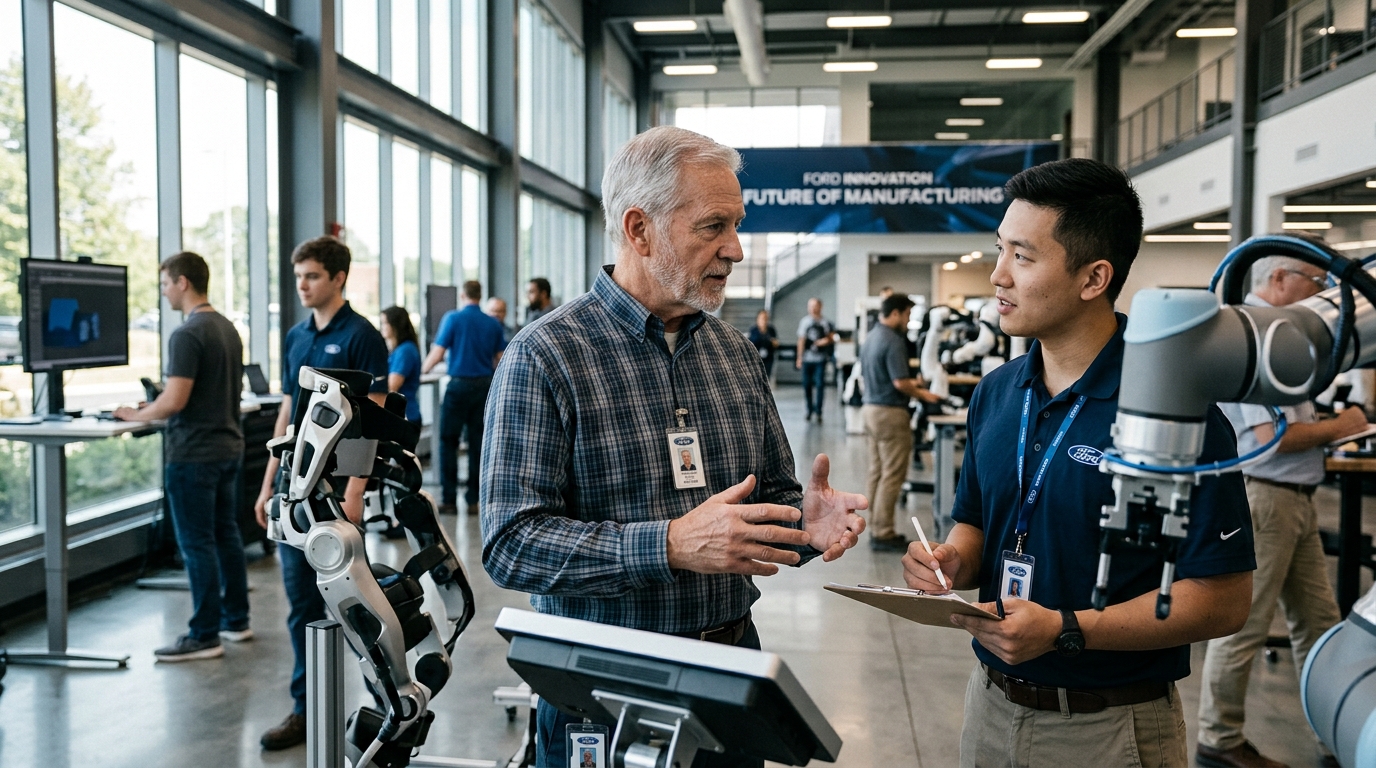
The "gray beards" are not just experienced workers; they are the custodians of tacit knowledge that has not yet been encoded into any algorithm. A veteran inspector can "hear" an anomaly in an engine before sensors even register it, or feel a microscopic blemish in the paint that a 4K camera deems acceptable. Ford realized that the absence of this human intuition was costing more than the savings offered by automation.
- Experience allows for the identification of flaws resulting from a combination of multiple subtle factors.
- Veterans serve as mentors for the younger generation of workers, bridging the widening knowledge gap.
- Human judgment is essential for assessing the actual severity of a technical issue versus a cosmetic one.
"Technology is a tool, not a replacement for human judgment. At Ford, we are learning that the best quality comes when AI supports the human, rather than trying to displace them," says a company executive speaking on condition of anonymity.
Jim Farley's Strategic Pivot
Ford CEO Jim Farley has made quality the group's absolute priority. The move to bring back retired inspectors is part of a broader admission: the transition to electric vehicles and the digital age cannot come at the expense of reliability. Ford isn't abandoning AI; rather, it is redefining its role. AI systems are now being retrained based on the feedback of these veterans in a process of "human-in-the-loop" reinforcement learning, where the human remains the ultimate arbiter of quality.
This development sends a loud message to the entire manufacturing industry. As companies rush to adopt Generative AI and other forms of automation, Ford's case serves as a reminder that technological superiority without the bedrock of human experience is fragile. The "gray beards" are returning not to fight the machines, but to teach them how to be better, ensuring that the next F-150 rolling off the line is worthy of its legacy.