

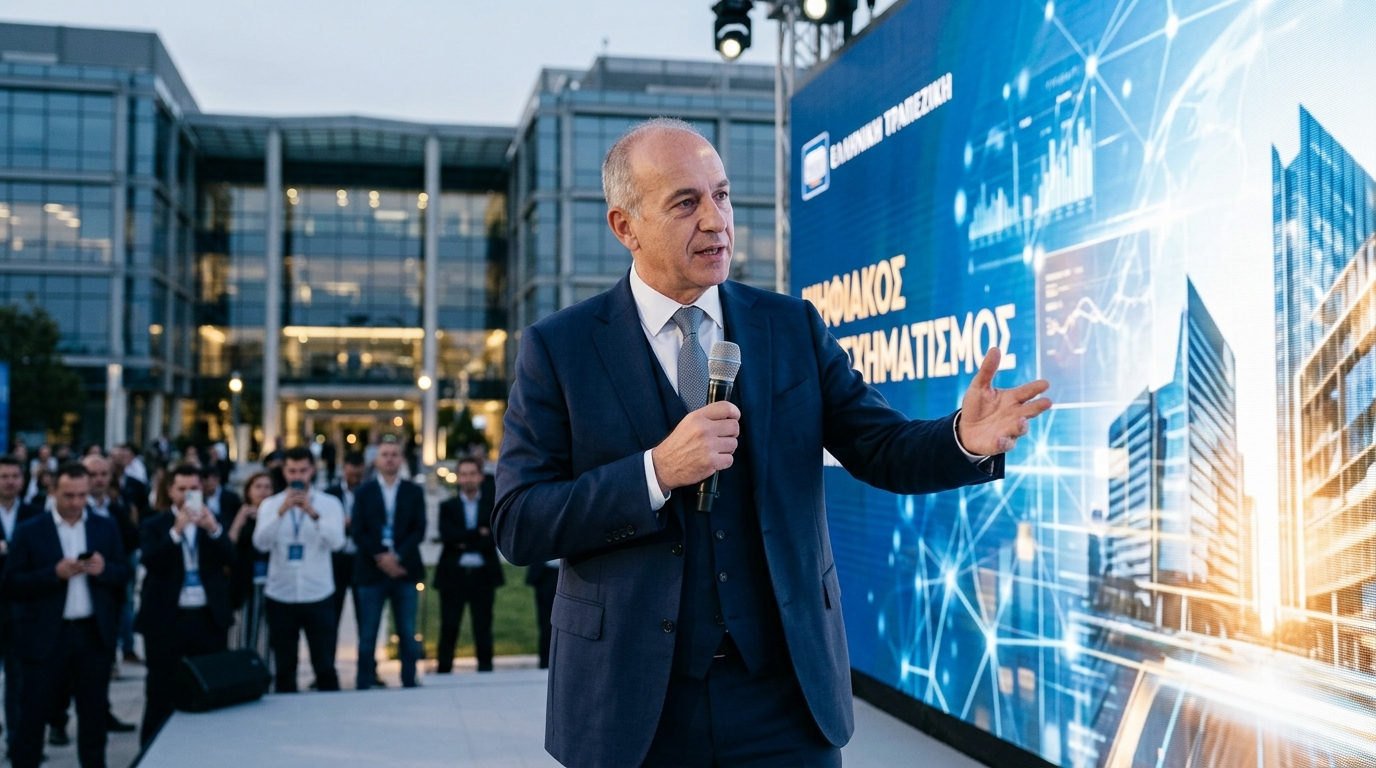
In a move that reshapes the banking landscape not only in Greece but across the wider Southeastern European region, Eurobank has announced an ambitious investment program totaling €1 billion through 2027. This investment is not merely a technological upgrade; it represents a radical paradigm shift where Artificial Intelligence (AI) and digital banking transition from supporting tools to the central engine of the organization.
Anatomy of a Landmark Investment
The €1 billion sum is earmarked for three primary pillars: cloud infrastructure, the integration of advanced AI models, and the comprehensive digitization of internal processes. According to bank executives, the goal is to create an "intelligent" organization capable of anticipating customer needs before they even manifest. Moving to the cloud allows the bank to process vast amounts of data in real-time, a feat that was impossible with traditional legacy systems.
Particular emphasis is being placed on Generative AI. Eurobank intends to develop its own language models, tailored to the specificities of the Greek market and banking terminology. This will enable the creation of digital assistants that go beyond standardized responses, offering personalized financial advice, analyzing spending patterns, and suggesting investment strategies with a precision that rivals human expertise.
Hyper-Personalization: The Customer at the Core of the Algorithm
The era of mass banking is coming to an end. Through the use of AI, Eurobank aims for "hyper-personalization." Every user of the mobile app will experience a different interface, customized to their specific habits. For instance, if a customer travels frequently, the app will automatically suggest travel insurance plans or currency exchange at preferential rates.
However, the investment isn't just about the storefront. In the back office, algorithms are taking over credit risk assessment. This translates to faster loan approvals for reliable borrowers, as AI can analyze thousands of parameters in seconds, reducing bureaucracy and waiting times at branches. Security is also a top priority, with machine learning systems detecting suspicious transactions and phishing attempts with far greater efficiency than traditional filters.
Challenges and the Human Element
Such a transition is not without its hurdles. The looming question is what becomes of the workforce. Eurobank's management clarifies that the investment includes an extensive upskilling and reskilling program for its employees. The objective is to shift staff from low-value clerical tasks to advisory roles where human empathy and judgment remain irreplaceable.
Furthermore, there is the issue of ethical data usage. In an age where privacy is paramount, the bank must balance providing smart services with protecting customer data, strictly adhering to the GDPR framework and the new EU AI Act guidelines.
Strategic Expansion and Competition
Eurobank's move comes at a time when competition from neobanks and fintech companies (such as Revolut) is intensifying. By investing €1 billion, the bank sends a clear signal that systemic players can be just as agile and innovative. Simultaneously, this technological superiority will serve as Eurobank's "weapon" for further expansion in the markets of Cyprus and Bulgaria, where it seeks to export its digital model.
In conclusion, Eurobank is not just buying software; it is purchasing its ticket to the next decade of the global financial system. The success of this venture will be judged by whether customers feel a real improvement in their daily lives or if technology becomes yet another wall between the bank and the citizen.





