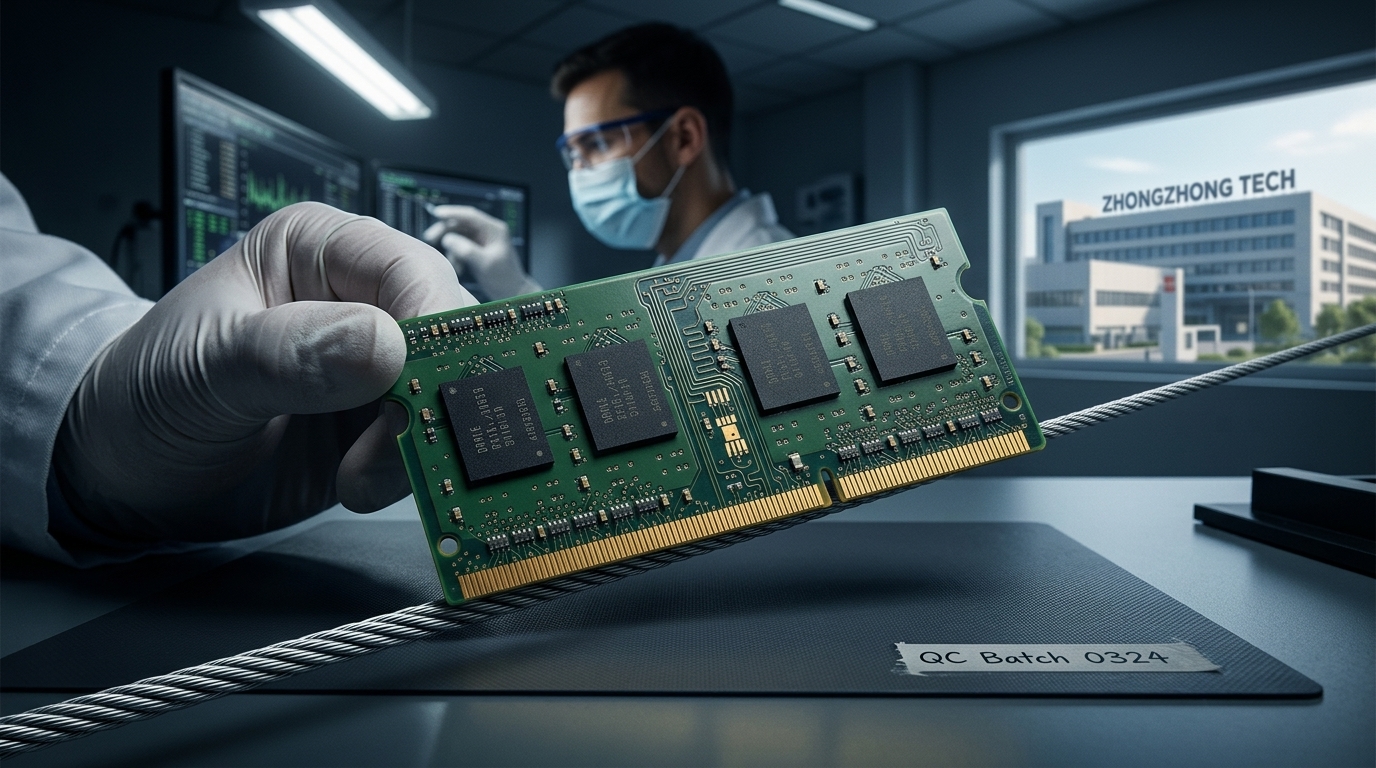
In a move that highlights the precarious balance between national security and corporate profitability, Apple Inc. is reportedly lobbying the U.S. government for a controversial waiver. According to reports from the Financial Times and The Verge, the Cupertino-based tech giant is seeking permission to source RAM chips from ChangXin Memory Technologies (CXMT)—a company currently on the Pentagon's blacklist due to alleged ties to China's People's Liberation Army (PLA).
The Strategic Necessity Behind the Risk
Apple’s decision to pivot toward CXMT is neither accidental nor due to a lack of Western alternatives. It is the result of a perfect storm in the semiconductor market. As we move through 2026, the AI boom has cannibalized much of the world’s high-speed memory production. Traditional Apple suppliers, such as Samsung and SK Hynix, have shifted their focus to producing High Bandwidth Memory (HBM) for AI servers, leaving the consumer device market with tightened supply and skyrocketing prices.
For Apple, CXMT represents a critical pressure-relief valve. The Chinese firm has successfully scaled its production to levels that make it highly competitive, offering pricing that Korean and American manufacturers can no longer guarantee for legacy and standard DRAM. In a world where iPhone margins are being squeezed by rising component costs, access to cheaper RAM is not just an option—it is a financial necessity to maintain shareholder value.
The Pentagon and the Specter of Espionage
However, this pursuit hits the wall of geopolitics. CXMT’s inclusion on the Pentagon’s list of "Chinese military companies" is rooted in the belief that the company’s technological advancements directly fuel the modernization of China’s armed forces. Apple’s critics argue that any flow of dollars to CXMT constitutes indirect funding of a U.S. military rival.
"Technological sovereignty isn't just about who designs the best software, but who controls the hardware it runs on," defense strategy analysts note.
Apple, for its part, argues that memory chips are "commodities" with no inherent security risks, unlike processors or modems. It claims that using CXMT memory in mass-market consumer products does not threaten national security, whereas banning them harms the competitiveness of an iconic American firm.
The Government's Dilemma
The Trump administration is forced to manage an extremely complex equation. On one hand, there is a commitment to "decoupling" from Chinese technology and protecting American industry. On the other, Apple is the largest taxpayer and one of the most significant pillars of the U.S. stock market. A denial could lead to price hikes for Apple products for American consumers or delays in the launch of new models.
The question now is whether Washington will allow a form of "managed dependency." The possibility of granting a temporary, conditional license is on the table, but doing so would send a contradictory message to other U.S. allies, who are also being pressured to sever ties with Chinese tech suppliers.
Conclusion: The End of Globalization as We Knew It?
The Apple-CXMT case is the ultimate symbol of a new era. The time when supply chains were designed solely based on cost is gone. Today, every transistor carries a flag. Apple’s attempt to preserve its margins through a forbidden Chinese route serves as a stark reminder that complete decoupling from China may remain an elusive goal, even for the most powerful company in the world.