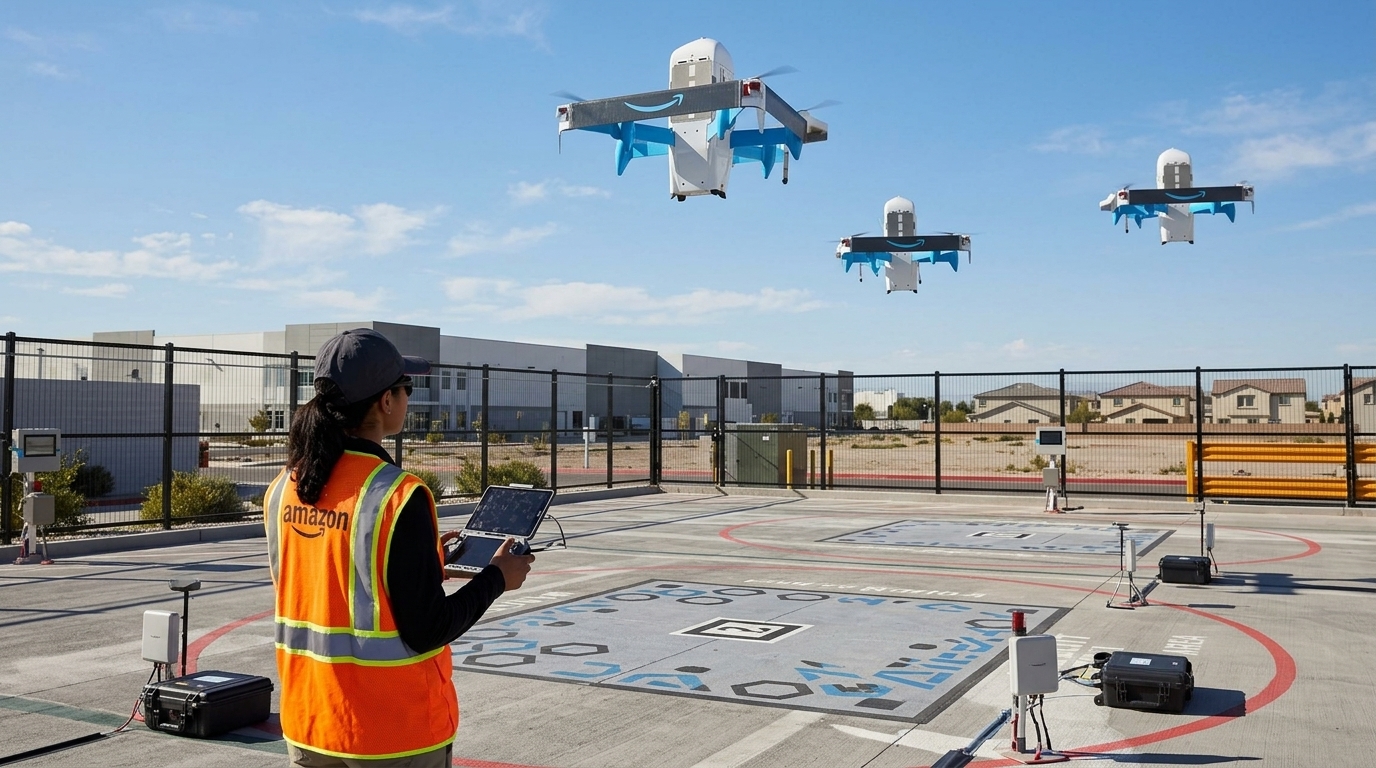
Amazon has announced plans to grow its Prime Air delivery drone service sixfold, aiming to reach nearly 500 cities and towns across the United States by the end of 2026. The expansion is set to make drone delivery available to tens of millions more people but will simultaneously test community tolerance for increased noise pollution from daily flights.
Expansion into Major Hubs
On August 19, the company revealed it would soon launch Prime Air in the metropolitan areas of Chicago, Cleveland, Atlanta, Syracuse, and Boise. Each site covers an operational area of approximately 175 square miles, with delivery times ranging from 30 minutes to one hour.
The move comes amid heating competition. Walmart, partnered with Wing and Zipline, is looking to expand its footprint to over 270 stores by 2027, having already surpassed 1 million drone deliveries. Additionally, Zipline recently announced a partnership with Uber, aiming to scale up to 1 million drone deliveries per day by the end of 2029, building on its record of over 2.7 million deliveries worldwide. Even DoorDash is entering the fray, having recently received FAA certification for its "DoorDash Air" program.
Operational Hurdles and Limitations
While autonomous drones offer potentially lower-emission operations, they remain limited by payload and weather. Amazon’s drones are currently restricted to items weighing five pounds or less that can fit inside a large shoebox. Furthermore, extreme cold, heavy rain, or strong winds can ground the fleet entirely.
Community pushback has emerged as a significant barrier. Residents in Michigan and Texas have likened the sound to a "flying leaf blower" or a small helicopter hovering over their homes multiple times a day. In Richardson, Texas, locals even held a public protest in June, claiming the service has actively altered the ambiance of their neighborhoods.
Safety and Privacy Records
Amazon's safety record has faced scrutiny following several incidents. In October 2025, two drones crashed into a construction crane in Arizona, and in November 2025, another drone downed an internet cable in Waco, Texas. In February 2026, a drone collided with an apartment building in Richardson, Texas. These incidents have triggered investigations by the FAA and the National Transportation Safety Board (NTSB).
Regarding privacy, Amazon maintains that onboard cameras are used strictly for navigation and obstacle detection. The company states there is no live feed monitored by humans. However, residents have voiced concerns about drones hovering over private backyards, citing a loss of personal privacy despite corporate assurances.