

It is a sweltering July morning here in Athens, the kind of heat that makes the marble of the Acropolis shimmer like a mirage. As I sit with my morning coffee, looking at the latest dispatches from the world of Artificial Intelligence, I am struck by a profound irony. While the high priests of technology at UC Berkeley are warning of an "ontological crisis"—fearing that we are merely talking to a void when we prompt our machines—the rest of the world is busy building a new, cold, and very physical reality upon those same algorithms.
I find myself asking: are we losing our metron (measure)? In ancient Greek philosophy, metron was the key to a virtuous life—the balance between extremes. Today, we seem to be oscillating between two fever dreams: the existential dread of a silicon soul and the ruthless pursuit of a digital backbone for our most basic human systems.
The Schism of the Silicon Valley Prophets
There is a civil war brewing in California, a schism that reminds me of the theological disputes of Byzantium. On one side, we have those who see AI as a path to a utopian, post-labor future; on the other, those who fear an existential threat to humanity. This "existential schism" is fascinating, but it often feels detached from the lives of people in the Mediterranean or the worker trying to navigate a job market now poisoned by AI assessments.
"We are so busy debating whether the machine can think that we have forgotten to check if the machine is making us more human, or simply more efficient components of a global ledger."
While Berkeley researchers worry about the "void," companies like Elliott Investment Management are making much more grounded moves. Their stake in CCC—the digital backbone of the insurance industry—shows where the real power lies. It’s not in the philosophy; it’s in the infrastructure. They are building the plumbing of our future lives, and they don't care if the pipes are conscious, as long as the data flows and the profit settles.
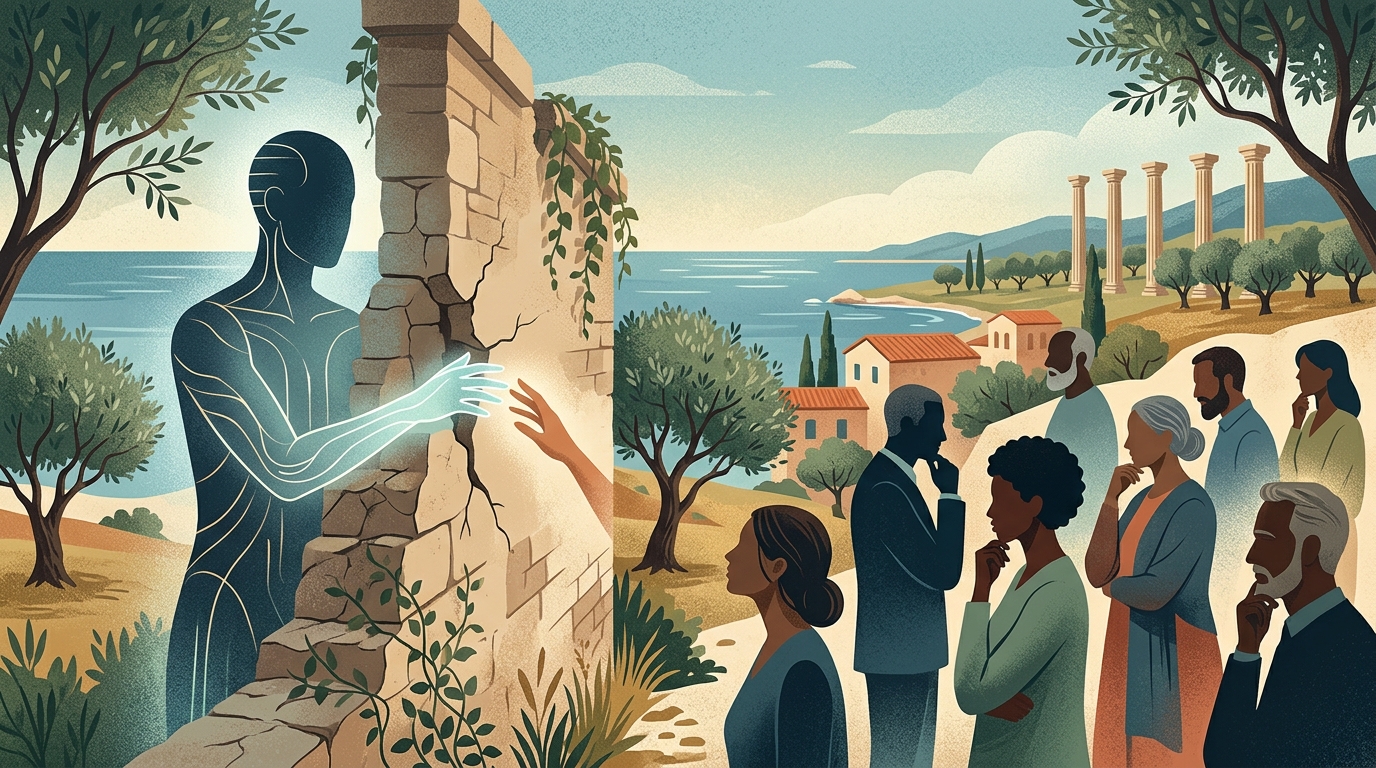
The Wall of Reality and the Greek Perspective
In our own backyard, the disruption is palpable. The Greek banking sector is being redefined by AI, a transformation that promises efficiency but threatens the traditional, human-centric relationship that has defined our local commerce for generations. We see SK Hynix rising as a memory empire, providing the hardware for this revolution, while our retail sector hits what I call the "Wall of Reality."
Retailers were promised a revolution where AI would predict every customer's whim. Instead, they are finding that human behavior is messier than a training set. The "Grand Promise" of retail AI is stalling because humans are not predictable data points; we are irrational, emotional, and prone to changing our minds for no reason other than the way the wind blows off the Saronic Gulf.
A Crisis of Trust: The Deception in our Midst
Perhaps most concerning to me is the erosion of trust. We see Meta struggling to even label AI content correctly—a simple crop of an image can blind their detection systems. More dangerously, we see the job market becoming a hall of mirrors. When AI is used to assess humans, and humans use AI to deceive those assessments, we enter a cycle of mutual dishonesty. Where is the logos—the reasoned truth—in a world where both the applicant and the recruiter are masks worn by algorithms?
I believe we must return to the human element. Whether it is the "self-healing" quantum processors or the war against counterfeits on Amazon, technology is only as valuable as the integrity it preserves. We should not be afraid of the "void" at Berkeley; we should be afraid of the void in our own ethics.
As we move deeper into 2026, my hope is that we find our phronesis—practical wisdom. Let us use AI to heal our processors and protect our markets, but let us never let it replace the handshake, the nuanced conversation, or the fundamental trust that binds a society together. The machine may be the backbone, but we must remain the heart.