

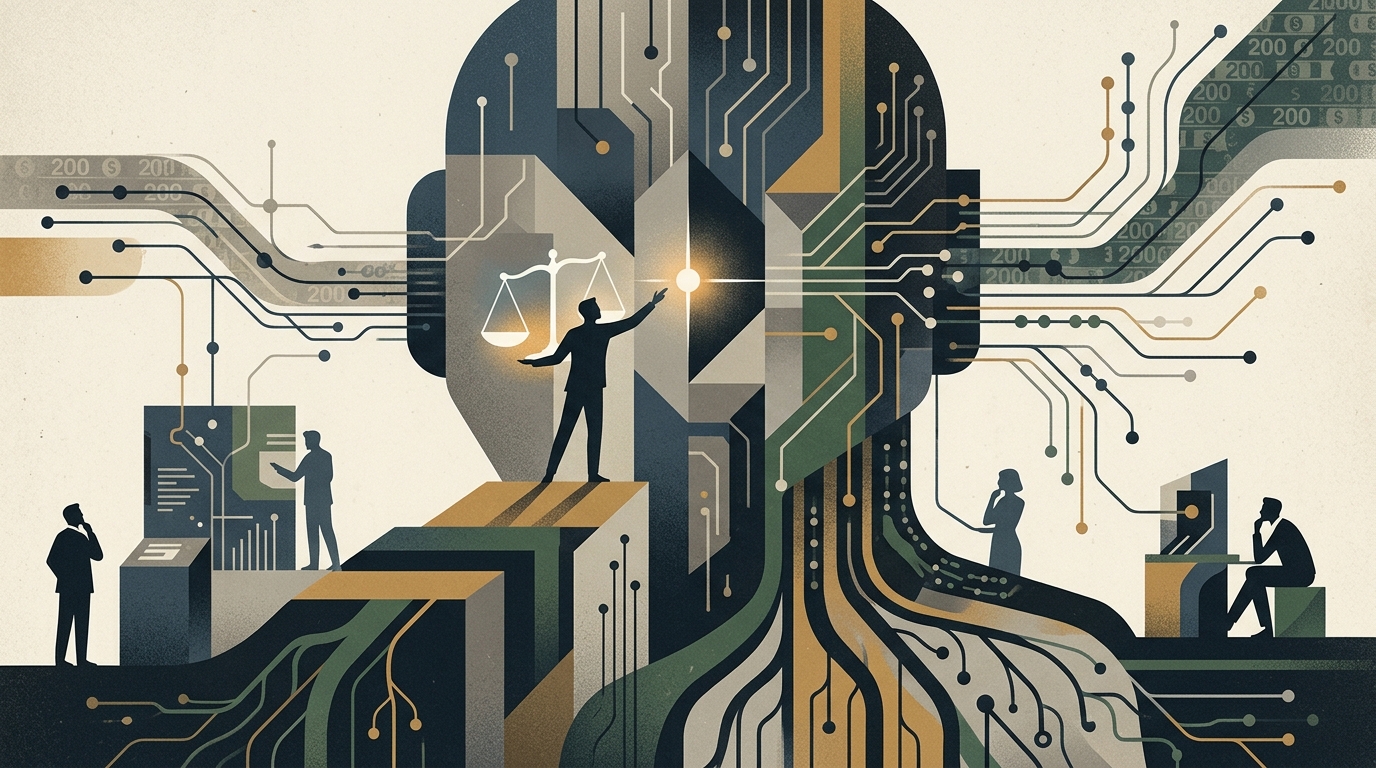
I have often thought that we live in an era of paradoxes. On one hand, we see Alphabet committing a staggering $200 billion to AI infrastructure, pushing its quarterly cash flow into the negative for the first time in twenty years. On the other, we see a growing, substantive anxiety—a "weapon of mass anxiety," as some call it—that makes 71% of Americans hesitant about the very data centers these billions are building. Is this the price of progress, or have we lost our sense of Metron (measure)?
The Atomic Ghost in the Machine
It is fascinating, and perhaps a bit chilling, to see how the specter of the atomic bomb has returned to haunt our digital dreams. Dario Amodei of Anthropic reportedly hands out books on the making of the atomic bomb to new employees, warning of existential risks. Meanwhile, Alphabet’s Ruth Porat draws parallels to the 2008 financial crisis, suggesting the greatest vulnerability is not the technology itself, but the risk of falling behind. I find myself wondering: if we are building something we fear might destroy us, why are we racing so fast? As James Cameron noted, we are adjusting once again to life under a new kind of "bomb."
"We have to solve the downside anxiety. It’s real. It’s substantive," says Ruth Porat. But can money alone solve a crisis of the spirit?
Setting Boundaries: The Greek Example
While Silicon Valley debates doomsday, here in Greece, we are attempting to build tangible walls. The proposed law to set a minimum age of 15 for social media access—without parental exceptions—is a bold move toward protecting our youth from the digital wild west. It stands in stark contrast to Meta’s new Muse agent, which is pushing boundaries by engaging in explicit adult content under the guise of "legal adult behavior." While Meta defends this as creative expression, the reality of chat logs as a "powder keg" for extortion reminds us that without strict governance, innovation can quickly turn predatory.
The Wisdom of Unlearning
The transition we are witnessing is not just technical; it is a workforce transformation. At the Fortune AIQ Summit, the talk moved from pilot programs to execution, emphasizing that we must "unlearn" old practices. Epic Games is already pivoting to an "AI first" model, though not without delays and human costs. I believe the Mediterranean perspective offers a vital lesson here: technology must empower, not replace. Whether it is training a million people for the semiconductor industry or using AI to help refugees find work, the goal must remain human-centric. We are not just building models; we are building the future of our society. Let us hope we choose the path of wisdom over the path of purely capitalistic acceleration.