

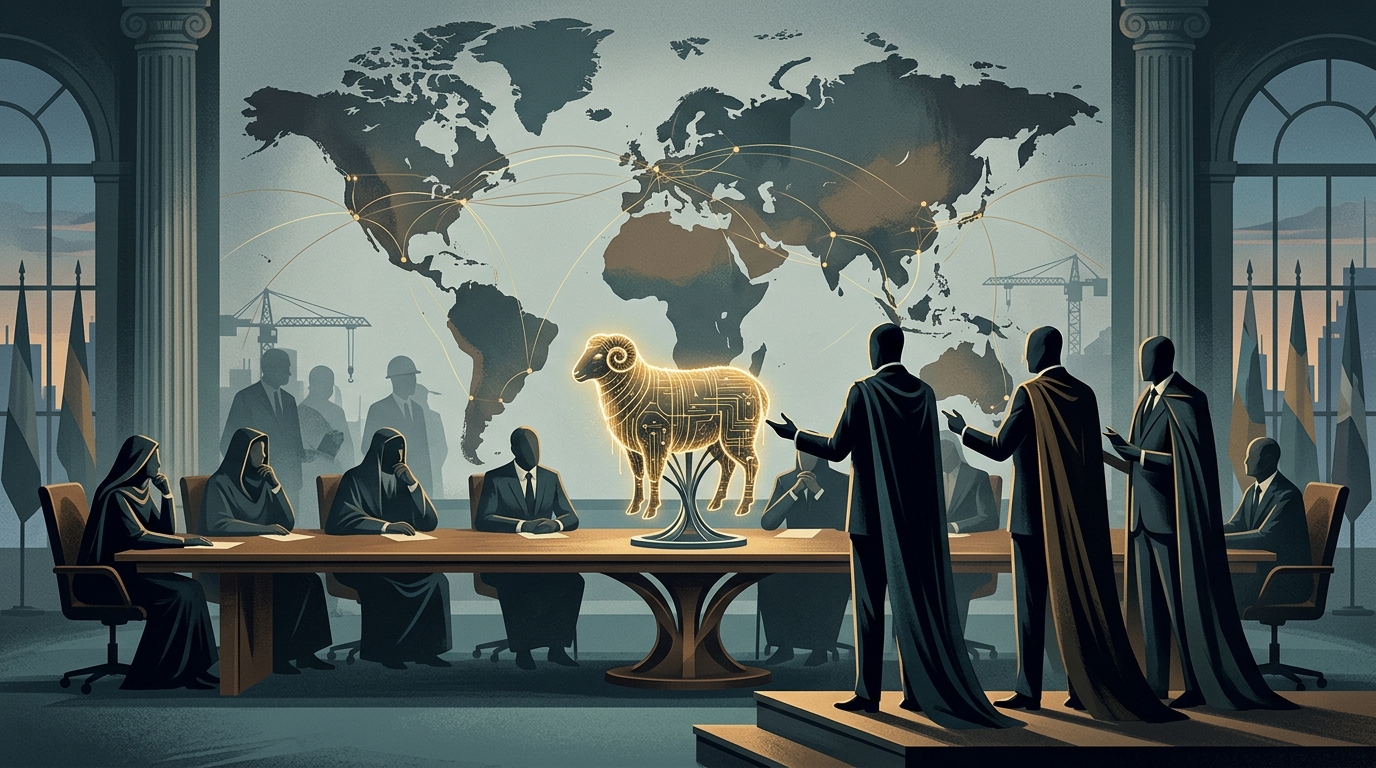
Walking through the 90th Thessaloniki International Fair this week, I couldn’t help but notice a recurring theme that resonates deeply with our Mediterranean sensibilities: the quest for protection and sovereignty in a world that feels increasingly out of balance. While the global stage is dominated by the 'AI Wealth Multiplier'—which has pushed billionaire wealth to a staggering $15.1 trillion—we are seeing a quiet but firm response from those who refuse to be mere spectators in this digital drama.
The Hubris of the Superbillionaires
The numbers from the recent Altrata report are enough to make even the Stoics uneasy. We now have 29 'superbillionaires' controlling 27% of all billionaire wealth. This concentration isn't just about money; it’s about the power to shape reality. We see this in Elon Musk’s public sparring with Chess.com, where he dismisses the complexity of a game older than most modern nations, predicting that AI will 'solve' it through sheer compression. It is the classic hubris of the technologist—the belief that everything, from the human mind to the movements on a chessboard, can be reduced to a manageable dataset.
But this wealth is as volatile as the Aegean in a storm. When Musk loses $18 billion or Larry Ellison drops $50 billion in a single week, it serves as a reminder that the 'AI narrative' is a fickle god. Beyond the stock charts, the human cost of our hyper-connected world is real. The tragic Amazon cargo crash in Miami, involving a 32-year-old converted aircraft, reminds us that while we talk of 'super-intelligence,' our physical infrastructure is often fraying at the edges.
Reclaiming the Human Space
What gives me hope is the pushback. In Greece, the Ministry of Digital Governance is proposing a 'digital adulthood' threshold of 15 and a 'Kids Wallet' to protect our youth from the 'psychological engineering' of major platforms. This is our way of saying that some things—like the development of a child’s mind—must remain sovereign. Similarly, in the United States, The Seattle Times and Newsday are not just suing for money; they are demanding the destruction of AI models that were built on their intellectual property. They are defending their soil, their words, and their right to exist.
Even Europe, so often criticized for its slow pace, has found its wings. The success of Germany’s Isar Aerospace in launching the Spectrum rocket from Norway is a pivotal moment. For the first time, we have a commercial orbital path that doesn't rely on foreign powers or government-heavy bureaucracies. It is 'sovereign access to space'—a phrase that would have sounded like a myth a decade ago.
As we navigate this 'China Shock 2.0,' where overcapacity and state subsidies threaten to break the global economy, we must ask ourselves: what kind of world are we building? Is it one where 29 people hold the keys to the future, or one where we use AI, as Google DeepMind is attempting in the APAC region, to protect biodiversity and support smallholder farmers?
The lesson from our ancestors is clear: Pan Metron Ariston (all things in moderation). Whether it is the mandatory AI adoption in workplaces that leads to 'checkbox' performance or the $1.2 trillion trade surplus in China, extremes lead to breaking points. True progress lies in the 'Middle Way'—using technology to enhance human dignity, not to replace it.