

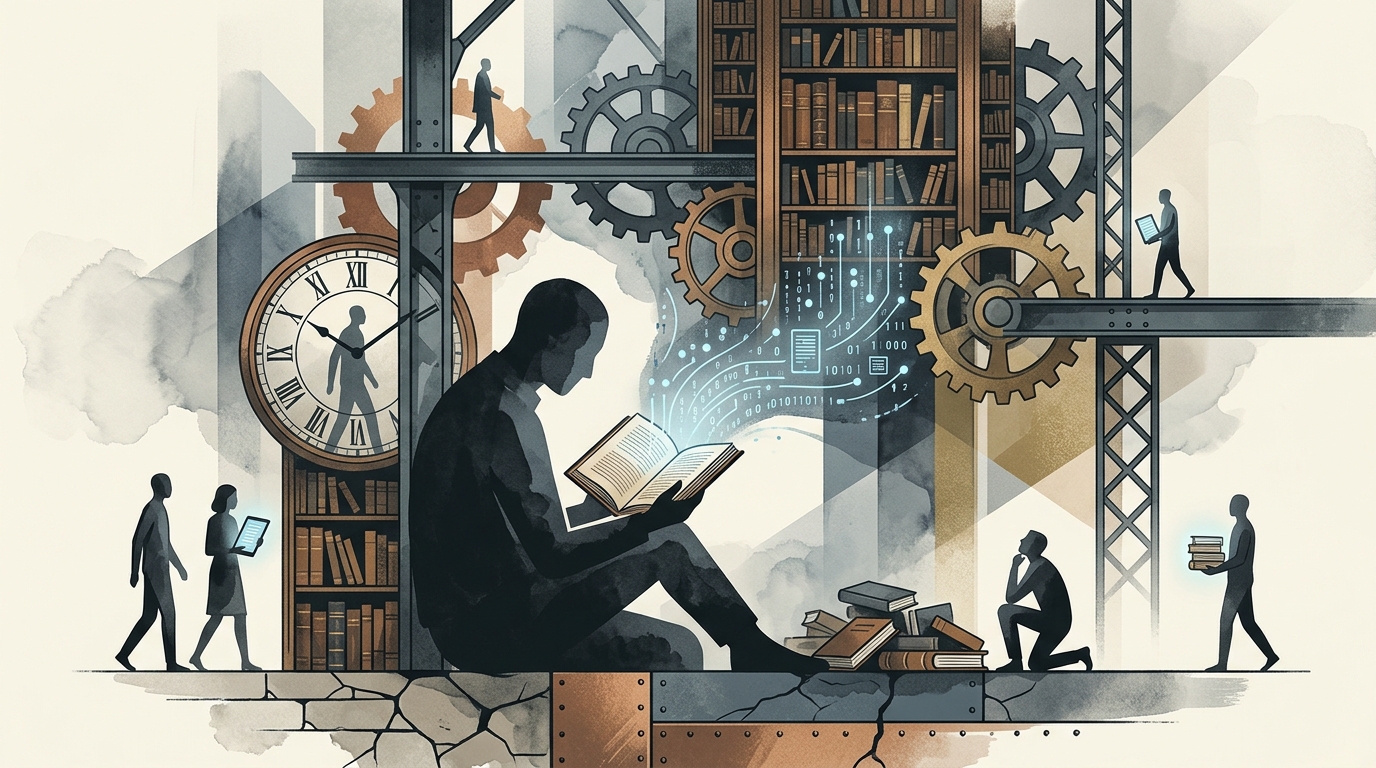
In my corner of the Mediterranean, we have a saying that the foundation of a house is as important as the memories made within its walls. Today, looking at the rapid industrialization of AI, I find myself wondering: are we building a home for humanity, or merely a very efficient factory? We are witnessing a decisive shift where AI is no longer just code on a screen; it is becoming the very steel and sinew of our infrastructure.
The Architecture of Efficiency
I am struck by the pragmatism of the former SpaceX engineers at 1872, who are now automating steel fabrication in Ohio. They aren't chasing the dream of total autonomy, but rather a measured 80 percent. This is a wisdom I recognize—knowing when to stop before the human element is entirely erased. Similarly, companies like Dharma AI are finding ways to squeeze 33% more utility out of GPUs, treating digital demand like a curve rather than a ceiling. This is the logic of the shipyard and the forge applied to the silicon chip.
Even here in Greece, we feel this momentum. The Athens Stock Exchange is holding its ground at 17-year highs, driven by energy and refining, as we await an upgrade to Developed Market status. It seems the world is hungry for stability and tangible assets.
The Sacrifice of the Sacred
But at what cost does this efficiency come? I felt a deep chill reading about Amazon’s "VGT3" facility, where rare books are reportedly being torn from their spines—a practice Michael Burry has called "evil incarnate." To destroy a physical piece of history just to feed an AI model’s hunger for data is a tragedy of the highest order. It is the modern equivalent of burning a library to keep the furnace running. These unique insights, once public, may soon be paywalled within proprietary models.
This same disregard for the human cost is echoing in the courtrooms of Oakland. Meta faces a trial with potential damages of $1.4 trillion—nearly its entire market value—over allegations that it designed platforms to addict our youth. When we treat children’s attention as a raw material to be mined, we shouldn't be surprised when the social fabric begins to fray. Even the emotional bonds we form with machines, like the neurodivergent children who loved the Moxie robot, are fragile. When the servers go dark because a company fails, what happens to the child's "friend"?
The Mediterranean Perspective
As Reddit begins turning its deep text threads into AI-voiced videos and Rogue Studio seeks to become the "HBO of AI" for adult content, the digital world is becoming louder and more visual. But is it becoming wiser? We are building a "modernized video experience," but we are also building loops that allow police surveillance systems like Flock to be misused without verification.
"Consumer product safety is the bedrock of a healthy society," as Julie Scelfo of Mothers Against Media Addiction rightly puts it.
I believe we must demand the same safety standards for our digital world as we do for the steel beams being welded in Cincinnati. Progress is only true progress if it preserves the books we read, the children we raise, and the truth we speak. Otherwise, we are just building a very expensive ruin.