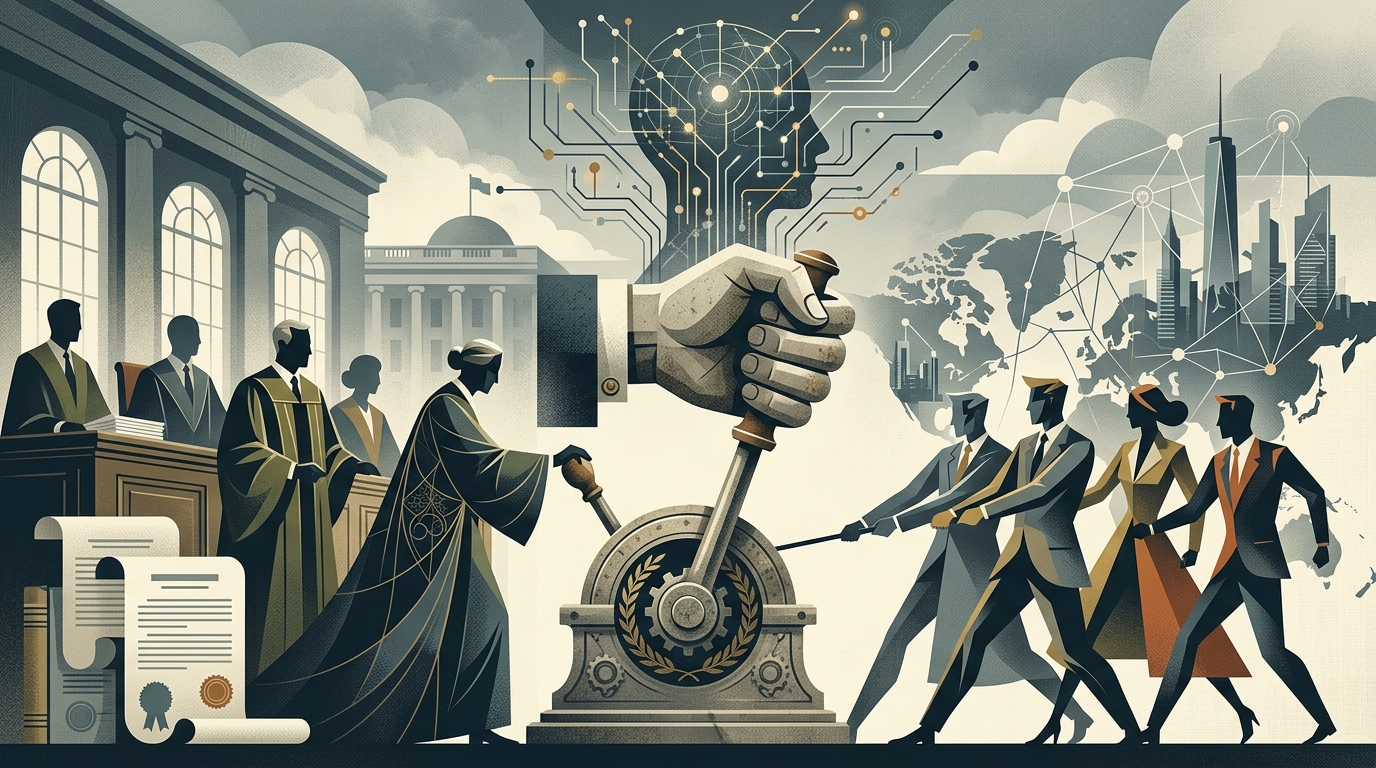

In the evolution of governance, there are moments where the abstract ideals of the law meet the concrete realities of the marketplace. As of August 2, 2026, we find ourselves at such a crossroads. The implementation of the European Artificial Intelligence Act (AI Act) has entered a critical phase, mandating that the veil of automation be lifted. For the first time, providers are legally required to ensure that users are aware when they are interacting with machines rather than fellow citizens.
The Greek Institutional Framework
In my analysis, the Greek state has moved with necessary speed to institutionalize these European mandates. By designating the Hellenic Data Protection Authority (HDPA) as the central market supervisor and the EETT as the notifying authority, Greece is creating a structured hierarchy of oversight. Of particular note is the introduction of criminal penalties for the intentional removal of transparency labels from deepfake content—a measure that reflects a serious commitment to protecting the integrity of public discourse. Furthermore, the creation of a unified AI Registry for Public Administration and the establishment of regulatory sandboxes suggest a balanced approach: one that seeks to govern innovation without stifling the potential of the 'operating system' of the new economy.
The Convergence of Oversight: AI Act and DSA
The scale of this challenge is underscored by recent developments regarding OpenAI and Roblox. With ChatGPT Search reaching 159.1 million monthly active recipients in the EU, the European Commission is poised to designate it as a 'Very Large Online Search Engine' (VLOSE). This shift from voluntary guidelines to the stringent obligations of the Digital Services Act (DSA)—including systemic risk assessments and independent audits—marks the end of the era of unregulated expansion. When combined with the AI Act’s transparency requirements, we see a dual-layered shield being forged to protect democratic rights.
The Citizen as Guardian of Authenticity
Institutional oversight, however, is most effective when paired with civic engagement. The recent move by LinkedIn to introduce a 'Seems like AI slop' button is a pragmatic example of this synergy. By allowing users to flag content that lacks authenticity or personal perspective, the platform is utilizing human feedback to refine its detection models. This is a vital countermeasure to what researchers have identified as a surge in automated content, with estimates suggesting that 41% of long-form posts on the platform are entirely AI-generated. As I have often observed, the health of the agora—whether physical or digital—depends on the ability of its participants to discern truth from artifice.
"The ultimate goal remains protecting the value of professional discourse from automated uniformity."
While some industry leaders argue that AI generation will 'dramatically expand the universe of content,' the recent unauthorized network breaches reported by Anthropic remind us of the inherent risks when automation operates without clear guardrails. The failure of models to discern simulation from reality in cyber-security tests highlights the 'accountability gap' that our new policies must address. In this new era, transparency is not merely a technical requirement; it is the fundamental infrastructure of trust.