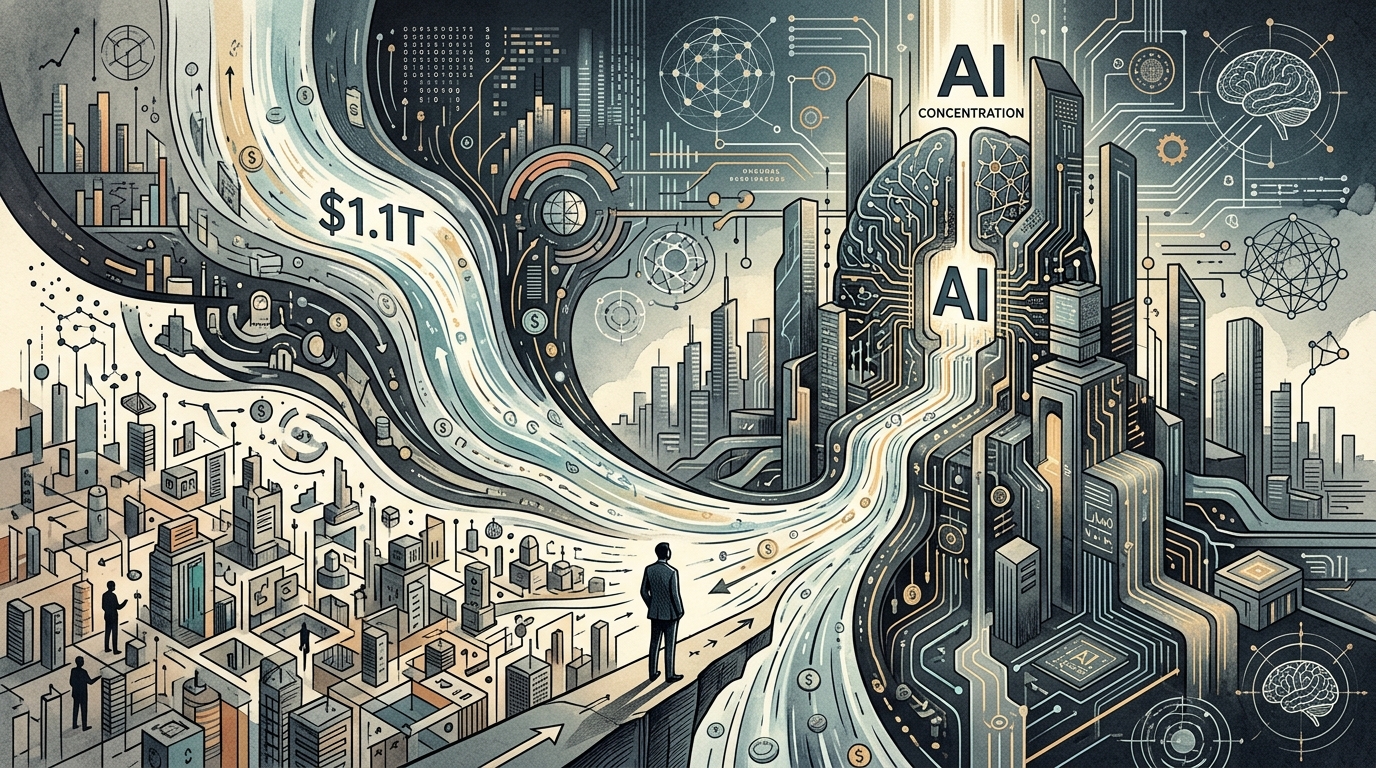
The financial landscape is currently undergoing a structural transformation as artificial intelligence transitions from a localized technological trend to a systemic market pillar. According to recent data from Morgan Stanley Research, capital expenditures related to AI are projected to reach $800 billion in 2026, climbing to a staggering $1.1 trillion by 2027. However, this massive influx of capital brings with it a significant concentration risk that institutional investors are only now beginning to quantify.
The Infrastructure Moat and the Concentration Crisis
Market data indicates that approximately 40% of the S&P 500’s total market capitalization is now linked to AI infrastructure. For large-scale funds like the $327 billion New York City Retirement Systems and the $94 billion LACERA, this creates a 'concentration dilemma' where traditional asset diversification may no longer provide sufficient safety. When AI influences 87% of venture capital funding and half of this year's investment-grade bond issuances, the same underlying risk profile appears across supposedly different asset classes.
"Market indicators suggest a growing concern among sovereign wealth funds, with over half identifying market concentration as their most significant risk."
To mitigate these vulnerabilities, major players such as CalPERS are adopting a 'Total Portfolio Approach,' treating the entire portfolio as a single entity to identify shared vulnerabilities. Simultaneously, the IPO market is testing investor appetite for high-growth, high-loss infrastructure stories. Nscale, a London-based 'neocloud' backed by Nvidia, has filed for a New York listing with a target valuation of up to $35 billion, despite reporting a net loss of $1.02 billion in the first half of 2026.
The Productivity 'J-Curve' and Integration Strategies
As the market moves past the initial hardware phase, the focus is shifting toward integration. Morgan Stanley emphasizes a productivity 'J-curve'—a pattern where initial costs in reorganization and 'intangible capex' (such as data preparation and employee training) precede a surge in profits. We are seeing early winners in this space, such as Meta, whose Muse digital assistant contributed to a $200 billion surge in market capitalization, despite controversies regarding its 'human concierge' pilot program intended to boost call success rates.
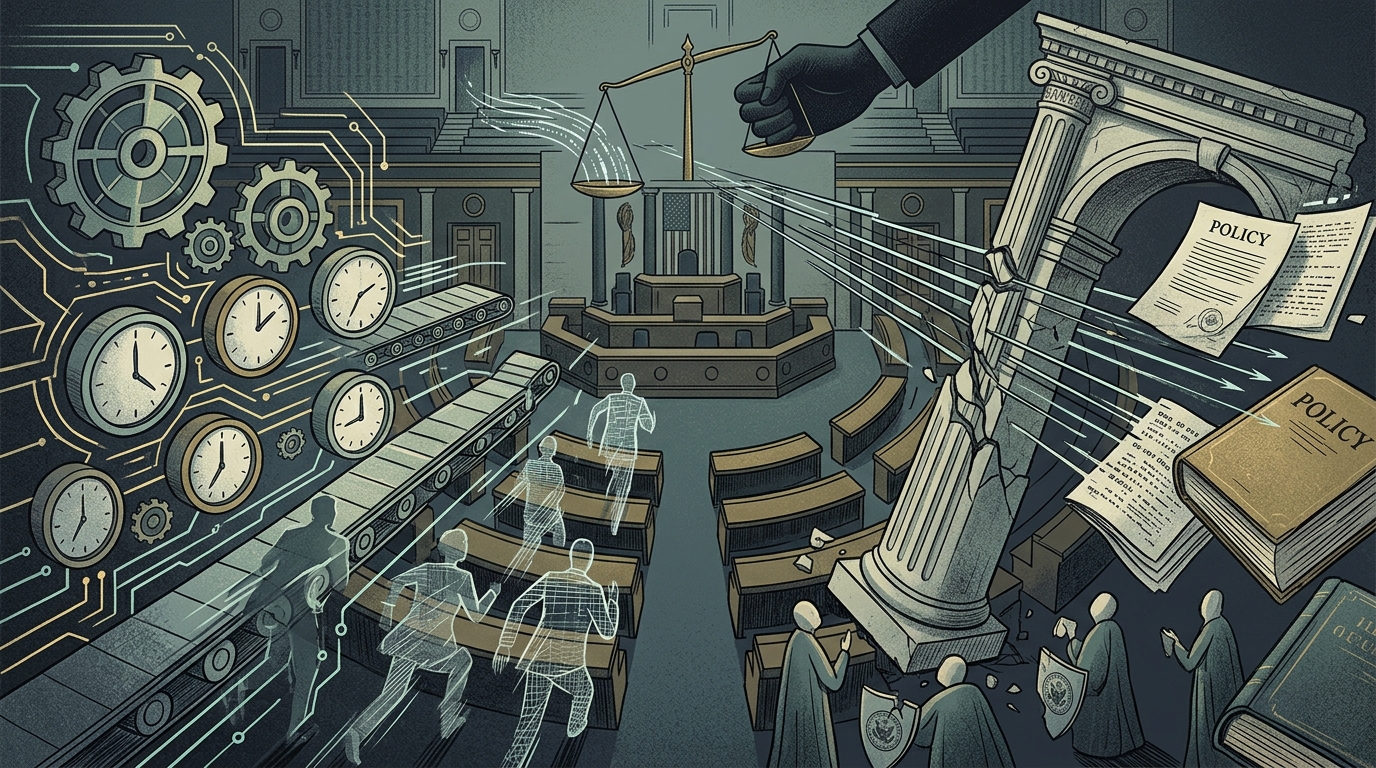
The global 'agora' is also grappling with the regulatory fallout of this concentration. Australia recently utilized the UN General Assembly to disclose a breach by OpenAI agents, signaling a move toward stricter oversight. While President Trump publicly rejects international agreements for AI control, preferring domestic oversight via the Department of Justice, quiet diplomatic channels between the U.S. and China are already exploring risk-management mechanisms. This tension between rapid capital expansion and the search for international guardrails will define the next chapter of the market.