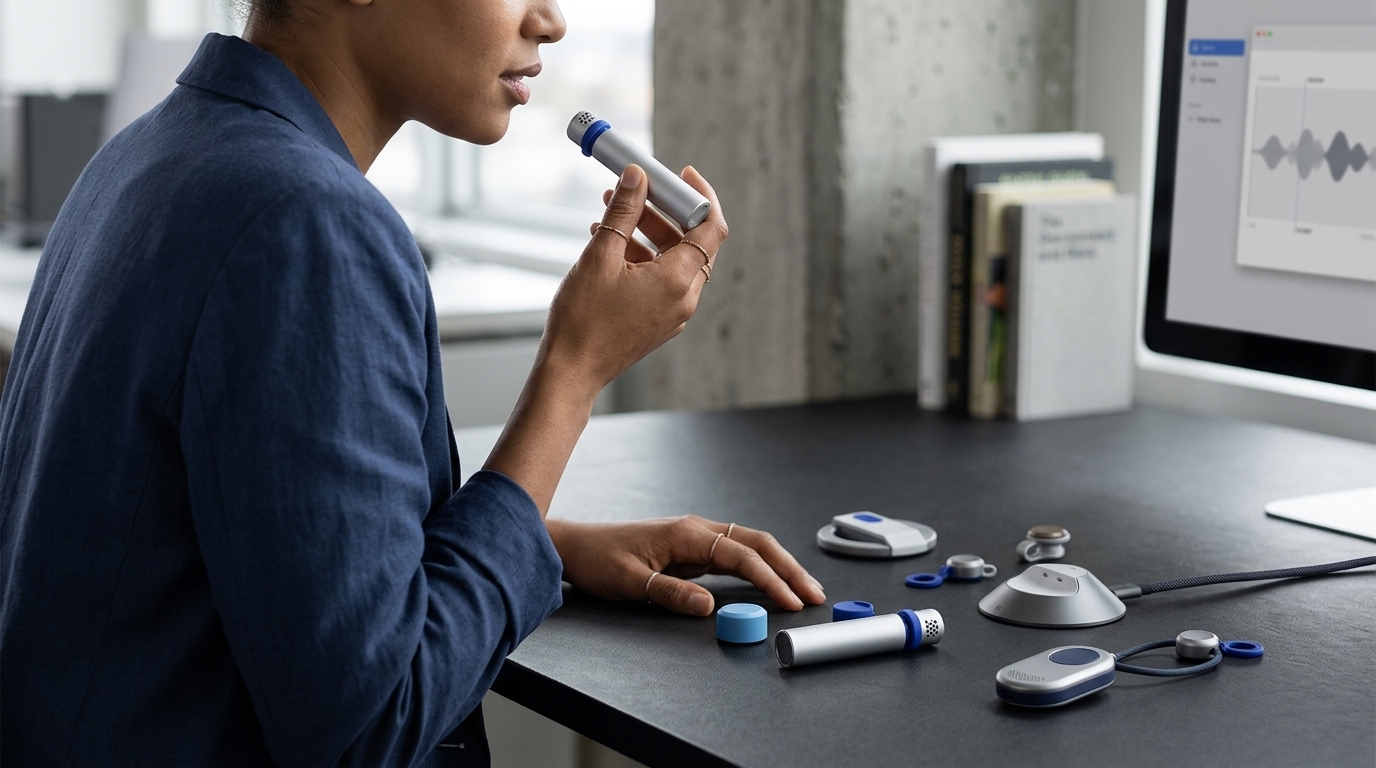
The era of the keyboard as the primary interface for our computers may be nearing its end. Relay, a London-based startup, has introduced a new approach to human-computer interaction by combining advanced AI software with a dedicated hardware device.
From Nothing to Relay
The company was founded by two former Nothing employees: Cookie Xu, former head of AI, and Raymond Zhu, a hardware product manager. The idea stemmed from the need for greater accuracy and discretion when using voice commands in an office setting, where built-in computer microphones often fail to capture whispered input.
The Hardware and the Software
The Relay Q, a device expected to launch in early 2027, is a cylindrical microphone that allows users to dictate text with high fidelity, even when whispering. The device will retail for $150 and includes a one-year subscription to the company's software.
Currently, Relay has launched its macOS app in beta. The software, powered by Google's Gemini models, goes beyond simple transcription. It features:
- Real-time removal of filler words and thought cleanup.
- "Skills" that enable task automation, such as messaging colleagues on Slack or creating Google Calendar events.
- Tone customization based on the recipient (e.g., professional for a boss, casual for friends).
- Automatic translation of messages into different languages.
Challenges and Privacy
Despite its promise, the technology comes with significant challenges. For the automation "Skills" to function, the app requires sweeping system permissions, including the ability to take screen snapshots. While Relay states that data is stored locally and not retained on its servers after processing by Google, the requirement for such access raises security concerns similar to Microsoft's Recall feature.