June 23, 2026, marks the commencement of one of the year's most significant economic events: Amazon Prime Day. What began years ago as a simple anniversary sale for Prime subscribers has mutated into a global consumerist hurricane that rewrites the rules of trade. This year, the event isn't merely about discounts on electronics or home appliances; it's about the full integration of Artificial Intelligence into the shopping experience, from personalized predictive needs to fully autonomous delivery.
The Revolution of the AI Shopping Agent
At the heart of Prime Day 2026 lies Rufus, Amazon’s sophisticated AI assistant, which no longer just answers queries but acts as a personal shopping consultant. Utilizing data from past purchases, browsing activity, and even social media trends, the algorithm suggests "survival kits" and "smart upgrades" before the user even realizes a need exists. This anticipatory shipping has reached new heights, with Amazon pre-positioning products in local fulfillment centers based on purchase probabilities.
However, this convenience comes with scrutiny. Analysts point out that AI doesn't just facilitate shopping; it creates a "closed loop" of desire, where consumers are nudged toward choices that serve the company’s profit margins and inventory management. The "Lightning Deals" of 2026 are now dynamic, shifting prices in real-time based on demand and individual user profiles, raising serious questions about price transparency and algorithmic manipulation.
Logistics and the Human Cost
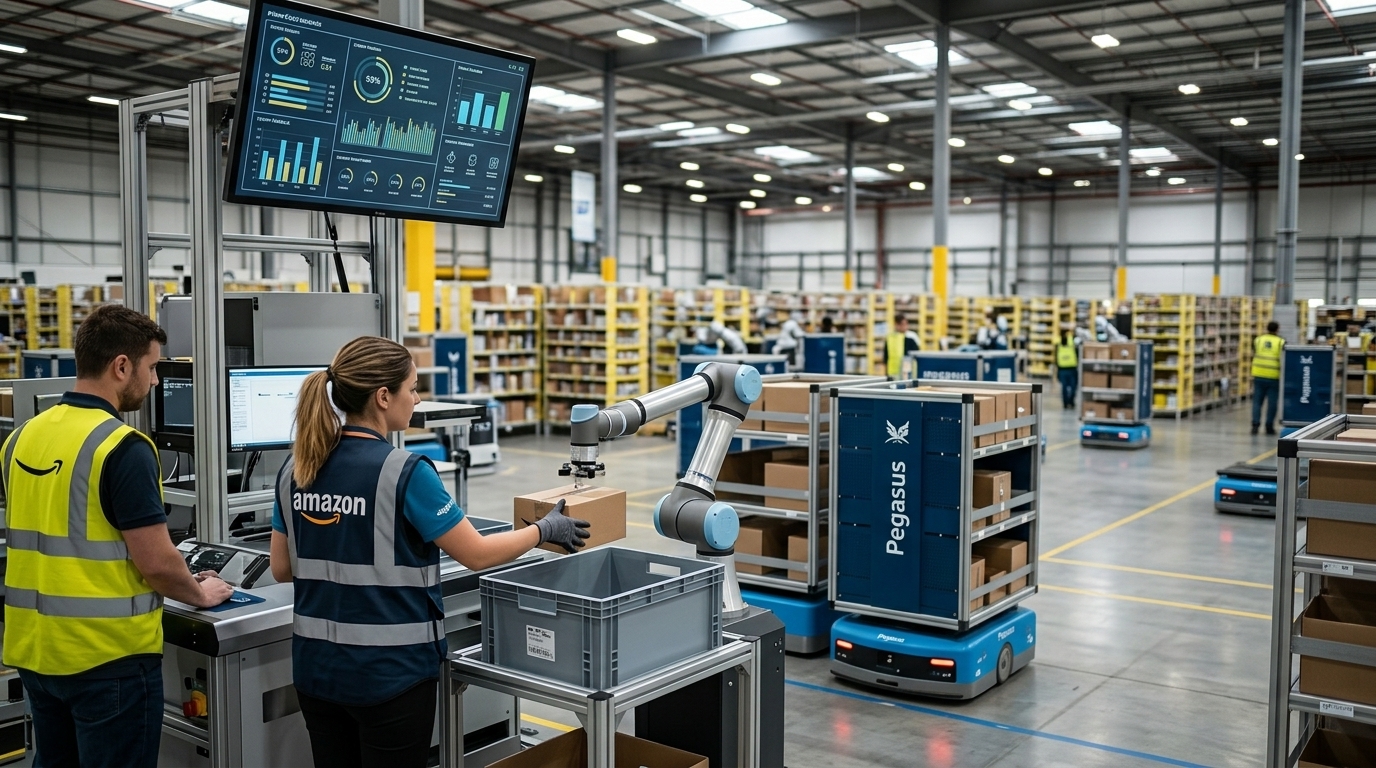
Behind the smartphone screen, the reality in fulfillment centers is more automated than ever. In 2026, the deployment of Proteus and Sparrow robots has drastically reduced order processing times to mere minutes. Amazon promises two-hour delivery in many metropolitan areas, a promise built on an army of drones and autonomous delivery vans navigating urban landscapes.
Despite the technological prowess, labor conditions remain under the microscope. Unions in Europe and the US warn that the pressure exerted on the remaining human links in the chain is grueling. The pace dictated by algorithms leaves no room for error or rest, effectively turning workers into cogs of a machine that never stops. Prime Day 2026 is a display of power, but also a reminder of the growing chasm between digital convenience and physical exhaustion.
Environmental Impact and Market Competition
Another critical issue is the environmental footprint of this consumerist frenzy. Despite Amazon's "Climate Pledge" commitments, the sheer volume of packaging and emissions from hyper-fast deliveries continues to climb. Criticism focuses on the "fast consumption" model, where low-quality goods are moved en masse, placing a heavy burden on the planet's resources.
Simultaneously, small and medium-sized enterprises (SMEs) find themselves in a precarious position. While Amazon promotes Prime Day as an opportunity for third-party sellers, the commissions and advertising costs required to gain visibility on the platform during these days often evaporate any potential profit. The market appears to be splitting into two speeds: those who own the infrastructure and everyone else who merely rents space within it.
Conclusion: A New Normal
Prime Day 2026 is not just a sale period; it is the mirror of the modern economy. An economy built on data, speed, and the absolute dominance of platforms. As consumers hunt for the next big deal, technology continues to sculpt our desires in ways we are only beginning to understand. The question remains whether the convenience we gain is worth the price of privacy and sustainability we pay.