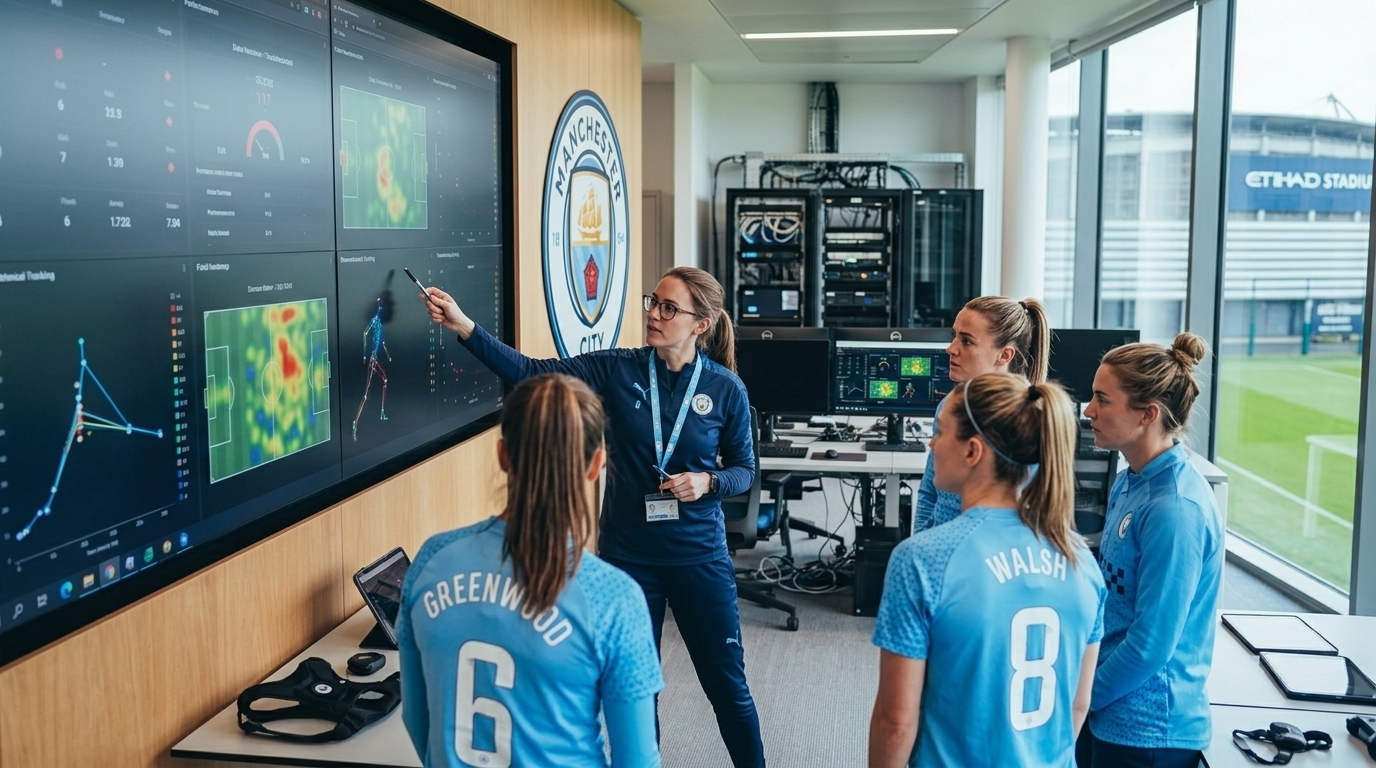
Manchester City’s announcement of a £10 million investment in a new, purpose-built training facility for its women’s team is more than just sports news. It is a definitive statement of intent regarding how cutting-edge technology and infrastructure strategy can transform a sport that has lived in the shadow of men’s competitions for decades. The new center, located within the City Football Academy (CFA) campus, promises to provide players with the same development and recovery opportunities enjoyed by the stars of the Premier League.
Technology at the Service of Performance
The new facility is far from a standard gym complex. It is a "high-performance ecosystem" where data analytics and biometrics take center stage. The installations will include state-of-the-art hydrotherapy suites, recovery rooms featuring advanced cryotherapy technology, and specialized sports science laboratories. The integration of motion sensors and 4K analysis cameras on every pitch will allow coaches to monitor player movements in real-time, providing data that was previously only accessible to elite men's clubs.
This investment focuses heavily on injury prevention, a critical issue in women’s football where rates of Anterior Cruciate Ligament (ACL) injuries are disproportionately high. By utilizing AI and predictive analytics, City’s medical staff will be able to forecast player fatigue and adjust training loads accordingly, drastically reducing the risk of long-term injuries.
From Shared Facilities to Autonomy
Until recently, many women’s teams, even at the top tier of the Women’s Super League (WSL), were forced to share facilities with academies or men’s teams, often with restricted access during peak hours. Manchester City’s move to create a dedicated 5,400-square-meter space breaks this outdated model. This autonomy is not just practical; it is psychological. It fosters a culture of professionalism and belonging, where players feel the club is directly invested in their specific career trajectories.
- Dedicated recovery and hydrotherapy zones.
- Specialized nutrition and performance analysis centers.
- Modern office spaces for coaching and administrative staff.
- Sustainable design aimed at reducing the facility's environmental footprint.
The Business Logic Behind the Millions
For City Football Group (CFG), this investment is not an act of charity. It is a strategic move in a rapidly expanding market. The value of broadcasting rights for women’s football globally is skyrocketing, and sponsors are increasingly seeking clubs that embody the values of equity and innovation. By building the best facilities in Europe, City becomes the premier destination for global talent. In a market where player transfers are beginning to reach six and seven figures, the ability to attract and retain the best athletes is vital for long-term economic sustainability.
"This investment represents the next step in our journey to make Manchester City the global home for women’s football," a club official stated during the unveiling of the plans.
The Future: A Model for Europe?
City’s move is expected to trigger a "domino effect" of investment across Europe. Clubs like Barcelona, Arsenal, and Lyon, which dominate the women’s landscape, will be forced to respond with similar infrastructure projects. The question is no longer whether women’s football is profitable, but how quickly the infrastructure gap can be closed. Manchester City, with its new high-tech home, demonstrates that the path to the top is paved with sports science laboratories and bold capital expenditure.